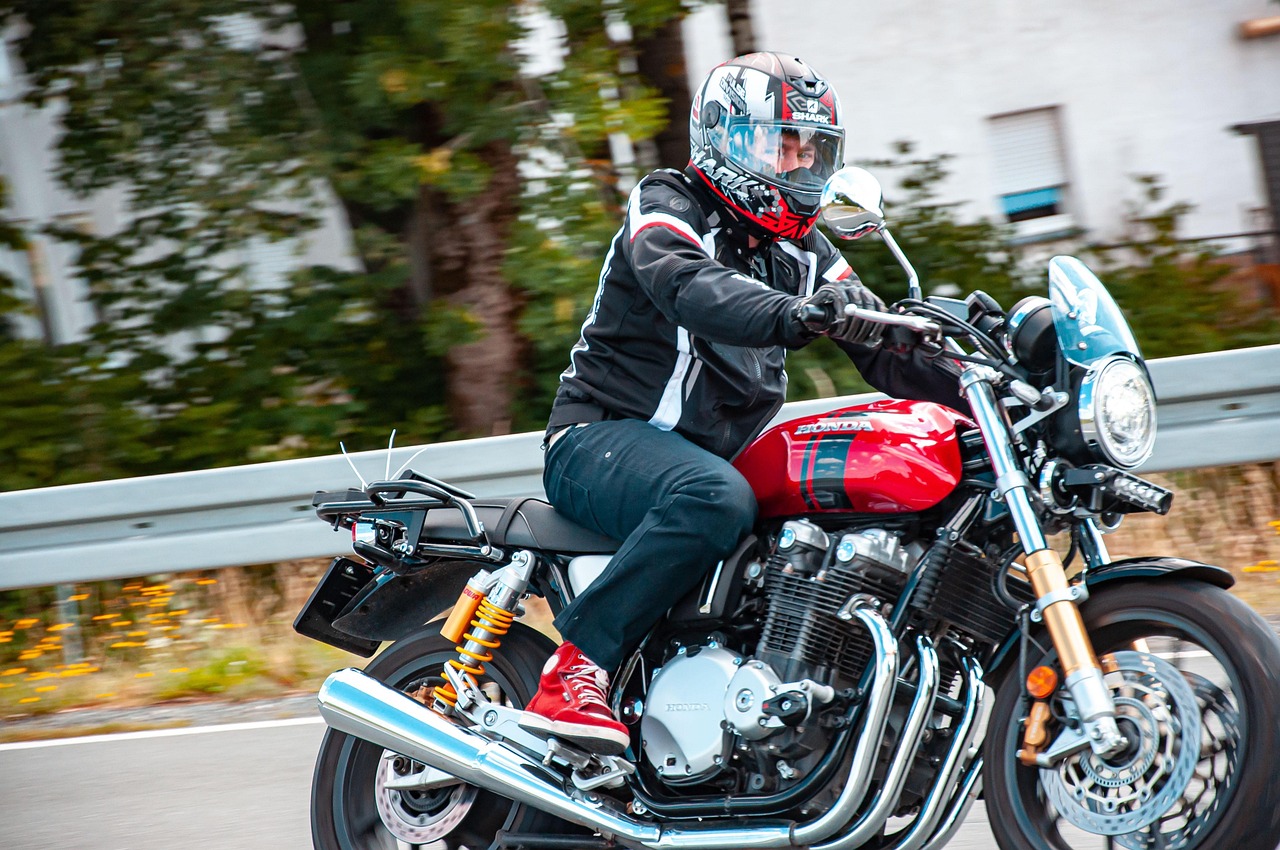
The limit point is the furthest ahead on the road that you can see where the edges of the road (curbs, shoulders, or lane edges) visually come together, especially when approaching or riding through a curve.
- If the limit point is moving away from you, the curve is opening up.
- If the limit point remains at the same distance, the curve remains constant.
- If the limit point is coming toward you, the curve is tightening.
Your speed and throttle control should be adjusted based on what the limit point is doing.

Why the limit point matters
At highway speeds—70–85 MPH—you must look as far down the road as possible, not just at what’s directly in front of your bike. A common guideline is to maintain about 12 seconds of visual lead time.
By focusing on the limit point:
- You avoid target fixation
- You enter curves at an appropriate speed
- You can smoothly roll on the throttle once you see through the turn
Lane positioning (the “3 positions”)
Being aware of your lane position gives you options and improves visibility:
- Position 1: Left side of the lane (left tire track)
- Position 2: Center of the lane
- Position 3: Right side of the lane (right tire track)
You can enter a curve in one position and exit in another, depending on:
- Curve direction
- Sight line
- Road surface
- Traffic and hazards
Lane position and limit point work together to help you set up safely for a turn.
Entering and riding through a curve
As you approach a curve:
- Roll off the throttle as needed
- Adjust lane position
- Look through the turn toward your limit point
Once you can see past the curve:
- Smoothly roll on the throttle
- Maintain your line using countersteering
- Let the bike lean and hold the curve
More experienced riders often roll off less because they understand:
- Their bike’s lean angle
- Countersteering input
- How the bike holds a line through a turn

Practice and rider experience
New riders should practice:
- Identifying the limit point
- Looking through the curve
- Smooth throttle control
- Countersteering
Riding with an experienced rider helps reinforce these skills. The more you ride, the more natural this becomes.
Knowing your bike’s limits and your own limits is critical to safe riding.
Want to ride smarter in a group?
Read our full guide: 10 Essential Tips for Motorcycle Group Riding
Enjoy the Ride
Riding is about freedom and enjoyment—but smart riding means managing risk, not ignoring it. Understanding the concept of limit points, lane positioning, and your bike’s handling allows you to ride confidently and safely.
Enjoy the roads of Montana—and ride safe.
If you’re experienced, share what you’ve learned. If you’re new, ask questions — riders are one of the most supportive communities out there.If this article resonated with you, share it with a fellow rider and carry these habits into every ride. For more proven safety tips, real-world riding insights, and practical ways to sharpen your skills, explore the Montana Motorcycle Safety Foundation blog page.
