Every mile you ride is a calculated risk — and the riders who handle emergencies best are the ones who planned for them before they ever left the driveway. Whether you’re commuting through Billings or embarking on a 2,000-mile touring adventure across the Northern Rockies, having the right motorcycle emergency kit can mean the difference between a minor inconvenience and a life-threatening situation. This guide covers everything you need to know: what to pack, how to build a first aid kit, which emergency systems to carry, and how to mentally prepare for the unexpected on a long-distance ride.
If you’re just getting started with rider safety fundamentals, we recommend reading our in-depth guide on pre-ride inspections and protective gear before diving into emergency preparedness — because prevention is always the first layer of protection.
Why Motorcycle Preparedness Is Non-Negotiable
Motorcycles are uniquely vulnerable on the road. Unlike cars, they offer no structural cage, no airbags embedded in doors, and no windshield between you and whatever hazard appears. Add remote terrain, unpredictable weather, and the occasional mechanical failure, and it becomes clear why motorcycle preparedness isn’t a hobby for the overly cautious — it’s a baseline responsibility for every rider.
Statistics from the National Highway Traffic Safety Administration consistently show that motorcyclists face a fatality rate roughly 24 times higher per mile traveled than passenger car occupants. Many of those outcomes are worsened — or caused — by a lack of emergency planning. A flat tire on a rural highway in Montana at dusk is manageable if you’re prepared. Without supplies, it can become dangerous very quickly.
Preparedness has three layers:
- Physical readiness — the gear, tools, and supplies you carry
- Knowledge readiness — knowing how to use what you carry
- Mental readiness — staying calm and decisive under pressure
For a deeper dive into the mental side of emergency response, check out our article on emergency preparedness drills and exercises that can save your life.
The Best Essential Gear for Your Motorcycle Emergency Kit
Your motorcycle emergency kit should be compact, waterproof, and organized so you can access what you need quickly. Panic is the enemy of efficiency — a well-packed kit helps you work methodically even in stressful situations. Here’s what every rider should carry:
Ready to register your vehicle?
Join thousands of vehicle owners who use MTMC Foundation to handle their registration quickly and legally.
Roadside Repair Essentials
- Tire repair kit — plugs, patches, CO2 inflators or a compact tire pump. A flat tire is the most common roadside emergency for motorcyclists.
- Jumper cables or jump starter pack — lithium jump starters are now small enough to fit in a jacket pocket and can restart a motorcycle battery in seconds.
- Multi-tool or small socket set — at minimum, carry the sizes needed to remove body panels on your specific bike.
- Electrical tape and zip ties — endlessly useful for temporary fixes.
- Duct tape — wrap a few feet around a water bottle to save space.
- Spare fuses — check your owner’s manual for the correct amperage set for your motorcycle.
- Bungee cords or tie-down straps — for securing gear that loosens or breaks.
- Tow rope or strap — especially important on remote routes where a tow truck may be hours away.
- Flashlight or headlamp with spare batteries — breakdowns don’t wait for daylight.
- Rain gear — a compact packable rain suit takes up almost no space and can prevent hypothermia in cold, wet conditions.
Communication and Navigation Tools
- Charged cell phone in a waterproof case — always, without exception.
- Portable battery pack — a 10,000mAh power bank can recharge your phone multiple times.
- Paper map of your route — cell service fails in many parts of Montana, Wyoming, and South Dakota.
- Personal Locator Beacon (PLB) or satellite communicator — tools like Garmin inReach allow two-way messaging and SOS alerts with no cell coverage required. This is particularly important for solo touring in remote areas.
- Roadside emergency contact card — laminated, tucked in your jacket. Include your blood type, emergency contacts, insurance information, and any medical conditions.
How to Build a Motorcycle First Aid Kit
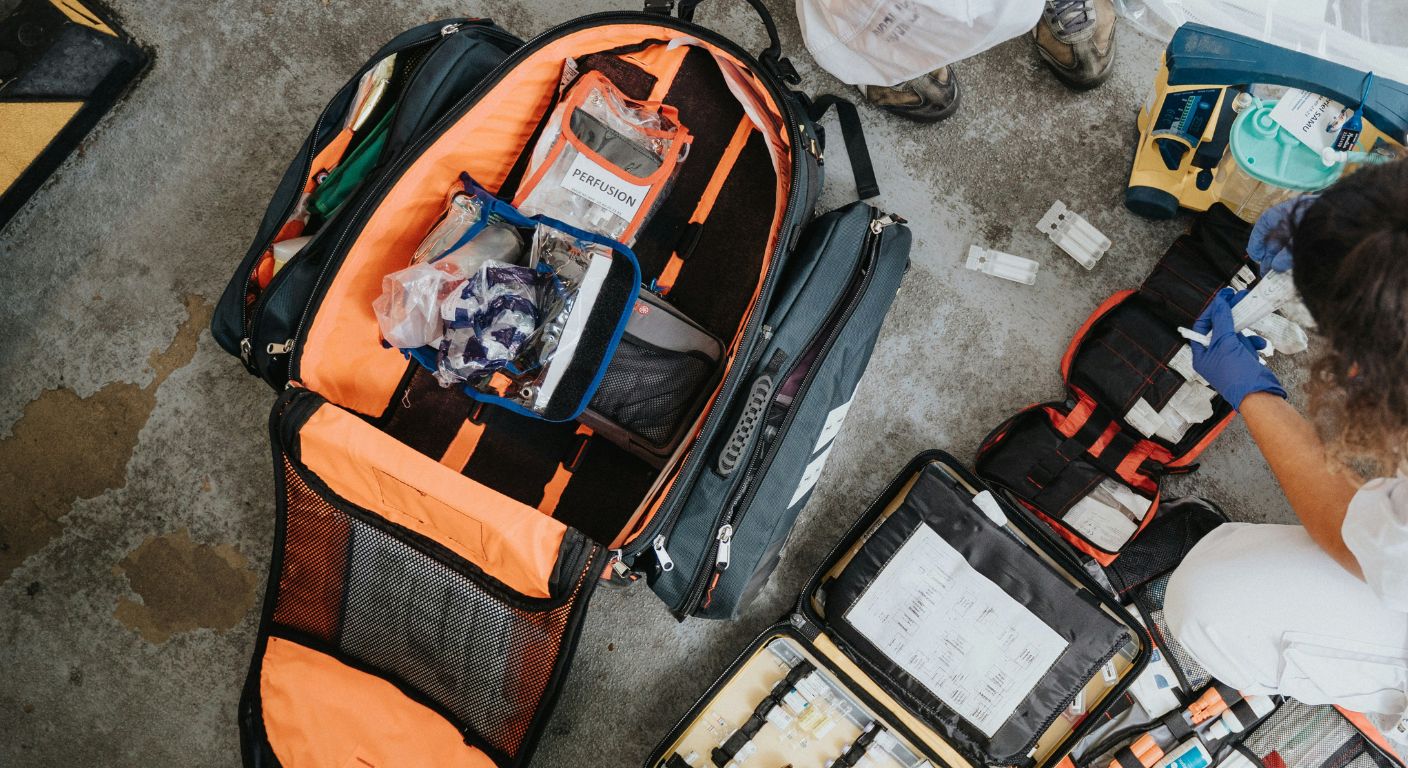
A commercial first aid kit from the drugstore is a starting point, but most are designed for minor household injuries, not the kinds of trauma motorcyclists can face. Building your own motorcycle first aid kit means tailoring it to the real risks of riding. Here’s a reliable framework:
| Category | Items to Include | Purpose |
|---|---|---|
| Wound Care | Sterile gauze pads (4×4), medical tape, adhesive bandages (assorted), non-adherent dressings | Control bleeding, cover road rash and lacerations |
| Bleeding Control | Tourniquet (CAT or SOFTT-W), hemostatic gauze (QuikClot or similar), wound closure strips | Stop severe or arterial bleeding |
| Burn Treatment | Sterile burn dressings, aloe vera gel packets | Treat exhaust pipe burns or friction injuries |
| Splinting and Immobilization | SAM splint, elastic bandage (ACE wrap) | Stabilize suspected fractures until EMS arrives |
| Medications | Ibuprofen, antihistamine, antacid, any personal prescription medications | Manage pain, allergic reactions, and ongoing conditions |
| Eye and Airway | Eye wash solution, CPR face shield | Flush debris, assist with rescue breathing |
| Protective Equipment | Nitrile gloves (2 pairs), emergency foil blanket | Prevent cross-contamination, treat shock and hypothermia |
| Documentation | Pen and notepad, medical info card | Record incident details, communicate medical history to responders |
Important: Carrying this equipment is only useful if you know how to use it. Consider completing a Stop the Bleed course or Wilderness First Aid certification — these are widely available and take just one weekend to complete. First aid training could save a life before emergency services arrive, especially on isolated roads.
3 Essential Emergency Kits for Motorcycle Travel
Rather than one massive bag, experienced touring riders often organize their emergency supplies into three distinct kits — each serving a different purpose and kept in a different location on the bike.
Kit 1: The On-Body Emergency Pouch
This is what you always have access to, even if your bike is on its side or inaccessible. Keep it in a jacket pocket or small hip pack. Include: tourniquet, wound closure strips, emergency foil blanket, medical info card, and a small flashlight. This kit is your immediate-response layer.
Kit 2: The Saddlebag Roadside Repair Kit
Stored in an easily accessible saddlebag or tail bag. This is your tire repair kit, multi-tool, zip ties, electrical tape, spare fuses, jumper cables, and compact flashlight. Everything you need to get back on the road or safely signal for help.
Kit 3: The Touring First Aid and Survival Kit
Stored in a larger luggage bag or top case for long-distance riding. This includes your full first aid kit, SAM splint, satellite communicator, power bank, rain gear, and any medications. It’s larger but only needed when you’re far from help or facing extended emergencies.
Long-Distance Motorcycle Touring Checklist
Before any long-distance ride, run through this pre-departure checklist. Being prepared on the road starts with being prepared in the garage.
- Mechanical inspection: Tires (pressure, tread depth, sidewall condition), brakes (pad thickness, fluid level), chain (tension, lubrication), fluids (oil, coolant, brake fluid), lights (headlight, brake light, turn signals), battery condition
- Emergency kits: Verify all three kits are packed, stocked, and accessible
- Communication: Phone charged, power bank charged, GPS programmed, paper maps printed for dead zones
- Documentation: License, motorcycle registration, insurance card, medical info card — all current and accessible
- Route planning: Share your planned route and expected check-in times with someone at home. Identify hospitals, dealerships, and repair shops along your route in advance.
- Weather check: Review forecasts for each day of travel. Adjust departure times or routes for severe weather windows.
- Protective gear: Full gear including helmet, jacket with armor, gloves, boots, and riding pants — every single ride, no exceptions
- Fuel planning: Note fuel stop intervals, especially through remote sections where stations may be 100+ miles apart
For new riders who are still building their skills and knowledge base, our post on essential motorcycle safety tips every new rider must know is a great complement to this checklist.
How to Prepare for Emergencies on a Road Trip
Packing the right gear is only part of road trip emergency preparedness. The other part is developing the habits and mindset that help you respond effectively when something goes wrong.
Tell Someone Your Plan
Always leave a detailed itinerary with a trusted contact. Include your planned route, overnight stops, and daily check-in schedule. If you miss a check-in, they should know to call for help. This simple habit has saved lives on remote rides across the American West.
Know Your Limits and Ride Them
Fatigue causes crashes. Schedule regular breaks — at least every 90 to 120 minutes. Eat, hydrate, and step off the bike. Fatigue impairs judgment and reaction time in ways that are surprisingly similar to alcohol intoxication. On a long-distance tour, this is one of the most underestimated risks.
Identify Emergency Resources Proactively
Before you depart, research the route for hospitals, urgent care centers, and motorcycle-friendly repair shops. Apps like Google Maps allow you to save offline maps and mark locations of interest. In Montana and other Western states, the nearest hospital may be significantly farther than you expect.
Practice Emergency Scenarios
Mentally rehearse what you’ll do if you have a tire blowout, if you drop your bike, or if a riding partner goes down. Riders who have thought through these scenarios in advance perform better under stress. Some riders practice physical emergency drills in safe, controlled environments — a habit that translates directly to better outcomes on the road.
We also encourage all riders to review our resource on indispensable motorcycle safety tips for additional guidance on protective habits that reduce the likelihood of needing your emergency kit in the first place.
Frequently Asked Questions
What is the most important item in a motorcycle emergency kit?
If you had to choose just one item, most experienced riders and safety professionals would say a tourniquet — specifically a commercial tourniquet like the CAT (Combat Application Tourniquet). Uncontrolled bleeding from a limb injury is one of the most preventable causes of death in traumatic accidents, and a tourniquet applied correctly in the first few minutes can be life-saving. Pair it with the knowledge of how to use it.
How do I carry emergency gear on a motorcycle without overloading it?
Organization is the key. Use the three-kit system described above to distribute weight evenly across your bike. Prioritize compact, multi-use items. For example, a SAM splint can also be used to prop up gear, and duct tape serves dozens of purposes. Vacuum-seal bags reduce volume for soft items. Aim for your full emergency kit to weigh under 5 pounds — it’s very achievable with thoughtful packing.
Do I really need a satellite communicator for motorcycle touring?
For riders who travel through remote areas without reliable cell service — which describes much of Montana, Wyoming, Idaho, and the Dakotas — a satellite communicator is strongly recommended. Devices like the Garmin inReach Mini allow you to send and receive text messages and trigger a GPS-assisted SOS signal from virtually anywhere on Earth. The cost is typically $350–$500 for the device, plus a monthly subscription. For solo riders or anyone venturing off major highways, it’s one of the highest-value safety investments you can make.
How often should I restock my motorcycle first aid kit?
Check your kit at the start of each riding season and after any trip where you used any of its contents. Look for expired medications, moisture damage, and depleted supplies. Items like nitrile gloves, adhesive bandages, and antiseptic wipes degrade over time. A quick 15-minute inspection each spring is all it takes to stay current.
Is a basic CPR/first aid course worth taking for motorcyclists?
Absolutely. The Red Cross and American Heart Association both offer CPR and first aid certification courses that can typically be completed in a single day. For motorcyclists, a Stop the Bleed course is also highly recommended — it teaches tourniquet application and wound packing, which are the skills most directly relevant to motorcycle crash injuries. These courses are widely available, often free or low-cost, and the skills you learn can help you assist yourself, a riding companion, or a stranger in crisis.
What documents should I always carry on a long-distance motorcycle trip?
At minimum, carry your driver’s license with motorcycle endorsement, current vehicle registration, proof of insurance, and a personal medical information card. The medical card should include your blood type, any allergies, current medications, emergency contacts, and health insurance information. Keep digital copies in a cloud storage app as a backup. In many Western states, roadside inspections and border crossings may also require your registration and insurance to be readily available.
Ride Prepared — Support the Riders Around You
Motorcycle preparedness isn’t just about protecting yourself — it’s about protecting everyone who shares the road with you, and everyone waiting for you to come home. The MTMC Foundation is committed to promoting rider education, safety awareness, and community resources across Montana and beyond.
We believe that every rider deserves access to quality safety information, training resources, and a community that has their back. When you support our mission, you help us reach more riders with the education and tools they need to come home safe from every ride.
Explore more safety resources on our blog, or visit our About page to learn more about who we are and what we stand for.
Support Our Mission — because every prepared rider is a safer rider, and every safer rider makes the road better for all of us.
