In several of my previous blogs, I’ve encouraged new riders to take a motorcycle training course. What many riders don’t realize, however, is that training shouldn’t stop after the beginner class. Even experienced riders can benefit from continuing their education and refining their skills through advanced rider training.
When I took the basic rider course many years ago, the instructors talked about advanced courses and encouraged us to continue developing our skills. At the time, I was more interested in getting out on the open road than spending more time in training. Looking back, I wish I had listened more closely to that advice.
Now that I’m older and have gained years of riding experience, I realize how important continuous learning really is. While experience teaches many lessons, structured training can refine techniques, correct bad habits, and make us safer riders. That’s why I’ve decided it’s time for me to take an advanced rider course and continue improving my skills.
Learning to ride a motorcycle is one of the most rewarding experiences on two wheels, but it’s also a skill that should be developed progressively. Many riders jump straight into traffic or long rides before mastering the fundamentals, which can lead to bad habits or unsafe situations.
A structured progression allows riders to develop skills in the proper order. By building a strong foundation and gradually adding complexity, riders gain confidence, control, and safety.
This guide outlines a step-by-step path similar to the progression used in many professional training programs, including those influenced by the Motorcycle Safety Foundation.
Stage 1: Familiarization With the Motorcycle
Before riding, every beginner should become comfortable with the motorcycle itself. Understanding the controls and how the machine behaves when stationary removes much of the anxiety that new riders feel.
At this stage, riders should learn:
- The location and function of all controls (throttle, clutch, brakes, and gear shifter)
- Proper mounting and dismounting
- Starting and stopping the engine
- Correct riding posture
- Walking the motorcycle with the engine off
- Understanding the clutch friction zone
Simple drills such as walking the bike forward and practicing clutch release help build early confidence.
Stage 2: Low-Speed Control
Once riders understand the controls, the next step is learning to move the motorcycle smoothly at very low speeds. This is usually practiced in an empty parking lot where riders can focus on control without traffic pressure.
Key skills include:
- Smooth clutch and throttle coordination
- Starting and stopping without jerking
- Straight-line riding
- Riding in large circles
- Shifting into second gear
- Gentle braking
Low-speed control is where riders begin developing the muscle memory needed for real riding situations.
Stage 3: Fundamental Maneuvers
After basic movement becomes comfortable, riders can begin practicing tighter maneuvers that require balance and precision.
Skills developed at this stage include:
- Tight turns and U-turns
- Figure-eight riding patterns
- Cone weaving
- Counterbalancing at slow speeds
- Maintaining balance while turning
These drills dramatically improve control and help riders handle parking lots, gas stations, and tight city spaces with confidence.
Stage 4: Emergency Control Skills
Real-world riding requires quick reactions. Emergency control training teaches riders how to respond safely to sudden hazards.
Important skills include:
- Maximum braking without locking the wheels
- Threshold braking
- Emergency swerving
- Avoiding obstacles while maintaining control
- Downshifting while braking
Practicing these techniques in a controlled environment helps riders respond effectively when unexpected situations occur on the road.
Stage 5: Cornering Fundamentals
Cornering is one of the most important skills in motorcycling. At this stage, riders begin learning how to handle curves safely and efficiently.
Core concepts include:
- Countersteering
- Selecting a safe entry speed
- Looking through the turn
- Maintaining smooth throttle control
- Understanding cornering lines
Developing these skills allows riders to navigate winding roads with far greater confidence.
Stage 6: Real-World Road Riding
Once core riding skills are developed, riders can begin applying them in traffic and real-world conditions.
Important road strategies include:
- Proper lane positioning
- Maintaining safe following distances
- Scanning for hazards
- Navigating intersections safely
- Managing blind spots
At this stage, defensive riding techniques become essential.
Stage 7: Advanced Riding Techniques
Experienced riders often pursue additional training to refine their control and efficiency.
Advanced techniques may include:
- Trail braking
- Faster corner transitions
- Advanced body positioning
- High-speed braking
- Managing traction and suspension behavior
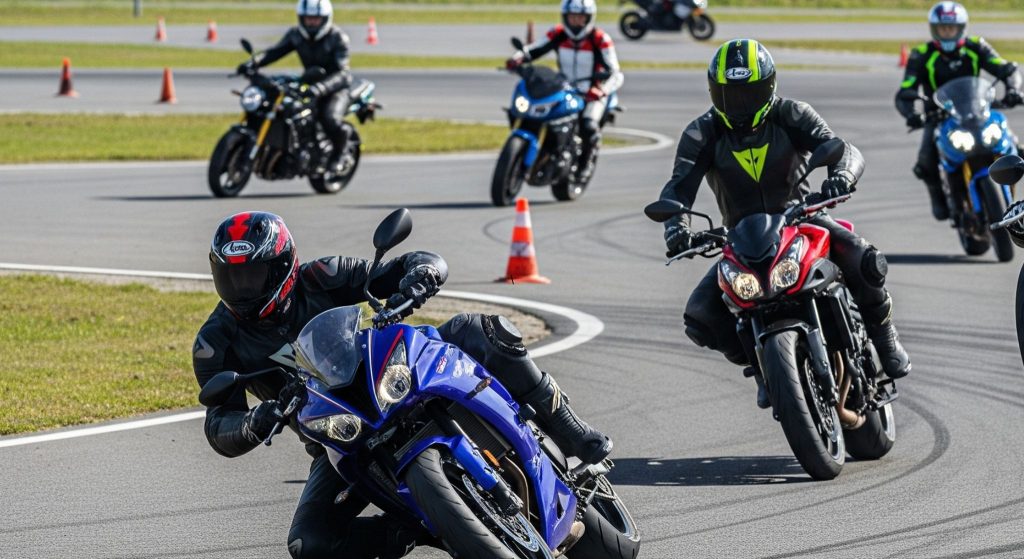
These skills are often taught in advanced rider schools or track-based training programs.
Read Next: Riding Aware: Staying Safe While Enjoying the Freedom of Two Wheels

Why Structured Progression Matters
Motorcycle riding rewards patience and continuous learning. Trying to learn everything at once can overwhelm new riders and increase risk.
A structured progression ensures that each skill becomes natural before moving on to the next challenge.
Riders who follow a progressive learning path tend to develop better control, safer habits, and greater confidence on the road.
In the end, motorcycling isn’t just about speed or freedom, but about mastery. And mastery always begins with the fundamentals.
Ride safe!
