
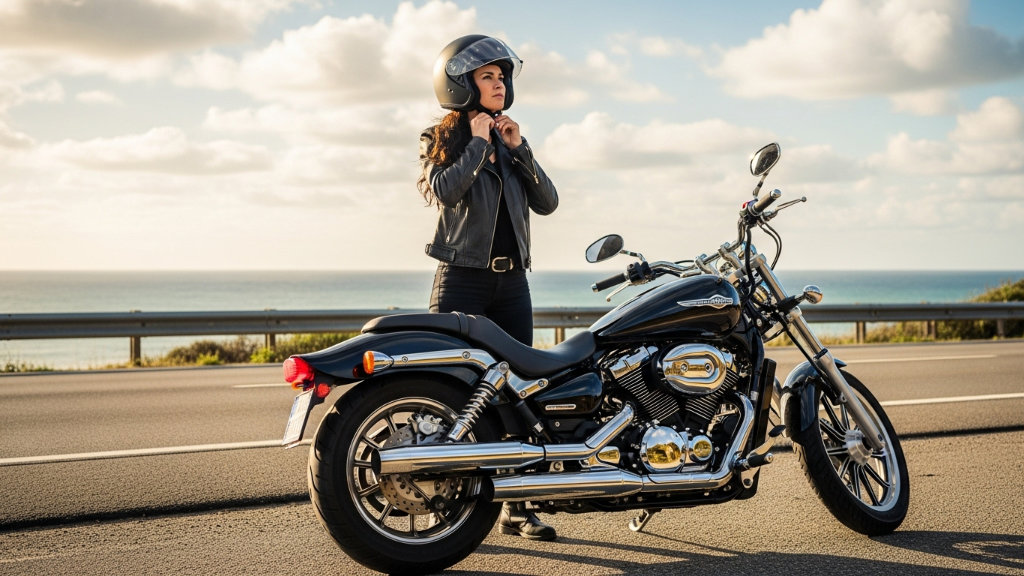
Riding a motorcycle across Montana offers unparalleled freedom and a deep connection to the open road. Yet, every rider must face an inconvenient truth: operating a motorcycle inherently involves a higher risk than driving a car.
True safety isn’t achieved by avoiding this fact, but by confronting it. The majority of motorcycle crashes (whether they involve another vehicle or are single-bike events) are not random accidents. They are preventable conflicts resulting from predictable, repetitive factors.
Safety, therefore, is an active choice. Your greatest defense on two wheels is not expensive gear or electronic aids; it is your trained mind and your mastery of emergency techniques.
This guide breaks down the top causes of motorcycle crashes and, more importantly, provides the actionable, MSF-tested countermeasures you need to integrate into every ride.
1. The Most Dangerous Collision: The Left-Turning Vehicle

Statistically, this is the #1 threat to any street rider. Roughly 40% of fatal multi-vehicle motorcycle crashes involve a passenger vehicle turning left directly in front of an oncoming motorcycle.
The Cause: Perceptual Failure
The car driver typically says, “I didn’t see him,” or “I thought he was farther away.” The problem is a concept known as perceptual failure. The driver is scanning the road for cars and often fails to register the small visual profile of a motorcycle. Even if they see you, they tend to misjudge your speed and distance, leading them to miscalculate the gap required to complete their turn.
The Prevention: Own the Intersection
The only way to win this battle is to assume you are invisible and plan for the driver’s mistake.
- Vary Your Lane Position: Do not sit passively in the center of the lane as you approach an intersection. Use the center or left third of your lane aggressively. This keeps your visibility profile shifting and positions you outside of the vehicle’s primary visual blind spots.
- Manage the Speed/Time Buffer: As you approach any potential conflict point (an intersection, a driveway), cover the clutch and brakes. Mentally prepare for an immediate stop. Reduce your speed early to create a vital time buffer that gives you extra distance to react.
- Enhance Visibility: Use your high beam during the day (checking your state’s regulations and being mindful of avoiding blinding others). If you notice a driver waiting to turn, a slight, rhythmic movement side-to-side within your lane (the “wobble”) can break their focus and force them to register your moving headlight.
2. The Internal Threat: Single-Vehicle Rider Error
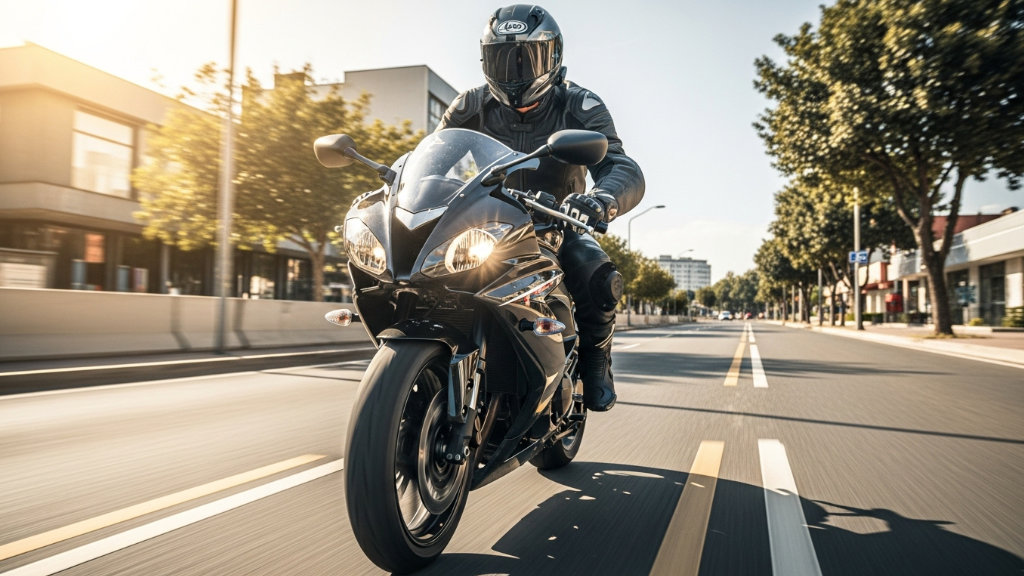
A significant percentage of motorcycle fatalities (often between 30-40%) are single-vehicle crashes where no other car is involved. In these instances, the rider’s own inputs (or lack thereof) are the primary cause. These errors often occur during emergency braking or cornering.
Cause A: Improper Braking and Momentum Management
Studies show that in a panic situation, riders rarely use the full braking capability of their machine. A common panic reaction is locking the rear brake, or worse, grabbing the front brake and releasing it too quickly, or locking the front wheel, especially in a curve or without Anti-lock Braking Systems (ABS).
Prevention: Master the Momentum
You must practice and drill progressive, simultaneous front and rear braking until it becomes muscle memory. Your training needs to build the discipline to pull the clutch in, square the bike up, and squeeze the brakes firmly and progressively. This is a skill that must be refreshed regularly through courses like the Basic RiderCourse 2 (BRC2).
Cause B: Cornering Errors (Under-Cornering)
The rider enters a corner too fast and then hesitates to lean the bike sufficiently, runs wide, and drifts off the road or into the oncoming lane. This is almost always accompanied by target fixation. The rider looks at the guardrail or the shoulder, and the bike inevitably follows that gaze.
Prevention: Trust the Technique and the Machine
- Look Where You Want to Go: This is the iron rule of cornering. Train your eyes to instantly look through the curve to your exit point, using the Search, Evaluate, Execute (S.E.E.) Strategy. Your body and the machine will follow your eyes.
- Aggressive Counter-Steering: Many riders fail to apply sufficient counter-steering pressure when they need it most. The Advanced RiderCourse (ARC) is specifically designed to build the confidence to apply the firm, immediate pressure needed to instantly change the bike’s lean angle and line when a curve tightens unexpectedly.
3. The Environmental and Behavioral Hazards

While training covers the mechanics of riding, a successful strategy must account for the environment and the rider’s mental state.
Roadway and Environmental Obstacles
In Montana, we face unique hazards: heavy gravel washes after a rainstorm, deep potholes from harsh winters, road debris, and dangerous rail crossings. Hitting any of these while carrying speed can initiate a loss of control.
Prevention: Continuous S.E.E. Strategy
Maintain a continuous, high-speed visual search. This is more than just looking ahead; it means:
- Search: Actively scan the road 12-20 seconds ahead.
- Evaluate: Identify potential hazards (potholes, gravel, blind driveways).
- Execute: Have a clear escape plan before reaching the hazard. Don’t look at the gravel; look at the clean patch of pavement you plan to ride through.
Impairment and Inattention
Riding requires 100% cognitive engagement. Alcohol and drug impairment is a factor in a disproportionately high percentage of fatal motorcycle crashes. Similarly, fatigue, stress, or distraction (including helmet communications) drastically increase your reaction time and reduce the necessary focus.
Prevention: Be Sober and Present
If you are tired, impaired, or distracted, the risk multiplier becomes exponential. Give your ride the respect it demands. Ensure your mind is as sharp as your machine’s handling.
Make Safety an Active Skill
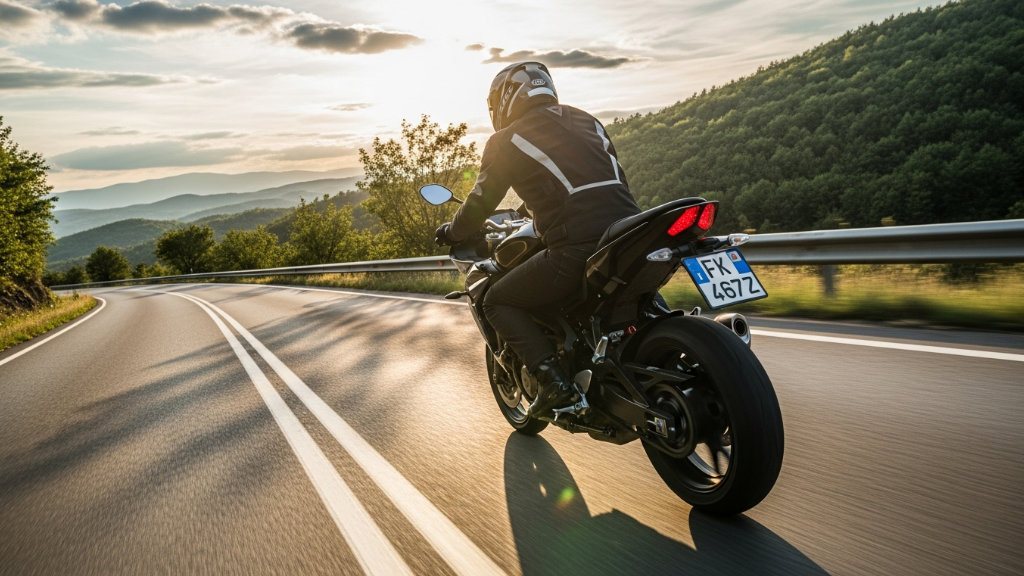
The freedom of riding is earned through proficiency. Accidents are predictable and, therefore, largely preventable through proper training and mental strategy.
By understanding the top causes of accidents and integrating the MSF-tested countermeasures, you are making the active choice to be a safer, more resilient rider.
Your greatest safety device is not ABS or protective gear, but your trained mind.
Ride Smarter, Ride Safer
The Montana Motorcycle Safety Foundation is here to support you with the skills, knowledge, and mindset to ride with confidence.
You can take the first step toward becoming a safer, more confident rider today. Our purpose is to educate and empower you with practical insights, tools, and resources that help you improve every time you ride. The mindset shift starts here—and every mile ahead will feel better because of it.
Ready to sharpen your skills?
