
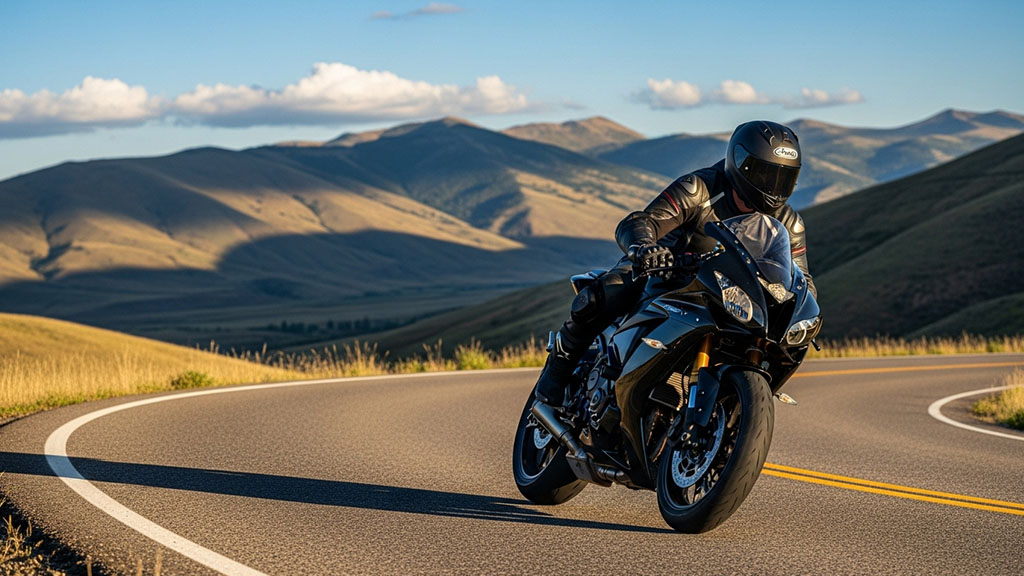
For many new riders, countersteering can feel overwhelming. If you’ve never ridden a motorcycle before, the concept often goes against your instincts.
When driving a car, we steer directly into a turn. On a motorcycle, doing that at speed can quickly put you in a dangerous situation. Overreacting or overcorrecting can be just as risky.
Countersteering comes into play anytime you’re riding faster than about 5 mph. At these speeds, a motorcycle must lean to turn, and countersteering initiates that lean. The input is subtle, but it’s critical.
Practical Application: Push Left, Go Left
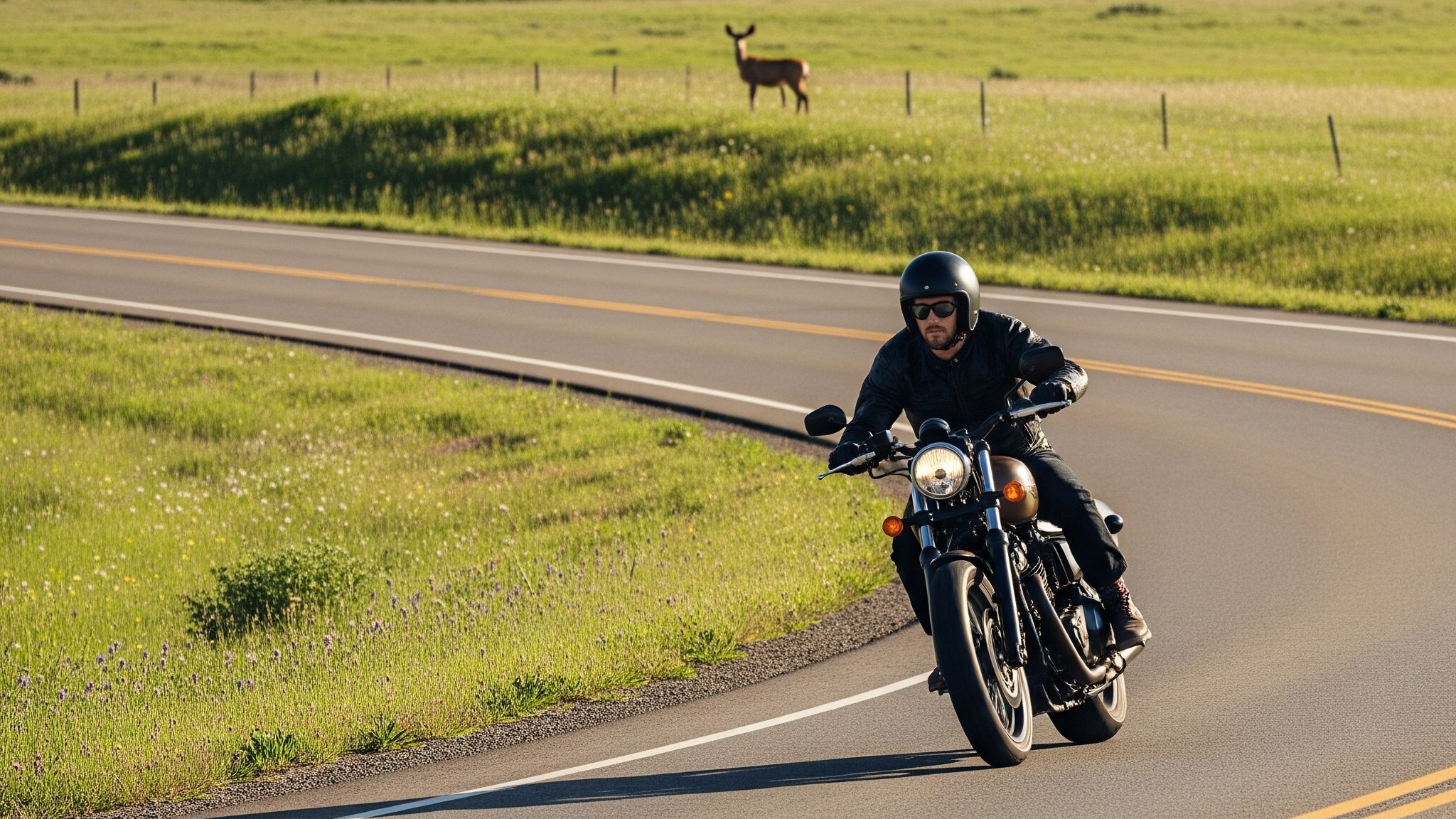
I ride Highway 12 between my home and Billings quite often, and there’s a great S-curve along that stretch that I really enjoy. As I approach the first part of the curve, I lean and gently push on the left handlebar.
That brief push moves the front tire slightly outward, allowing the bike to lean and settle smoothly into the turn. When the curve switches direction, I do the same thing on the right handlebar to transition into the second turn.
A simple way to think about countersteering is this: to go left, you push left; to go right, you push right—again, this applies at speeds over 5 mph. It takes practice and trust in the process. Riders must also take the time to learn how their specific motorcycle responds to steering input.
Mastering Smooth Inputs for Safety
Mistakes happen when riders oversteer, understeer, freeze up, or react too late. Any of these can lead to an accident. With practice, smooth inputs, and proper awareness, countersteering becomes second nature—and once it does, it opens the door to safer, more confident riding.
Below are a couple of articles that will help new and experienced riders understand countersteering better:
