
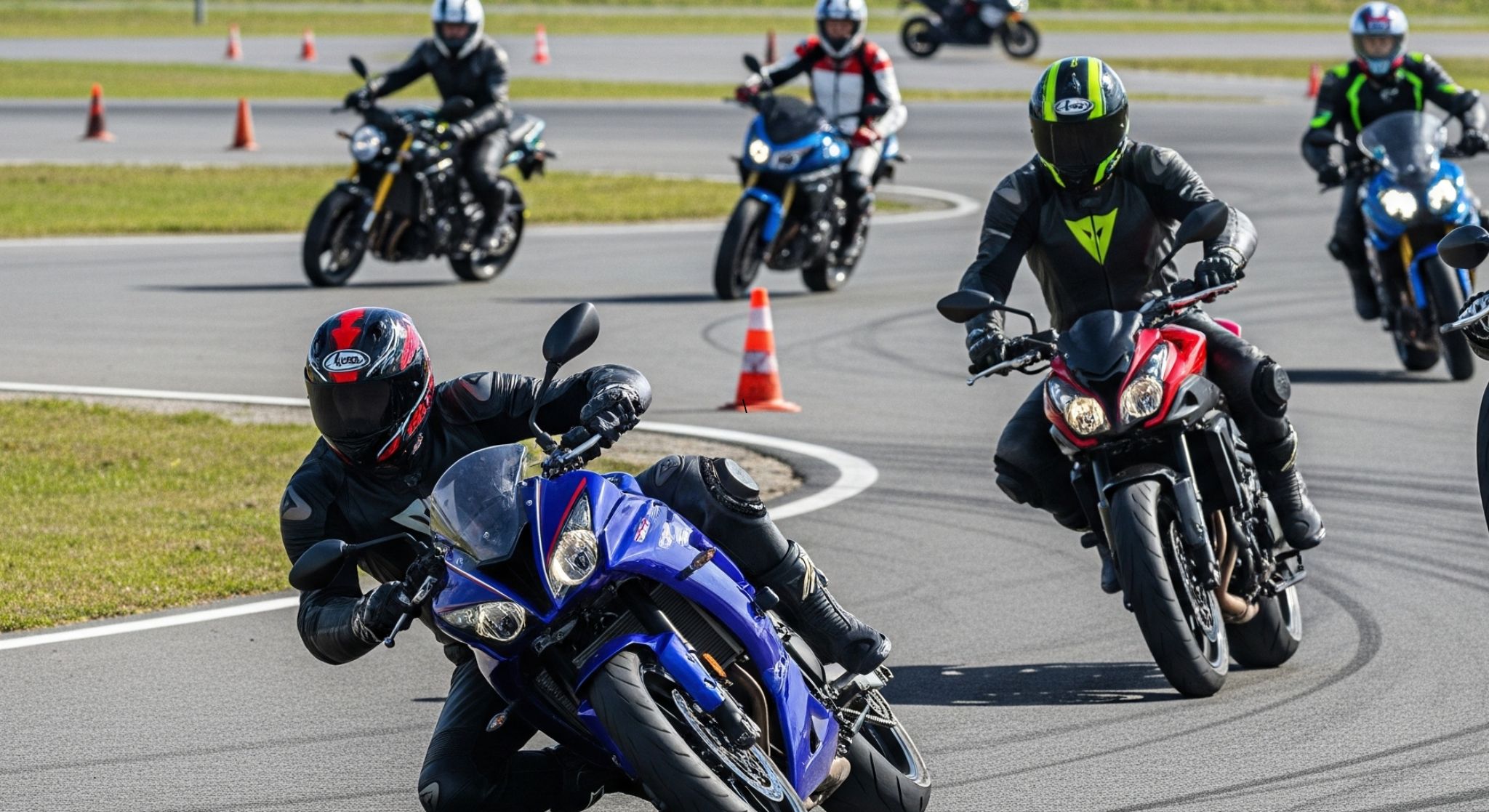
Riding with a group can be one of the best parts of owning a motorcycle. But riding together isn’t just about following the same road—it’s about watching out for each other. Group rides work best when everyone follows the same set of safety rules and riding habits.
Why Group Riding Takes More Than Just Riding Together
Group rides are fun, but they can get risky if riders aren’t on the same page. You need teamwork, trust, and a plan. Riding close together leaves little room for mistakes. That’s why group riding rules matter.
Pre-Ride Prep Sets the Tone for Safety
Hold a Pre-Ride Meeting
Before starting, gather everyone for a quick meeting. Go over the route, planned stops, and what to do if someone gets separated. Assign a lead rider and a sweep rider (the last in the group). Make sure everyone understands hand signals and basic rules. Also, everyone should gas up before the ride. The Motorcycle Safety Foundation’s group riding tips cover all these basics and more.
Pick the Right Group Size
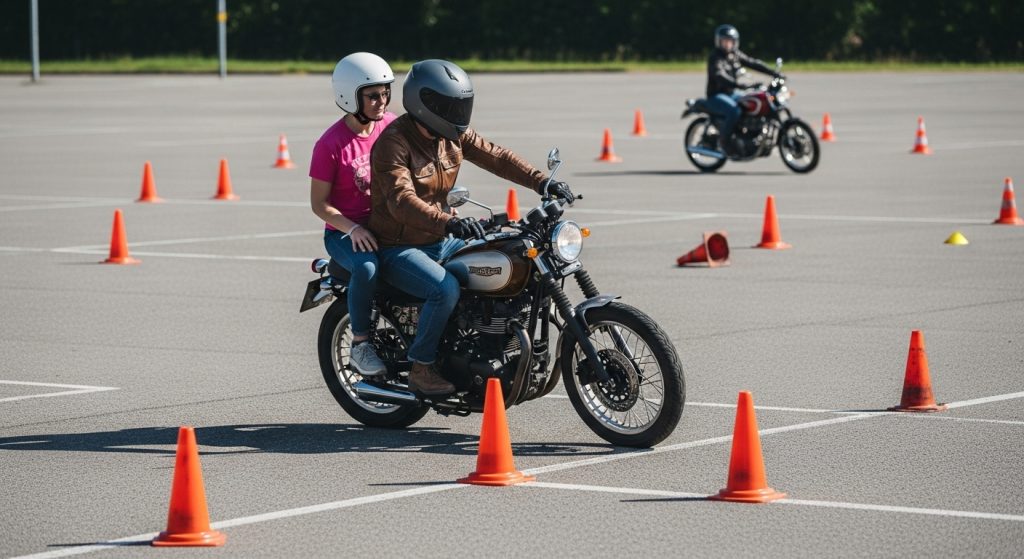
Groups of five to seven riders work best. Larger groups should split into smaller ones, each with its own lead and sweep riders. It helps with traffic flow and makes it easier to manage the ride.
Assign Roles: Lead and Sweep
The lead rider sets the pace and watches for hazards. They should know the route and be a strong rider. The sweep rider stays in back and makes sure no one falls behind. They help anyone who needs to pull over.
Don’t Leave Unprepared
At least one person should carry a first-aid kit and a basic toolkit. Everyone needs a charged phone. Check that your lights, horn, and mirrors work before leaving.
Mastering Group Formations
Use the Staggered Pattern
The most common and safest formation is staggered. The lead rider rides in the left third of the lane. The next rider rides one second behind, in the right third. This pattern continues down the line. It keeps good spacing without taking up too much road. SA1NT’s guide to staggered formations explains the details clearly.
Go Single-File When Needed
Switch to single file on tight turns, wet roads, or rough patches. Give more space between bikes when doing this. It gives everyone more time to react.
Keep Safe Gaps
Stay at least one to two seconds behind the rider in front of you (on your side of the lane). Stay two or more seconds behind a rider in the same lane position as you. This spacing gives you time to stop or swerve if needed.
Group Etiquette Everyone Should Follow
Never Ride Side-by-Side
Riding right next to someone gives you no space to escape. It’s tempting, especially with friends, but it’s not safe. Stick to staggered or single-file.
Use Clear Hand Signals
Use the standard hand signals to show turns, stops, or road hazards. Only signal important info. Don’t wave or point unless it helps the group stay safe. Zen & Chill’s group riding etiquette breaks it down simply.
Be Patient and Respectful
Not everyone rides at the same level. Ride at a pace that’s comfortable for everyone. Wait at turns or stoplights so nobody feels rushed or left out. Rider Magazine’s best practices emphasize keeping things smooth and respectful.

Gear, Discipline, and Safety Habits
Wear the Right Gear
Everyone should wear a DOT-approved helmet. Add gloves, a jacket, riding pants, and boots that cover your ankles. Dress like you might fall—because you might.
Obey the Law
Stick to the speed limit. Follow traffic signs and signals. No racing or stunts. Group rides aren’t the time to show off. Allstate’s group riding rules reinforce this.
Do a Pre-Ride Bike Check
Before you roll out, check your tires, lights, fluids, and brakes. If something doesn’t feel right, fix it before hitting the road. A mechanical failure during a group ride puts everyone at risk. Harley-Davidson’s group riding guide includes a solid pre-ride checklist.
Group riding works when every rider puts safety first. Communicate clearly, ride smart, and watch out for each other. That’s how you make sure every ride ends with a smile.
Ready to Ride Smarter?
If you’re planning a group ride, take time to review these tips with your crew. Want to get even more out of your riding experience?
And if you’re looking for more tips, stories, and advice to help you stay safe on the road, check out our other blogs. There’s always more to learn—and more ways to ride smarter.
