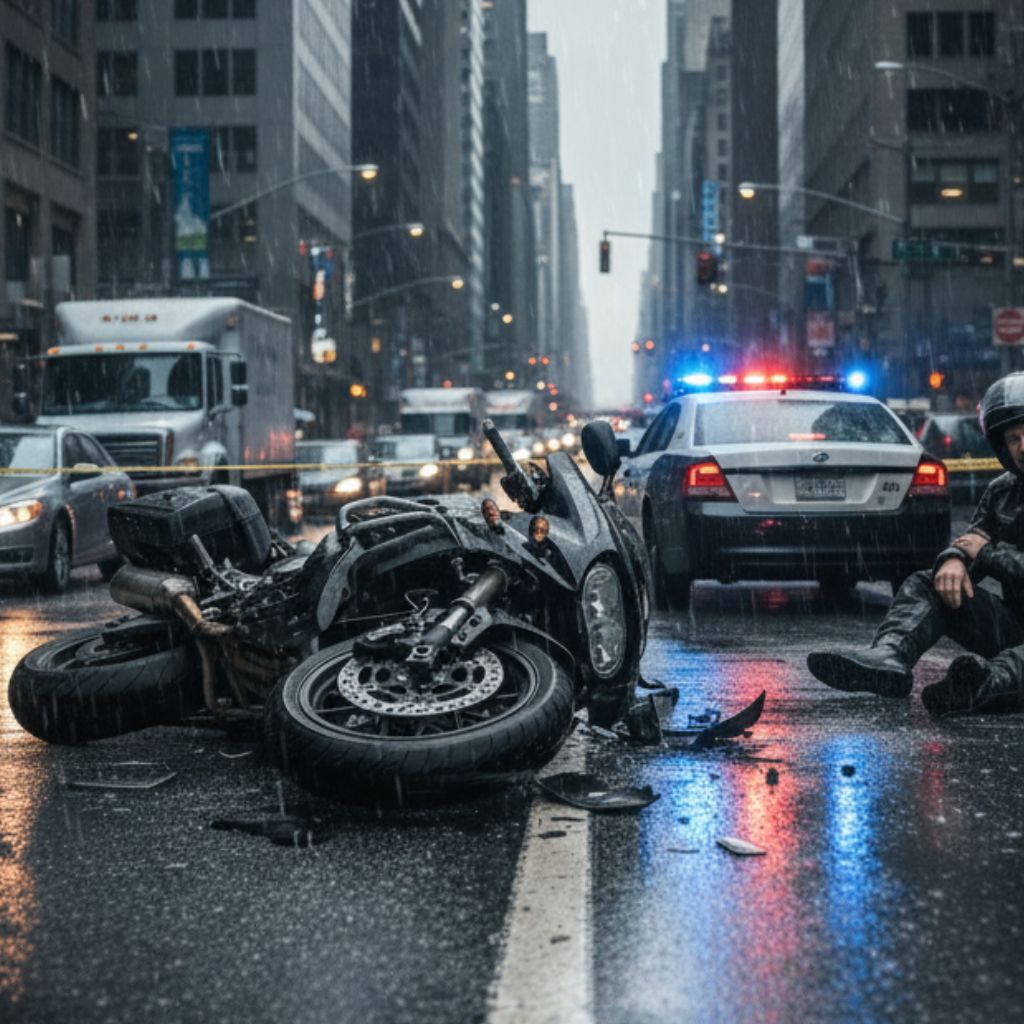
Picture this: you’re cruising down the highway at 70 MPH with your riding group. Traffic is flowing, the rhythm is good, and you’re holding steady in the middle lane. There’s a semi to your right, another rider on your left, and two more close behind.
Then, in the distance, you spot it — a pothole right along the white line ahead. You can’t move into the right lane because of the semi. The rider to your left leaves no room to shift over. You’ve got only seconds to react.
That exact situation happened to me a couple of years ago while riding into Salt Lake City with my club. I didn’t react fast enough and hit that pothole. My bike had a narrow front tire and a fat rear tire, and within seconds, my front tire went flat. I immediately started slowing down and maneuvered toward the shoulder from the middle lane. Thankfully, the tire didn’t blow out completely — it just went flat — but the impact destroyed the tire, popped the tube, and broke the steel belts.
In that moment, I made a quick decision. I saw the hazard, evaluated it, and executed my plan. Sure, I could have tried swerving left, but there wasn’t time or space. Doing so might have caused a collision with the other riders beside and behind me. My decision cost me a tire and the rest of that weekend’s ride, but no one got hurt — and I still believe I made the right call.
That experience reminded me that riding is about much more than throttle and brakes. It’s about your eyes and your mind. You have to constantly scan the road ahead, anticipate hazards, and prepare to react instantly. Every decision you make affects not just your safety, but the safety of everyone around you.
The Motorcycle Safety Foundation teaches a simple but powerful concept: SEE — See, Evaluate, Execute.
- See: Scan the road ahead for hazards, changes in traffic, and potential escape routes.
- Evaluate: Quickly judge what’s happening and what options you have.
- Execute: Make your move — whether that’s slowing down, changing lanes, or holding your line.
Riding safely is a skill of the eyes and mind. It takes awareness, judgment, and practice. Your hands and feet carry out the reaction — but it’s your focus and decision-making that keep you upright and in control.
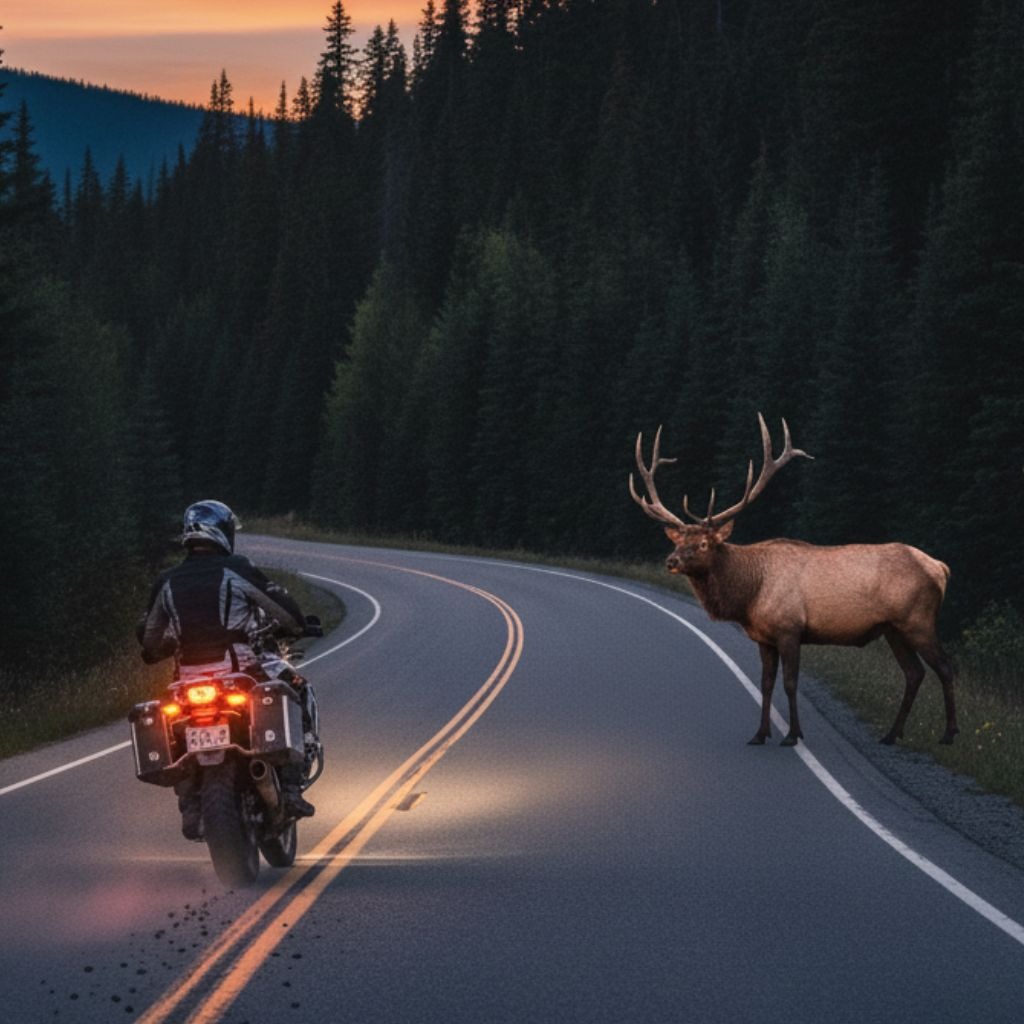
Whether it’s a pothole, an animal, or an inattentive driver, every situation demands that you SEE, Evaluate, and Execute. With enough practice, those reactions become second nature — and that’s what makes you not just a rider, but a skilled motorcyclist.
To learn more about staying safe on Montana roads and preventing wildlife collisions, visit the Montana Motorcycle Safety Foundation’s full article here:
Montana Wildlife Collisions on the Rise: How Riders and Drivers Can Stay Safe
Ride smart, ride aware, and always SEE the road ahead.
It’s not just about riding carefully—it’s about shaping a safer future for everyone. Local advocacy groups and state agencies are already working on better fencing, wildlife crossings, and public education campaigns, but they need community voices behind them.
Ready to ride with confidence?
Explore more safety tips and rider training opportunities today.
