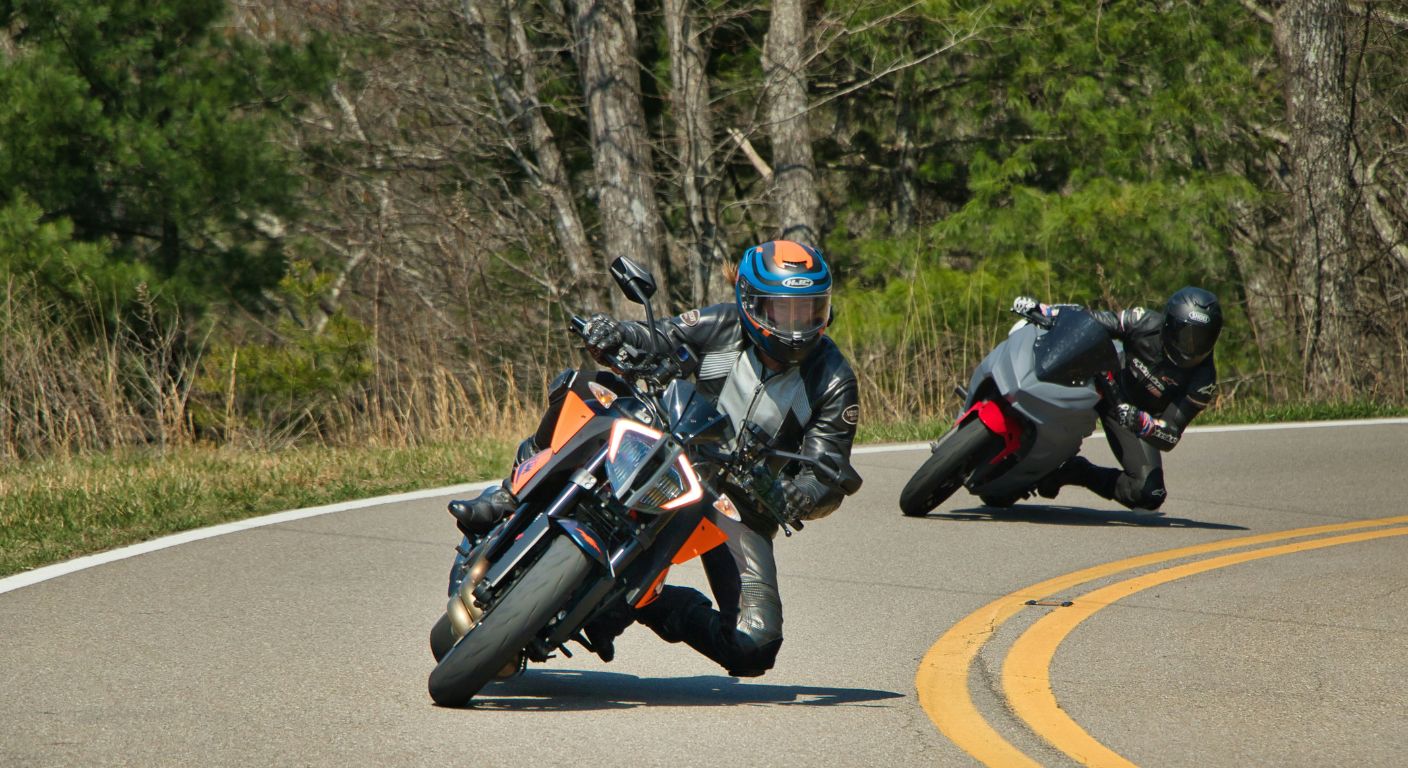
Turning a motorcycle smoothly and confidently is one of the most important skills a rider can develop. Whether you’re maneuvering through a tight parking lot or flowing through a curve at speed, understanding how and why the bike turns will dramatically improve your control and confidence.
Let’s break it down.
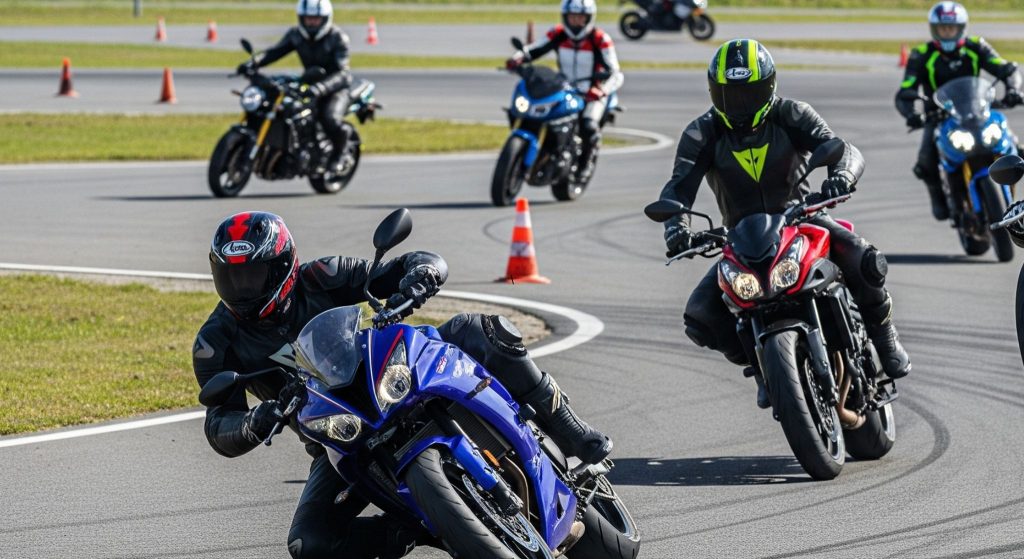
Low-Speed Turning and Pro-Steering
At low speeds, we steer the motorcycle by turning the handlebars in the direction we want to go. This is known as pro-steering, and it works much like steering a car.
A common problem riders experience during low-speed turns is feeling “locked up.” This happens when both arms tense up and begin fighting each other. When that occurs, steering becomes difficult because you’ve entered a feedback battle, each arm trying to correct what the other is doing.
To regain control, you must break the feedback loop. A simple and effective technique is to consciously relax one arm and let the other do the work.
In most situations, allowing the left arm to steer while keeping the right arm relaxed works best. This keeps your throttle hand loose, which is critical for smooth speed control and balance at low speeds.
For new riders, especially, I strongly encourage taking a basic rider course and finding a mentor who can ride with you and provide constructive feedback afterward. Skill development happens fastest with guidance and repetition.
A vacant parking lot is the perfect practice environment. Work on:
- Starting and stopping
- Tight, low-speed turns
- Approaching intersections and making left or right turns
You can even set up small cones to simulate intersections. Practice making turns without coming to a complete stop, similar to turning left on a green arrow at an intersection.
Counterweighting: Using Your Body for Control
Why do our arms fight each other in turns? Often, the root cause is poor vision.
If you don’t look far enough through a turn, especially a tight one, you may hesitate. That hesitation creates tension, and your arms instinctively compete for control. The farther back and through the turn you look, the more confident and stable the bike will feel.
This leads us to counterweighting.
This means using your body position to balance the motorcycle by shifting your weight slightly opposite the lean of the bike. This includes:
- Shifting your position in the seat
- Opening your hips to improve your line of sight
- Keeping your chest upright and away from the turn
- Pressing your outside knee into the tank
- Feeling added pressure on the outside foot peg
The more the bike leans, the tighter the turning arc becomes. If you need to adjust your line, you can do so by subtly changing speed or lean angle.
Counterweighting takes time to learn, but it is a critical skill, especially for slow-speed riding. New riders who master this early gain far more control and confidence.
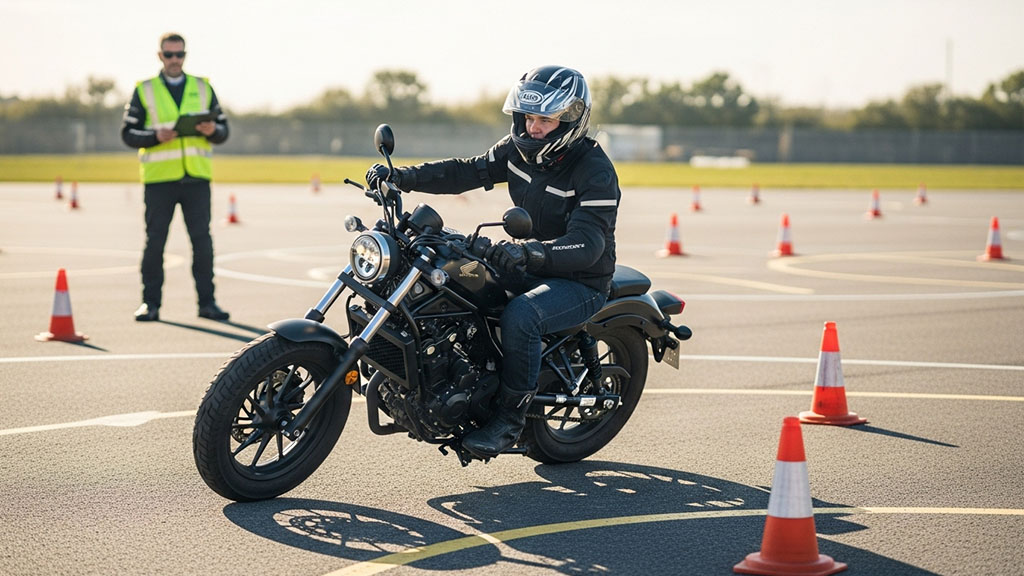
High-Speed Turns and Countersteering
When speeds increase (generally above 10–12 mph), the motorcycle must be countersteered.
It works like this:
- To turn left, push forward on the left handlebar
- To turn right, push forward on the right handlebar
This technique is essential for safe cornering and navigating curves at speed. Many new riders find the concept confusing at first, so I recommend reviewing this explanation from the MTMC Foundation.
Final Thoughts
To new riders:
Take a course, find a mentor, and practice often. Learn how your bike feels, how it responds, and how it behaves in turns and curves.
To experienced riders:
Advanced courses and regular practice are just as important. Skills fade if they aren’t used.Ride safe, and most importantly, have fun out there.
