
Montana Motorcycle Safety Foundation
{{POST_TITLE}}
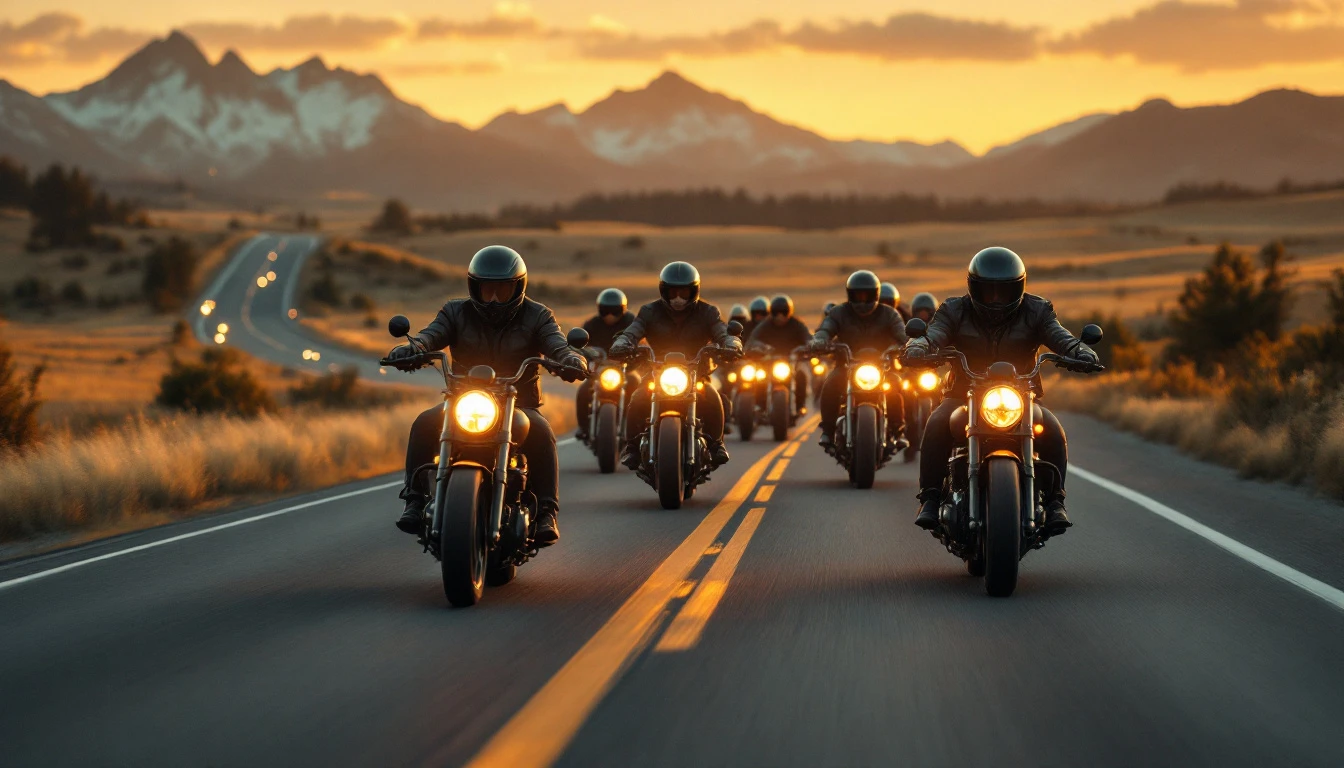
There is something genuinely electric about rolling down an open highway with a group of fellow riders. The rumble of engines, the shared sense of freedom, the camaraderie — group riding is one of motorcycling’s great joys. But that joy can turn dangerous in an instant if riders haven’t agreed on the rules of the road before leaving the parking lot. Understanding motorcycle group riding rules isn’t just about etiquette — it’s about everyone getting home safely. Whether you’re a seasoned road captain or a newer rider joining your first group run, this guide covers everything from formation spacing and hand signals to pre-ride meetings and emergency protocols.
If you’re still building your foundational skills before joining group rides, check out our Ultimate Guide to Motorcycle Safety Courses in Montana — structured training makes you a far safer group rider.
What Are the Rules for Group Motorcycle Riding?
Group motorcycle riding rules are the shared standards that allow multiple riders to travel together efficiently and safely. Unlike driving a car in a convoy, motorcyclists share a single lane in a staggered formation, which requires constant awareness of spacing, speed changes, and rider communication. The National Highway Traffic Safety Administration (NHTSA) consistently highlights rider behavior and communication as key factors in preventing motorcycle crashes — and those factors become exponentially more important when you add more bikes to the equation.
Here are the foundational rules every group should agree on before the first engine turns over:
- Hold a pre-ride meeting. Every group ride should begin with a short riders’ meeting to cover the route, planned stops, emergency contacts, and hand signals.
- Designate a lead rider and a sweep rider. The lead sets the pace and navigates; the sweep (tail gunner) rides at the back to assist anyone who has mechanical trouble or falls behind.
- Ride within your own ability. No rider should feel pressured to keep up if conditions exceed their skill level. The group waits — always.
- Maintain a staggered formation. This is the universal standard for group riding on open roads (more on spacing below).
- Never pass within the group without a clear signal. Passing other group members mid-ride creates confusion and collision risk.
- Use consistent, agreed-upon hand signals. Everyone must know what each signal means before the ride begins.
- Keep group sizes manageable. Most experienced road captains recommend groups of no more than seven to nine riders. Larger groups should split into smaller sub-groups with their own lead and sweep.
For a firsthand account of what can go wrong when these rules aren’t followed, read our post on Group Motorcycle Riding Safety Lessons I Learned the Hard Way.
Guide to Riding Motorcycles in a Group: Formation and Spacing
Proper formation is the backbone of safe group riding. The staggered formation — sometimes called the offset formation — allows each rider to maintain a safe following distance while keeping the group compact enough to stay together in traffic.
Ready to register your vehicle?
Join thousands of vehicle owners who use MTMC Foundation to handle their registration quickly and legally.
How the Staggered Formation Works
In a staggered formation, the lead rider positions themselves on the left side of the lane. The second rider positions themselves on the right side of the lane, one second behind the lead. The third rider returns to the left, two seconds behind the second rider, and so on. This creates a visual “stagger” down the lane and gives every rider a clear view ahead while maintaining safe reaction distance.
| Rider Position | Lane Position | Following Distance from Rider Ahead |
|---|---|---|
| Lead Rider (#1) | Left third of lane | N/A — sets the pace |
| Rider #2 | Right third of lane | 1 second behind #1 |
| Rider #3 | Left third of lane | 2 seconds behind #2 (1 second behind #1’s actual position) |
| Rider #4 | Right third of lane | 2 seconds behind #3 |
| Sweep Rider (last) | Flexible — responds to needs | Full 2-second gap from second-to-last rider |
When to Break Formation
The staggered formation works well on open highways and straight roads, but there are situations where every rider should shift to a single-file line:
- Entering curves or winding mountain roads
- Navigating construction zones or narrow lanes
- Poor visibility conditions such as fog, rain, or night riding
- Intersections and merging traffic
- When road surfaces become rough, gravel-covered, or slippery
The Montana Department of Transportation maintains resources on road conditions across the state — checking these before a group ride is a habit every road captain should build into their pre-ride checklist.
You can also deepen your understanding of safe spacing by reading our detailed breakdown of what is the proper following distance behind a motorcyclist.
Motorcycle Group Riding Tips: Formation and Hand Signals
Communication is everything in a group ride. You can’t shout to the rider two bikes back, and not every group has Bluetooth intercoms. That’s why standardized hand signals — and knowing them cold before you leave — are a non-negotiable part of motorcycle group riding rules.
Essential Hand Signals Every Group Rider Must Know
- Left turn: Left arm extended horizontally, palm down.
- Right turn: Left arm bent upward at the elbow, fist closed. (Or right arm extended horizontally.)
- Stop: Left arm extended downward, palm facing back.
- Speed up: Left arm extended, palm facing upward, motion upward.
- Slow down: Left arm extended, palm facing downward, motion downward.
- Follow me / Single file: Left arm raised, index finger pointing upward.
- Staggered formation: Left arm raised, index and middle fingers spread in a V shape.
- Hazard in road (left side): Left arm pointed downward toward the ground.
- Hazard in road (right side): Left foot extended downward toward the road.
- Fuel stop needed: Left arm extended, finger pointing to the tank.
- Comfort stop / Bio break: Fist placed on top of helmet.
- Pull off / Disperse: Left arm swung overhead in a circular motion.
- You lead / Come up front: Left arm raised, swung forward to the front.
The Motorcycle Safety Foundation, whose guidelines are referenced by safety programs nationwide, recommends that groups practice these signals in a stationary setting before riding. For a deeper dive into signals and etiquette, visit our post on Group Riding Etiquette and Hand Signals Every Rider Should Know.
What Is Proper Group Motorcycle Riding Etiquette?
Beyond the mechanical rules of formation and signals, great group riding depends on a culture of mutual respect and shared responsibility. Here is what separates a smooth, enjoyable group ride from a stressful one.
Before the Ride
- Arrive fueled and ready. Don’t make the group wait while you fill up at the first gas station. Fuel before you meet.
- Inspect your bike. A pre-ride check (tires, brakes, lights, fluids) protects the whole group. A breakdown or blowout mid-ride affects everyone. See our guide on the harsh reality of ignoring gear and pre-ride inspections.
- Know your limits — and say so. If you’re not comfortable with the planned route, the pace, or any aspect of the ride, speak up at the pre-ride meeting. It’s not weakness; it’s wisdom.
- Share emergency contact information. The lead rider should have a list of contacts for every rider in the group.
During the Ride
- Ride your own ride. Focus on your lane position, your speed, your following distance. Don’t fixate on the rider ahead to the point where you stop reading the road.
- Pass signals down the chain. When the lead signals a turn or hazard, every rider should pass that signal back so the sweep rider sees it.
- Don’t fill gaps created by a departing rider. If a rider exits at a turn or stop, leave their slot empty. Others will adjust naturally.
- Intersections: the accordion method. At red lights and stop signs, the group compresses into a tighter formation to get everyone through the same light cycle when possible. As the group accelerates, it expands back into proper formation.
- Never tailgate. Peer pressure to close the gap is real in groups. Resist it. A two-second following distance is the minimum — not a suggestion.
After the Ride
A brief debrief after the ride — especially for newer riders — goes a long way. What went well? What could be better? Group riding skills improve fastest when the group communicates honestly.
Group Riding Best Practices: Safety Gear, Planning, and Emergency Protocols
The best group riding experiences are built on preparation, not luck. Here are the group riding best practices that experienced road captains rely on.
Gear Standards for Group Rides
Every rider in the group should be appropriately geared for conditions. While you can’t control what others wear, the group culture should encourage — not shame — full protective gear. According to the Centers for Disease Control and Prevention (CDC), helmets are estimated to be about 37% effective in preventing motorcycle deaths and about 67% effective in preventing brain injuries. Encourage your group to treat gear as non-negotiable. Our post on Top 7 Indispensable Motorcycle Safety Tips is a great resource to share with newer riders in your group.
Route Planning
- Share the full route in writing or digitally before departure — not just verbally at the meeting.
- Identify fuel stops, rest stops, and a meeting point if the group gets separated.
- Check weather forecasts for every segment of the route.
- Identify the nearest trauma centers along the route in case of a medical emergency.
Communication Devices
Bluetooth helmet-to-helmet communicators (such as Sena or Cardo systems) have transformed group riding. When groups use intercoms, they still benefit from knowing hand signals — technology can fail, and not every rider will have compatible equipment.
Emergency Protocols
- If a rider goes down, the sweep rider stops immediately and makes the scene safe.
- The lead rider pulls the group to a safe location and returns on foot or sends one rider back to assist.
- Call 911 first. Render aid second only if trained to do so — moving an injured rider incorrectly can cause additional harm.
- Every rider should carry a basic first-aid kit and know where it is on their bike.
For a comprehensive look at emergency preparedness on two wheels, read our post on Emergency Preparedness for Motorcyclists: Drills and Exercises That Can Save Your Life.
Frequently Asked Questions About Motorcycle Group Riding Rules
What is the safest formation for motorcycle group riding?
The staggered formation is widely considered the safest for open-road group riding. It provides each rider with a one-to-two second following distance from the rider directly ahead and keeps the group compact enough to navigate traffic effectively. Single-file is recommended on winding roads, in curves, and in adverse conditions.
How large should a motorcycle group be?
Most experienced road captains recommend keeping groups to seven to nine riders maximum. Larger groups are harder to keep together at intersections, create longer gaps in traffic, and are more difficult to manage in an emergency. Groups larger than nine should split into multiple sub-groups, each with their own lead and sweep rider.
What should be covered in a pre-ride meeting?
A good pre-ride meeting covers: the planned route and alternate routes, fuel and rest stop locations, hand signals the group will use, the pace and expectation of riding within each rider’s ability, emergency contact information, a designated meeting point if the group gets separated, and any known road hazards or weather concerns.
Can newer riders join group rides?
Yes — but newer riders benefit most from smaller, lower-pressure group rides where the pace is relaxed and experienced riders are patient. A newer rider should be honest about their skill level at the pre-ride meeting. Many experienced groups will place a newer rider near the front, just behind the lead, where the sweep rider can monitor them. Completing a formal motorcycle safety course first is strongly encouraged.
What happens if I get separated from the group?
Before the ride, every rider should have the full route in hand and a pre-arranged meeting point. If you get separated, pull over safely, consult your route, and proceed to the next planned stop. Never make unsafe maneuvers — like running a red light — just to keep up with the group. The group will wait.
Are there legal rules for motorcycle group riding?
Laws vary by state. Most states permit two motorcycles to ride side by side in a single lane (lane sharing within the group), but prohibit more than two abreast. Some states specify following distance minimums. Always check your state’s specific motorcycle laws. The Insurance Institute for Highway Safety (IIHS) maintains updated state-by-state motorcycle law resources that are worth reviewing before a multi-state group tour.
Ride Together, Arrive Together
The best motorcycle group riding rules aren’t restrictions — they’re the agreements that make the whole experience better for every rider in the group. When everyone knows the formation, recognizes the signals, respects the pace, and communicates openly before the ride begins, group riding becomes one of the most rewarding experiences motorcycling has to offer. And when something unexpected happens — as it sometimes does — a prepared group responds effectively rather than panicking.
At MTMC Foundation, our mission is rooted in community, safety, and making sure every rider has access to the knowledge and resources they need to ride well. If you found this guide helpful, explore more of our rider safety resources or visit our 10 Essential Tips for Motorcycle Group Riding for an additional perspective.
Safe group riding starts with each individual rider taking personal responsibility — not just for themselves, but for the riders around them. When every person in the group commits to that standard, the whole group thrives.
If our content has helped you become a safer, more informed rider, consider supporting the work we do. Your generosity funds rider education programs, community outreach, and safety resources across Montana and beyond.