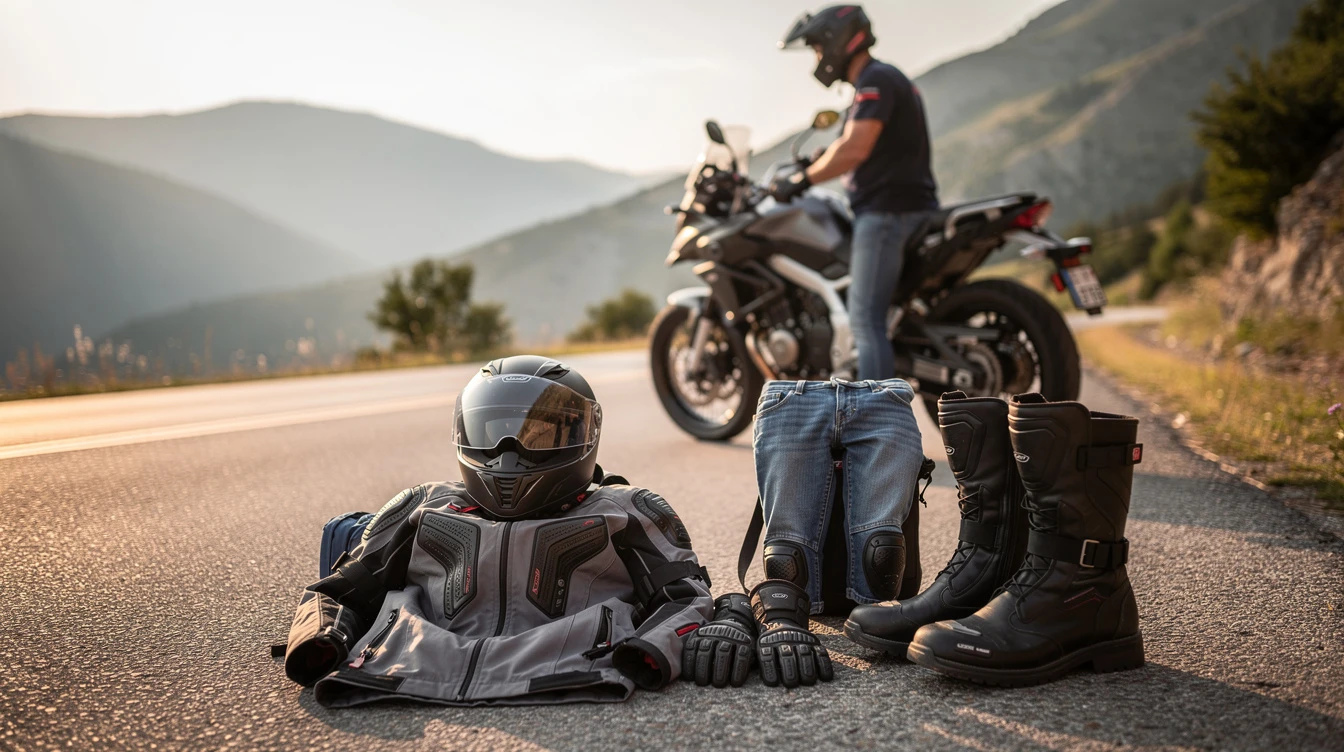
The best motorcycle protective gear is the gear you actually wear, every single ride. That sounds simple, but choosing the right pieces matters enormously. Whether you're a new rider figuring out what to buy first or an experienced commuter looking to upgrade, this guide covers every major gear category, what to look for in each, and why skimping on protection is rarely worth the savings.
Gear doesn't make you a better rider on its own. But paired with solid training, it's one of the most important decisions you'll make. This guide walks through helmets, jackets, gloves, pants, and boots, and explains how each one protects you when things go wrong.
You'll also find a gear comparison table, answers to common questions, and links to deeper resources on riding safety and training. Let's get into it.
Does Motorcycle Protective Gear Really Make a Difference?
Short answer: yes. Significantly. The data on rider injuries consistently shows that unprotected riders face far worse outcomes in crashes than those wearing proper gear. Helmets alone reduce the risk of fatal head injury by nearly 37%, according to the National Highway Traffic Safety Administration. Road rash from even a low-speed slide can mean weeks of recovery without the right jacket and gloves.
Motorcycle protective gear acts as a second skin. When you go down, that gear absorbs the friction, impact, and heat your body would otherwise absorb directly. Abrasion-resistant materials and built-in armor do real, measurable work.
Honest truth: some riders avoid gear because it's uncomfortable or hot. That's a real trade-off. But modern gear has come a long way. Ventilated jackets, perforated gloves, and lightweight helmets make staying protected far more manageable than it used to be. The discomfort of wearing gear doesn't compare to the discomfort of not having it when you need it.
For a deeper look at how safety habits and training connect, the Motorcycle Safety: The Honest Guide Every Rider Deserves is a solid starting point.
What the Research Actually Says About Gear
Studies from the Motorcycle Safety Foundation and independent safety researchers show that riders who wear full protective gear are significantly less likely to suffer serious injuries in crashes. Helmets are the most studied, but jackets with CE-rated armor, reinforced gloves, and ankle-protecting boots all contribute to meaningfully better outcomes.
Wearing gear isn't just about crashes. Protection from debris, insects, wind fatigue, and cold weather keeps you more alert and focused throughout a ride. Fatigue caused by exposure is a real safety factor that's easy to underestimate.
Why Gear Matters More for Daily Commuters
Daily commuting means more exposure time, more intersections, and more chances for a low-speed collision. Motorcycle safety gear that provides the best protection for daily commuting tends to prioritize comfort and practicality without sacrificing impact protection. A jacket with removable armor panels, for example, lets you ride in and take the armor out at the office. You don't have to choose between professional appearance and safety.
The Best Helmet Options and What to Look For
Your helmet is your single most important piece of gear. Full stop. A quality helmet protects your skull, face, and brain from impact forces that would otherwise be fatal or permanently debilitating. Choosing the right one means understanding the certifications, the styles, and the fit.
Ready to register your vehicle?
Join thousands of vehicle owners who use Montana Motorcycle Safety Foundation to handle their registration quickly.
Get started today. →Helmet Certification Standards: DOT, ECE, and SNELL
Three major certification systems tell you whether a helmet has been tested to real safety standards:
- DOT (Department of Transportation), Required for street riding in the U.S. It's the minimum standard, self-certified by manufacturers.
- ECE 22.06, The current European standard. Generally considered more stringent than DOT because it involves independent lab testing.
- SNELL, Independent U.S. certification with rigorous testing. Often used by track riders. SNELL-certified helmets typically exceed DOT requirements.
Look for at least DOT certification. ECE or SNELL adds another layer of confidence. A helmet with all three is thoroughly tested by multiple independent standards.
Full-Face vs. Modular vs. Open-Face Helmets
Full-face helmets offer the most protection. They cover your entire head and face, including the chin, which is involved in a high percentage of helmet impacts. Modular helmets flip up for convenience while offering near-full-face coverage when locked down. Open-face helmets sacrifice chin protection in exchange for visibility and ventilation.
For most riders, especially newer ones, a full-face or modular helmet is the right call. The protection difference is significant, and modern full-face helmets are far more comfortable and ventilated than older designs.
Getting the Right Helmet Fit
A helmet that doesn't fit correctly won't protect you correctly. The shell should sit snugly all around your head without pressure points. It should not move when you shake your head. Always try a helmet on before buying, or know the brand's sizing guidelines thoroughly if buying online. Head shape matters too, oval heads, round heads, and everything in between correspond to different helmet internal shapes.
Motorcycle Jackets: Materials, Armor, and What Works Best
A good motorcycle jacket does two things: resists abrasion if you slide, and holds armor in place to absorb impact. The best jackets do both well without making you miserable in the heat.
Leather vs. Textile Jackets
Leather is the traditional choice and still excellent for abrasion resistance. A quality leather jacket can handle road contact longer than most textiles before wearing through. The downside is heat and lack of weather versatility.
Textile jackets (Cordura nylon, Kevlar blends, and similar materials) have closed the gap significantly. Many high-end textile jackets offer abrasion resistance close to leather while adding waterproofing, ventilation, and lighter weight. For daily riders or those in variable climates, textile often wins on practicality.
CE Armor Ratings for Impact Protection
Built-in armor is what absorbs impact energy in a crash. CE ratings tell you how well the armor performs:
- CE Level 1, Meets minimum impact force standards. Adequate for most street riding.
- CE Level 2, Higher protection, typically used in back protectors and premium shoulder/elbow armor. Recommended for frequent or higher-speed riding.
Look for CE-rated shoulder and elbow armor at minimum. A back protector, either built in or added separately, is worth the investment. Back injuries are among the most severe in motorcycle crashes.
What to Look for in a Commuter Jacket
For daily commuting, prioritize: CE Level 1 or 2 armor at shoulders, elbows, and back; a waterproof liner or shell; and ventilation zippers for warmer days. Reflective panels improve visibility in low-light conditions, which matters a lot in city traffic. Some riders who take a Motorcycle Safety Foundation course are surprised to learn just how much gear choice comes up in rider training discussions.
Gloves, Pants, and Boots: The Overlooked Pieces That Matter
Riders often invest in a helmet and jacket and then buy minimal gloves and street-legal boots. That's understandable from a budget perspective, but your hands, legs, and ankles are extremely vulnerable in a crash. These pieces fill real gaps.
Motorcycle Gloves: Why Your Hands Are Always First Down
Your hands go out instinctively when you fall. Bare hands on asphalt at 30 mph means severe road rash. Motorcycle-specific gloves have reinforced palms, knuckle protection, and abrasion-resistant materials that regular gloves simply don't offer.
Look for gloves with CE-rated knuckle armor and wrist closures that keep the glove in place during impact. Short cuffs work for warm weather. Gauntlet-style gloves that extend over the wrist are better for cold or rain. For riding in cold weather, the Cold Weather Riding guide covers layering and gear selection in detail.
Motorcycle Pants: Protection Below the Waist
Riding jeans with Kevlar lining are the most popular compromise between everyday appearance and basic protection. Dedicated motorcycle pants with built-in CE knee and hip armor offer more. For aggressive riding or touring, armored overpants worn over regular clothes are a practical option.
Knee and hip impacts are common in crashes. Unprotected, these injuries often involve fractures, deep abrasions, and long recovery periods. Gear here is relatively affordable and genuinely effective.
Motorcycle Boots: Ankle Support When It Counts
Ankle injuries are among the most common in motorcycle crashes. Standard footwear provides almost no lateral support when the foot gets pinned or twisted on impact. Dedicated motorcycle boots have reinforced ankle cups, oil-resistant soles, and toe protection built in. They don't have to look aggressive, touring boots and urban riding boots are available in styles that pass as regular footwear.
At minimum, wear boots that cover and support your ankle on every ride. Flip-flops and sneakers on a motorcycle are a decision you're likely to regret. The Riding Smart article on ignoring gear covers this in more detail with real-world context.
Motorcycle Protective Gear Comparison Table
Here's a side-by-side look at the major gear categories, protection levels, and what to prioritize:
| Gear Type | Primary Protection | Key Feature to Look For | Minimum Standard |
|---|---|---|---|
| Helmet | Head, skull, brain, face (full-face) | Full-face coverage, proper fit | DOT certified; ECE or SNELL preferred |
| Jacket | Arms, shoulders, back, chest | CE-rated armor at shoulders, elbows, back | CE Level 1 minimum; Level 2 recommended |
| Gloves | Hands, knuckles, wrists | Reinforced palm, knuckle armor, wrist closure | CE-rated knuckle protection |
| Pants | Knees, hips, thighs | CE-rated knee and hip armor or Kevlar lining | CE Level 1 knee/hip armor |
| Boots | Ankles, feet, toes | Ankle cup, oil-resistant sole, toe protection | Over-ankle coverage, dedicated motorcycle design |
| Hi-Vis Vest or Reflective Gear | Visibility to other drivers | Reflective panels, bright colors | High-visibility design, especially for night/commute |
Gear and Training: Why One Without the Other Falls Short
Gear protects you when things go wrong. Training helps make sure things go wrong less often. The two work together, and experienced riders know it. The Motorcycle Safety Foundation Basic Rider Course teaches situational awareness, braking technique, and hazard recognition skills that gear alone can't give you.
Riders who've completed formal training also tend to be more consistent about wearing gear. There's something about learning how crashes happen that makes you take protection more seriously.
What a Safety Course Teaches You About Gear
Most structured rider courses cover gear selection as part of their curriculum. Instructors typically walk through what each piece does, why it matters, and what minimum standards look like. If you've recently passed your course and are wondering what comes next, the post MSF Course FAQ: Everything You Need to Know answers many of the questions riders have after completing training.
Defensive Riding and Gear as a Combined Strategy
The best protective gear doesn't replace good defensive riding habits. Looking ahead, maintaining proper following distance, scanning for hazards, and riding within your skill level all reduce the chance you'll need that gear. But if you do go down, your gear is what stands between you and serious injury. Think of it as the final layer of a strategy that starts with solid riding skills.
For practical defensive riding techniques, the Essential Facts and Everyday Riding Tips guide has useful, specific guidance.
Also worth knowing: the 10 Common Mistakes to Avoid When Riding a Motorcycle lists gear-related errors alongside riding errors, because both categories contribute to outcomes.
Frequently Asked Questions About Motorcycle Protective Gear
What motorcycle safety gear provides the best protection for daily commuting?
For daily commuting, a full-face or modular helmet with DOT/ECE certification is the starting point. Pair it with a textile jacket featuring CE-rated armor, waterproofing, and ventilation. Reinforced gloves, ankle-protecting boots, and riding pants or armored jeans round out a commuter setup. Prioritize gear that you'll actually wear consistently over gear that's theoretically better but uncomfortable enough to skip. Reflective panels on your jacket or vest are especially important for commuting in low-light conditions.
Does motorcycle safety gear really make a difference in a crash?
Yes, meaningfully. Helmets reduce fatal head injury risk by nearly 37% according to NHTSA research. Abrasion-resistant jackets and pants prevent or significantly reduce road rash. CE-rated armor absorbs and distributes impact energy that would otherwise go directly into your body. The difference between gear and no gear in a real crash isn't marginal. Riders who wear full gear consistently report far better outcomes from incidents that would have been far more serious without protection.
What is usually covered in a motorcycle safety course regarding gear?
Most structured motorcycle safety courses, including those aligned with the Motorcycle Safety Foundation, cover the basics of appropriate protective gear as part of rider preparation. Instructors discuss helmet certification standards, the importance of full coverage, and why each gear category matters. Some courses require specific gear for the riding portion. You can find a course near you by checking How to Find a Motorcycle Safety Course Near You.
How much should I spend on motorcycle protective gear?
You don't need to spend a fortune to get decent protection, but budget gear often cuts corners on certification, materials, or construction. A reasonable starting budget for a new rider: $200, $400 for a quality helmet, $150, $300 for a jacket with real armor, $50, $100 for gloves, $100, $200 for boots, and $80, $150 for armored pants or riding jeans. That's roughly $600, $1,100 for a solid full-kit setup. Used gear can lower costs but always check helmets carefully, a helmet that's been in a crash may look fine but have compromised protection.
Can I wear regular clothes under my motorcycle gear?
Yes, and most riders do. Motorcycle jackets and pants are designed to layer over regular clothing. Some riders in hot weather wear a mesh jacket directly over a t-shirt. The key is that your protective outer layer, with its armor and abrasion-resistant materials, is what does the work. Regular jeans and a jacket without reinforcement don't offer meaningful crash protection on their own, regardless of what you layer underneath them.
What does motorcycle gear not protect you from?
Gear reduces injury severity significantly, but it has limits. High-speed impacts can still cause serious injury even with full gear. Gear doesn't improve your reaction time, braking distance, or hazard recognition. That's why training and situational awareness matter as much as gear. What a motorcycle safety course teaches you about reading traffic and riding defensively fills the gaps that gear alone can't cover. The two approaches work best together.
Is hi-vis gear worth it for motorcycle riders?
For most riders, especially commuters, yes. A significant number of motorcycle crashes involve drivers who simply didn't see the rider. High-visibility colors and reflective panels make you more noticeable in traffic, dawn and dusk riding, and at night. You don't have to wear a bright yellow jacket if it's not your style, but adding a hi-vis vest over your regular gear costs very little and can make a real difference in how visible you are to drivers around you.
Should I take a motorcycle safety course before or after buying gear?
Most courses require you to arrive with basic gear, so some purchases happen before your first class. At minimum, you'll need a DOT helmet, gloves, a jacket, long pants, and over-ankle boots to participate. After completing training, many riders upgrade their gear as they get a better sense of their riding style and climate. If you're ready to find training options, Searching for Motorcycle Classes Near Me is a good place to start.
Making the Right Gear Decisions Before Your Next Ride
The best motorcycle protective gear covers your head, hands, body, and feet with purpose-built materials rated to real safety standards. A certified helmet, an armored jacket, reinforced gloves, riding pants, and motorcycle boots form the foundation. Every piece has a job. None of them are redundant.
Gear works best when it's worn consistently, fits correctly, and meets current certification standards. Pair that with ongoing skill development through structured rider training, and you've covered both sides of the safety equation: what you wear and how you ride.
The Top 7 Indispensable Motorcycle Safety Tips and the Most Dangerous Motorcycle Safety Myths Riders Still Believe are both worth reading as next steps. Because knowing what gear to wear and knowing how to ride with it, that combination is what actually keeps you on the road.