
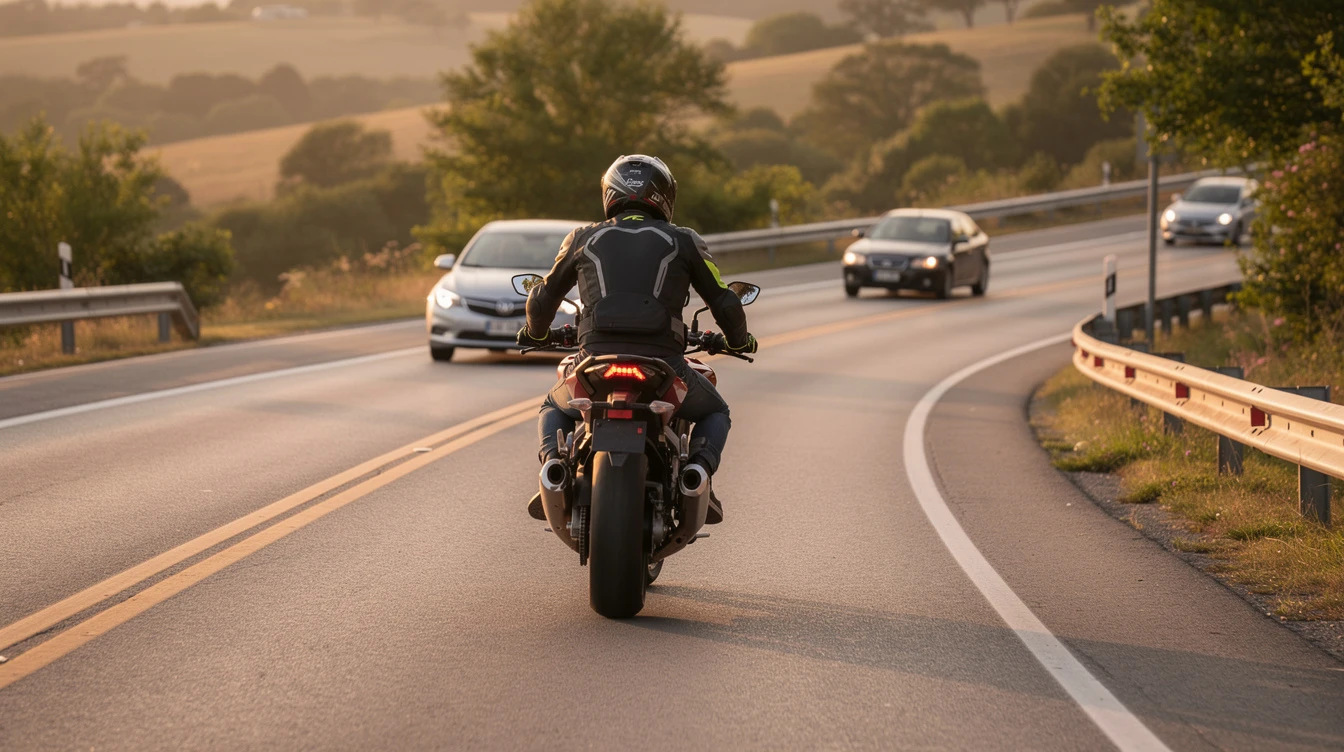
Defensive driving techniques for motorcycle safety aren't optional extras. They're what separates riders who stay upright from those who end up with a crash story. The road doesn't care how experienced you are, and other drivers definitely aren't watching out for you. So you have to watch out for yourself.
This guide breaks down the most effective defensive riding habits, backed by real-world application and rider safety education. You'll learn how to manage your space, read road conditions, use your gear properly, and build the mental habits that keep you out of trouble before it starts.
Whether you're brand new or you've been riding for years, these techniques apply every single ride.
What Defensive Driving Techniques for Motorcycle Safety Actually Mean
Defensive riding means you're always thinking ahead, not reacting after something goes wrong. A car driver who makes a mistake might dent a bumper. A motorcyclist who reacts too late faces far worse odds. That gap in consequences is exactly why defensive technique matters so much on two wheels.
The core idea is simple: assume other drivers can't see you, and ride as if you're invisible. From that starting point, every other technique follows naturally.
The "Assume You're Invisible" Mindset
This isn't pessimism. It's strategy. Most intersection collisions happen because a car driver looks right at a motorcycle and still doesn't register it as a vehicle. Your brain can use this knowledge. Give yourself extra buffer at intersections. Make eye contact with drivers before proceeding. Never assume a turning car sees you just because you're in its path.
Experienced riders at the Motorcycle Safety Foundation have long taught this mindset as the foundation of all rider safety education. It works because it puts you in control of the equation rather than depending on others to do the right thing.
Why Reaction Time Is Everything
At 45 mph, you're covering about 66 feet every second. A two-second hesitation puts you 132 feet further down the road before you even begin to brake. Defensive riding buys you that time by moving your decision point earlier. You spot the hazard at 300 feet instead of 100, and the math starts working in your favor.
Check out this honest look at motorcycle safety fundamentals every rider deserves to understand before they hit the road.
Space Management: The Single Biggest Lever You Have
Space is your safety cushion. More space equals more time. More time equals more options. It's that direct. Most crashes happen because a rider ran out of space before they ran out of road, and there was nowhere left to go.
Ready to register your vehicle?
Join thousands of vehicle owners who use Montana Motorcycle Safety Foundation to handle their registration quickly.
Get started today. →Following Distance Rules That Actually Work
The standard recommendation is a three-to-four second following distance behind the vehicle ahead. In wet conditions, add at least two more seconds. On gravel, loose surfaces, or at night, push that to six or seven seconds. This feels excessive until the car in front of you panic-brakes and you're grateful for every inch.
There's a practical reason to understand proper following distance behind a motorcyclist, from both sides of the equation. Cars need to give you room, and you need to give the car ahead room. Both matter.
Lane Positioning as a Defensive Tool
Your lane is not a fixed track. You have three positions within any lane, and switching between them is a legitimate safety move. Position yourself where you're most visible to drivers ahead, and where you have the best view of potential hazards. That's usually the left third of the lane for straight roads, which puts you in the driver's mirror line of sight.
Avoid the center strip of a lane, where oil and debris tend to collect. Stay out of blind spots. And read this breakdown of lane splitting, filtering, and riding practices if you want the full picture on lane behavior.
Intersection Strategy
Intersections are where roughly 40% of motorcycle crashes happen. Slow down approaching any controlled intersection, even on green. Check cross traffic before committing. Position yourself where a driver who runs the light would hit the side of your bike rather than you directly. It's a small adjustment with a real survival margin.
Reading Road Conditions Before They Read You
The road surface itself is a hazard. Gravel on a curve, standing water after rain, painted crosswalk markings, metal grates, railroad tracks at an angle. Every one of these changes your traction equation. Defensive riders scan the surface well ahead, not just the traffic.
Spotting Surface Hazards Early
Your eyes should be moving constantly, scanning in a pattern: far ahead, middle distance, near ground, mirrors, repeat. The moment you fixate on one point, you're behind the information curve. Shiny patches on a road usually mean oil or water. Loose gravel on curves is common near unpaved driveways and construction zones. Wildlife is an especially real concern on Montana roads, so check out how to stay safe around Montana wildlife on the road.
Adjusting Speed Before the Corner
The golden rule of cornering: brake before the turn, not during it. Your tires handle braking and turning separately, but doing both at once splits their grip budget. Slow to your safe cornering speed before you lean, then maintain or gently accelerate through the exit. Mid-corner braking is one of the fastest ways to lose the front wheel.
If this is new to you, mastering motorcycle turns at all speeds is a skill worth studying in detail.
Weather and Visibility Adjustments
Rain reduces your traction by 30-40% on average. Cold temperatures stiffen tires and reduce grip before they warm up. Riding at night shrinks your visual range dramatically. Each condition calls for a specific response: increase following distance, reduce speed, improve gear visibility. There's no shame in slowing down. The road will be there tomorrow.
For specific cold-weather riding strategies, see cold weather riding: layering, gear, and staying alert on icy roads.
Gear That Supports Your Defensive Riding Strategy
Protective gear isn't a substitute for good technique, but it's the last line of defense when everything else fails. The right gear also affects your riding quality: a good helmet reduces wind noise and fatigue, proper gloves improve grip feel, and high-visibility gear changes how other drivers perceive you on the road.
What to Wear Every Single Ride
The minimum for any ride: DOT-approved helmet, gloves, jacket with CE-rated armor at shoulders and elbows, boots that cover the ankle, and pants with knee protection. Daily commuters especially need gear that performs across real conditions, not just ideal ones. For a detailed look at what protection is worth prioritizing, read the harsh reality of ignoring gear and pre-ride inspections.
High-Visibility Options and Their Real Impact
Studies consistently show that riders in high-visibility gear are spotted by other drivers at greater distances and in more conditions. Bright yellow, orange, and reflective gear isn't just for beginners. It's a practical defensive tool. If you're on the fence, think of it this way: the rider you can see is the rider who doesn't get hit.
| Technique | Primary Benefit | When It Matters Most |
|---|---|---|
| 3-4 second following distance | More time to react to sudden stops | All conditions, especially wet roads |
| Lane positioning (left third) | Increased visibility to drivers ahead | City streets, multi-lane roads |
| Intersection scanning | Catches cross-traffic threats early | Every controlled intersection |
| Pre-corner braking | Maintains traction through turns | Curves, on-ramps, roundabouts |
| Surface hazard scanning | Early detection of traction threats | Rural roads, after rain, construction zones |
| High-visibility gear | Earlier detection by other drivers | Daily commuting, dawn/dusk, rain |
| Emergency braking practice | Faster, controlled stops in crisis | Sudden pedestrians, animals, hard stops |
Building the Mental Skills That Keep You Safe
Most defensive riding happens in your head before it happens on the road. Situational awareness, hazard prediction, and calm decision-making under pressure are skills, not traits. They can be practiced, and they improve with the right kind of training.
Developing Hazard Prediction Habits
Every time you see a parked car, predict that the door will open. Every time a vehicle is stopped at a side street, assume it might pull out. Kids near the road, dogs on leashes, delivery trucks double-parked, all of these are cues to pre-load a response before you need it. This isn't paranoia. It's pattern recognition, and it's trainable.
Honest question: how often do you ride with zero plan for what you'd do if the car ahead stopped cold? That mental rehearsal is exactly what formal training drills, including those covered in the MSF Basic Rider Course, are designed to build.
What a Motorcycle Safety Course Teaches That Self-Study Cannot
You can read every article on the internet and still miss the muscle memory that a structured course builds. The MSF course combines classroom knowledge with on-bike skill drills specifically designed around defensive riding scenarios. Emergency stops, swerving, hazard avoidance, they're all practiced in a controlled setting before you face them at 60 mph on a public road.
Even among experienced riders who submit documentation for formal programs, odometer compliance is the most common reason paperwork comes back for correction, which tells you that attention to detail, the same skill that makes a defensive rider sharp, matters in every rider-related context (internal data, rolling last 90 days, n=118).
Looking for a course near you? Start with how to find a motorcycle safety course near you and why it's worth the time.
Managing Fatigue and Distraction on Long Rides
Fatigue is a silent performance killer. Your reaction time degrades significantly after two hours of continuous riding, even if you feel fine. Plan stops every 90 minutes on long trips. Stay hydrated. Avoid riding when you'd normally be asleep. Distraction, from passengers, music, or just zoning out, is equally dangerous. Keep your mental focus active by using the scanning habit described above. It gives your brain a productive task and keeps you alert.
Emergency Techniques Every Rider Must Practice Before Needing Them
You won't have time to think in a real emergency. Your body will do what it's been trained to do. That's either a good thing or a very bad one, depending on how much you've practiced.
Maximum Braking Without Locking Up
Most riders significantly under-brake in emergencies because they're afraid of locking the wheel. On a bike with ABS, you can apply full pressure and let the system work. Without ABS, progressive pressure, firm but not sudden, gives you the shortest stopping distance without a skid. Practice this in a parking lot. Often. The muscle memory you build there will function when your brain is in panic mode.
Emergency drills and exercises are covered in detail in this post on emergency preparedness drills that can save your life.
Controlled Swerving to Avoid Obstacles
Braking isn't always the answer. Sometimes swerving is faster and more effective for avoiding a sudden road obstacle. The technique: press the handlebar on the side you want to swerve toward, briefly, to initiate lean. Don't brake mid-swerve. Return to upright after clearing the hazard. This counter-steering response takes practice to do correctly under pressure, which is another reason formal training is worth the weekend.
Frequently Asked Questions About Defensive Driving Techniques for Motorcycle Safety
What is the most important defensive driving technique for motorcycles?
Space management is the single most important technique. Maintaining a three-to-four second following distance and choosing smart lane positions give you the time and room to respond to any hazard before it becomes a crisis. Without adequate space, every other skill becomes harder to apply. Pair this with the "assume you're invisible" mindset and you've covered the two biggest risk factors in most motorcycle crashes.
How does a motorcycle safety course improve defensive riding?
A structured course like the Motorcycle Safety Foundation Basic Rider Course gives you hands-on drills for emergency braking, hazard avoidance, and controlled swerving. These skills are hard to build through road experience alone because real emergencies don't let you practice. A controlled course environment lets you make mistakes and correct them safely, which is how muscle memory actually forms.
What does a motorcycle safety course not teach you?
A formal course teaches the fundamentals, but real-world experience fills in the gaps over time. Courses typically don't cover every road surface condition you'll encounter, the psychological effects of long rides, group riding dynamics, or the specific hazards of your local commute. They're the starting point, not the finish line. After the course, keep building your situational awareness on every ride. Reading about common mistakes new riders make is a good next step.
How should I handle intersections defensively on a motorcycle?
Approach every intersection with reduced speed, even on green. Scan cross traffic left, center, right before committing. Position your bike so a running red light from the side would strike a less critical angle. Cover your brake lever as you enter the intersection. Make eye contact with drivers waiting to turn before you pass in front of them. Intersections account for a disproportionate share of motorcycle collisions, so they deserve that extra second of attention every single time.
What gear best supports defensive riding for daily commuters?
For daily commuting, prioritize a DOT-approved full-face helmet, a textile jacket with CE Level 2 armor at shoulders and elbows, gloves with palm sliders and knuckle protection, and waterproof ankle boots. High-visibility outer layers are especially valuable on commutes where dawn, dusk, and traffic density all combine. The goal is gear that works across conditions, not just the best-case scenario you'd prefer to ride in. See the top motorcycle safety tips every rider should know for a broader breakdown.
How do I stay mentally sharp on long rides?
Stop every 90 minutes, even briefly. Use the scanning pattern, far ahead, middle distance, near ground, mirrors, to keep your brain engaged rather than drifting. Hydration makes a measurable difference in alertness. Avoid riding during hours when you'd normally be asleep. If you feel your attention slipping, pull over. No destination is worth riding mentally checked out. Fatigue-related crashes often happen in the last hour of a long trip, when riders are close enough to feel like they can push through.
Is defensive riding something I can learn on my own?
Partly. You can develop good habits through deliberate practice and study. But there are real limits to self-teaching, especially for emergency techniques like maximum braking and controlled swerving. These require repetition in a controlled setting to wire into muscle memory. A DPS approved motorcycle safety course provides that foundation, and many experienced riders return for advanced courses years into their riding career to sharpen skills they didn't know had faded.
Keep Building Your Defensive Riding Skills
Defensive driving techniques for motorcycle safety work best when they're treated as habits rather than rules. The rider who consistently manages space, scans actively, positions well in the lane, and practices emergency responses is building a skill set that compounds over time. Every ride is practice.
The best next step is pairing these techniques with formal training. A structured course accelerates everything covered in this guide and adds the hands-on muscle memory that reading alone can't build. Find a course near you, ride every day with intention, and treat each trip as a chance to improve.
Ready to take your riding safety to the next level? Get started today and find the training resources that fit your experience level and goals.