
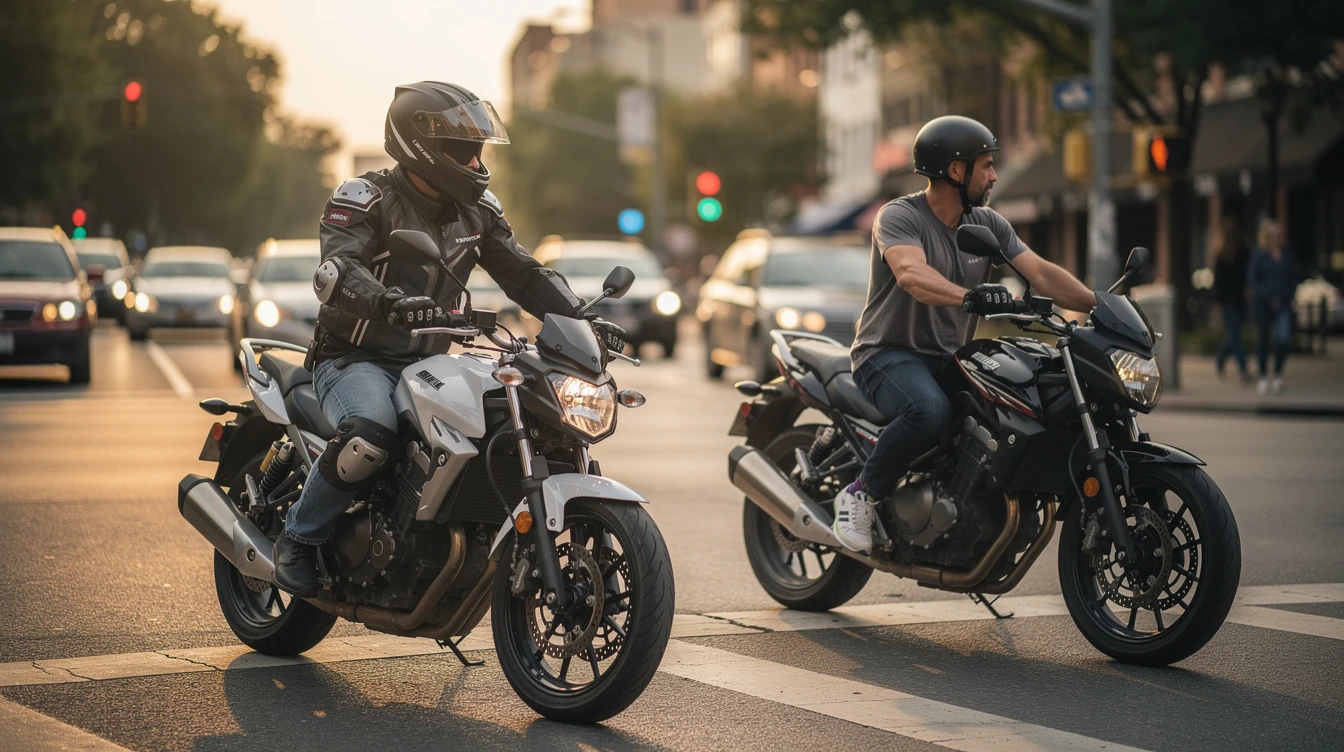
Does motorcycle safety gear really make a difference? The short answer is yes, and the data isn't even close. Riders who gear up consistently walk away from crashes that would otherwise put ungeared riders in the hospital. This article breaks down the evidence by gear type, answers the questions riders ask most, and helps you build a kit that fits your riding style.
You'll find out which pieces of equipment deliver the biggest protection payoff, what gear works best for daily commuting versus weekend rides, and how pairing smart gear choices with solid training gives you the best possible odds on every road.
Honest gear advice ahead. No fluff.
Why Motorcycle Safety Gear Saves Lives: What Research Actually Shows
Motorcyclists are significantly more vulnerable than car occupants in a crash. There's no steel cage, no airbag curtains, and no crumple zones between you and the asphalt. Gear is your first and last line of physical defense.
Studies from the National Highway Traffic Safety Administration (NHTSA) consistently show that helmets reduce the risk of fatal head injury by roughly 37 percent and brain injury risk by 69 percent. Abrasion-resistant jackets and pants reduce road rash severity from a life-threatening injury to a manageable one. Gloves protect the palms and fingers, which absorb enormous force when a rider instinctively reaches out during a fall.
The difference between geared and ungeared riders in crash outcomes isn't marginal. It's the difference between riding home and being airlifted.
What Happens to Your Body Without Gear
Skin loses a fight with asphalt at 30 mph. Even a low-speed slide can strip skin down to muscle in under a second. Without impact-absorbing armor at the hips, knees, and shoulders, the force of a crash transfers directly to joints and bone. A fractured collarbone or shattered kneecap doesn't just end a ride, it can end a season, or a career.
The injuries that seem minor in the moment, road rash, friction burns, split skin, carry serious infection risks. Hospitalization from infection is far more common than most riders expect.
What the Numbers Say About Helmets Specifically
The NHTSA estimates that helmets saved approximately 1,872 motorcyclist lives in a single recent year. They also estimated that an additional 749 lives could have been saved if all riders had worn helmets. That's not a hypothetical. That's a body count tied directly to a choice made before the ride started.
Breaking Down Each Piece of Motorcycle Safety Gear
Not all gear is equal, and not all situations call for the same setup. Here's what each major piece actually does for you.
Ready to register your vehicle?
Join thousands of vehicle owners who use Montana Motorcycle Safety Foundation to handle their registration quickly.
Get started today. →Helmets: Your Most Important Investment
A helmet that fits well and meets DOT, ECE 22.06, or SNELL certification standards is non-negotiable. Full-face helmets offer the most protection, covering the chin and face, which account for a significant portion of impact zones in crashes. Modular helmets offer a reasonable compromise for riders who commute and want ventilation options without losing coverage. Open-face and half helmets reduce protection substantially, particularly to the chin and jaw.
Fit matters as much as certification. A loose helmet that moves during impact fails to do its job. Try it on, shake your head, and make sure it doesn't rotate freely before buying.
Jackets, Pants, and Abrasion Resistance
Leather remains the gold standard for abrasion resistance. A quality leather jacket can survive a slide that would shred denim and skin in less than a second. Textile jackets have closed the gap significantly with modern materials like Cordura and Kevlar blends. Many come with CE-rated armor at the shoulders, elbows, and back, which absorbs and distributes impact force away from joints.
For daily commuting, a textile jacket with waterproof lining is often more practical than leather. You'll actually wear it every day, which is the goal. Gear sitting in your closet because it's uncomfortable or inconvenient protects nobody.
For more on gear choices specific to wet and cold conditions, our post on dressing for unexpected weather covers what to layer and when.
Gloves, Boots, and the Gear Riders Often Skip
Gloves protect the palms, fingers, and wrists. When you fall, your hands reach for the ground before your brain registers what's happening. That reflex is hardwired. Without gloves, that instinct means shredded palms and broken fingers. Motorcycle-specific gloves with palm sliders and knuckle protection absorb that impact instead.
Boots matter more than most new riders realize. Your feet and ankles are your first contact with the bike and the road. A boot that covers the ankle and has oil-resistant soles reduces sprain and fracture risk significantly. Sneakers offer essentially no ankle support in a slide or tip-over.
What Motorcycle Safety Gear Provides the Best Protection for Daily Commuting?
Commuting gear needs to do double duty. It has to protect you on the road and be comfortable and practical enough that you'll actually put it on every single day. The best gear for commuting hits the sweet spot between safety, comfort, and convenience.
Commuter-Specific Gear Priorities
For daily riding, look for a textile jacket with CE Level 2 armor at shoulders and elbows, plus a back protector pocket. Waterproofing is valuable because you won't always see rain coming. Ventilation zips let you adjust for temperature changes during a commute. Riding pants with hip and knee armor are often overlooked by commuters but are critical, since most low-speed urban crashes impact the lower body first.
A modular or full-face helmet with a clear anti-fog visor performs well for commuting in variable light conditions. Fogging kills visibility, and commutes often span dawn and dusk.
Balancing Comfort and Protection on Shorter Rides
Some riders assume that shorter commutes mean lower risk. Urban riding at lower speeds still carries real crash risk, particularly at intersections. The most common commuting crashes happen under 35 mph, exactly the speed range where road rash becomes the primary injury. Gear designed for commuting does not mean reduced protection. It means smarter design for the environment you're riding in.
Our guide on ignoring gear and pre-ride inspections covers the real-world consequences riders face when they cut corners.
Gear Is Half the Equation: How Training Multiplies Protection
The best gear in the world won't help you if a crash is avoidable in the first place. Rider training through programs like the MSF Basic Rider Course teaches hazard perception, emergency braking, and situational awareness that reduce the likelihood of a crash before gear ever needs to do its job.
Why the Motorcycle Safety Foundation basic rider course Matters
The Motorcycle Safety Foundation basic rider course combines classroom instruction with hands-on range exercises. Riders learn proper braking technique, slow-speed control, and how to scan traffic effectively. These aren't just box-checking skills. They're crash-prevention habits that stay with you for years.
Completing an MSF course also typically qualifies riders for insurance discounts, which offsets the cost of quality gear over time. That's a practical win on top of the safety benefit.
How Training and Gear Work Together
Think of training and gear as two separate safety systems. Training reduces the probability of a crash. Gear reduces the severity of injury if one happens anyway. Riders who invest in both give themselves the strongest possible foundation. Neither replaces the other.
If you're ready to find a course, our page on finding a motorcycle safety course near you makes it straightforward to locate options by region.
For riders in Montana specifically, this complete guide to Montana Motorcycle Safety Foundation courses and endorsements covers everything from beginner to advanced training.
Gear Comparison: How Different Equipment Stacks Up
Use this table as a quick reference for what each major piece of motorcycle safety gear protects, the protection level it provides, and how it ranks for daily commuting use.
| Gear Item | Primary Protection | Best Type for Commuting | Protection Level |
|---|---|---|---|
| Full-Face Helmet (DOT/SNELL) | Head, face, chin, jaw | Modular or full-face | Critical |
| Armored Textile Jacket | Shoulders, elbows, back | Waterproof textile with CE Level 2 armor | High |
| Leather Jacket | Abrasion resistance, upper body | Best for highway/touring | High |
| Riding Pants (armored) | Hips, knees, thighs | Textile with CE hip and knee armor | High |
| Motorcycle Gloves | Palms, fingers, wrists | Gauntlet-style with palm sliders | Moderate-High |
| Motorcycle Boots | Ankles, feet, lower leg | Ankle-height with oil-resistant sole | Moderate-High |
| Base Layer / Mesh Suit | Abrasion, impact distribution | Worn under regular clothes in warm weather | Moderate |
Frequently Asked Questions About Motorcycle Safety Gear
Does wearing a helmet actually prevent death in a motorcycle crash?
Yes. Helmets are the single most effective piece of protective equipment a rider can wear. According to NHTSA data, helmets reduce fatal head injury risk by approximately 37 percent and brain injury risk by 69 percent. Full-face helmets with DOT or SNELL certification offer the best protection. A helmet must fit correctly to work as designed. One that's too loose can rotate or come off during impact, reducing its effectiveness significantly.
Is motorcycle gear worth the cost for casual or occasional riders?
Absolutely. Crash risk doesn't scale with how often you ride. A casual rider can have a serious crash on their first outing of the season. Quality gear is a one-time investment that pays off in injury prevention. Many insurance providers also offer discounts to riders who complete safety courses and wear full gear, which helps offset the upfront cost. Think of it as protective equipment, not optional accessories.
What's the minimum gear a rider should wear every time?
At minimum: a DOT-certified helmet, a jacket with impact armor at elbows and shoulders, gloves, and boots that cover the ankle. Riding pants with knee and hip armor are strongly recommended for any ride longer than a few blocks. The idea that short trips are lower risk is a myth. Most crashes happen close to home at moderate urban speeds, exactly where riders tend to skip gear.
Does gear help in high-speed crashes, or only low-speed ones?
Gear helps across the speed range, but its effectiveness varies. At low and moderate speeds, abrasion resistance and impact armor prevent the majority of common injuries like road rash, fractures, and joint damage. At very high speeds, the physics of the crash become more severe, but helmets, spine protectors, and airbag-equipped suits still meaningfully reduce injury severity. Gear isn't a guarantee, but it consistently improves outcomes at every speed.
What safety gear is required by law for motorcyclists?
Requirements vary by state. Montana requires helmets for riders under 18. Many states have full helmet laws. Regardless of state law, wearing a helmet and protective gear is strongly recommended for all riders at all ages. The honest guide to motorcycle safety on this site covers what gear riders should prioritize regardless of what the law requires in their state.
Can a motorcycle safety course help me become a better gear user?
Yes, and this connection is underappreciated. Courses like the MSF course teach riders not just riding skills but also the importance of proper protective equipment as part of a complete safety mindset. Instructors cover what gear to wear, how it should fit, and why ATGATT (All The Gear, All The Time) is the standard that experienced riders follow. Many riders who complete a course report that they take their gear choices more seriously afterward.
How often should motorcycle gear be replaced?
Helmets should be replaced every five years, or immediately after any significant impact, even if no damage is visible. The foam liner compresses during impact and doesn't recover. Jackets and pants should be inspected regularly for compromised armor, torn seams, or worn abrasion zones. Gloves and boots should be replaced when soles wear thin or structural integrity is compromised. Gear that has survived a crash should be evaluated carefully, as many pieces are designed for single-impact use.
Is expensive gear significantly better than budget options?
Price often correlates with comfort, fit, and material quality, but a budget-friendly DOT-certified helmet still outperforms no helmet by a wide margin. Look for CE armor ratings on jackets and pants rather than relying on price alone. A CE Level 2 rated back protector in a mid-range jacket offers real protection. The key is making sure any gear you buy meets a recognized safety certification standard, not just that it looks the part.
The Bottom Line on Motorcycle Safety Gear
Motorcycle safety gear really does make a difference, and the evidence across decades of crash data backs that up without question. A certified helmet, armored jacket and pants, proper gloves, and ankle-covering boots form a protection system that reduces both the likelihood of serious injury and the severity of injuries when crashes do happen.
Gear works best alongside strong riding skills. Across more than 5,000 completed customer engagements, one pattern holds constant: riders who invest in both quality equipment and structured training report far greater confidence and consistency on the road (internal data, lifetime through current month, n=5,262).
Whether you're gearing up for your first season or rethinking your commuter kit, the right gear and the right training are the two decisions that protect you most. Check out our top motorcycle safety tips for riders at every level, and find a motorcycle safety course near you to put skills behind the gear you wear.