
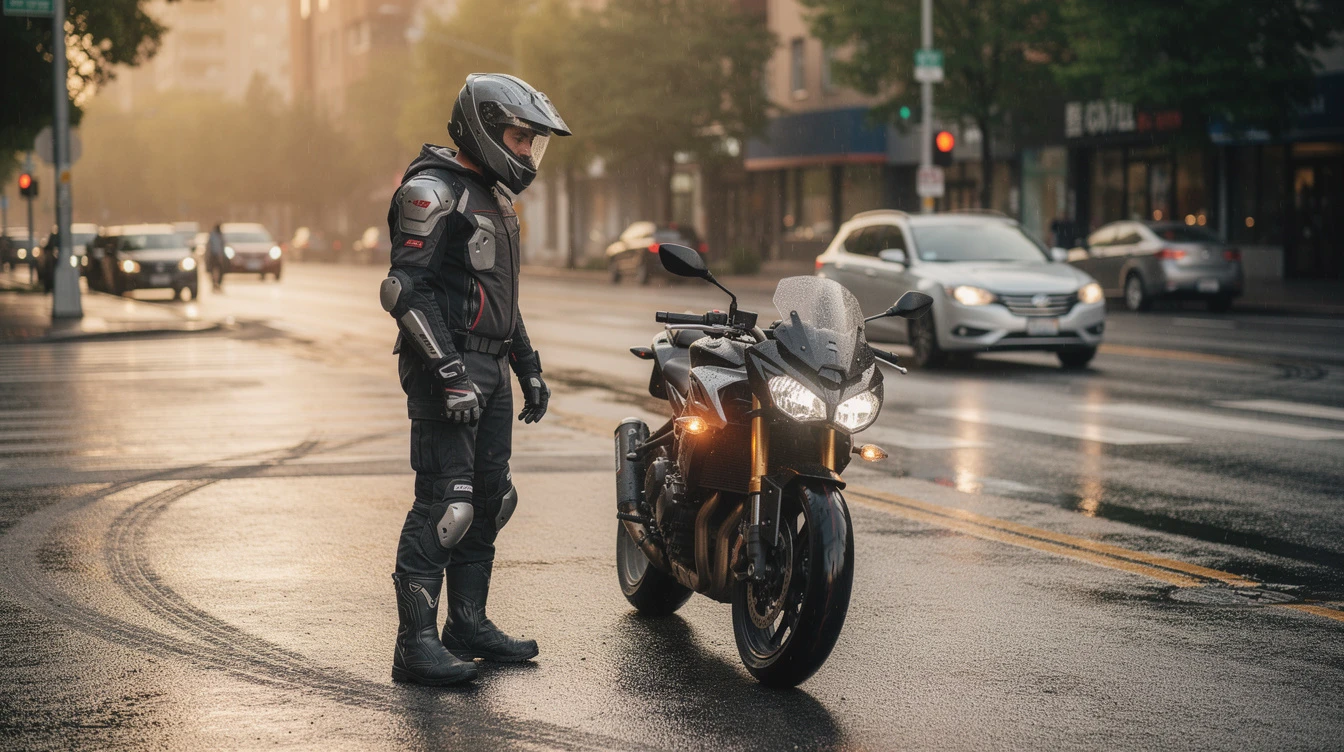
How effective is motorcycle safety gear? Short answer: more than most riders realize. The right gear is the difference between walking away from a crash and spending weeks in a trauma unit. This guide breaks down what each piece of protective equipment actually does, which gear provides the best protection for daily commuting, and why wearing it every ride matters far more than most people think.
You'll also find a gear comparison table, answers to the most common questions riders ask, and links to training resources that pair with good gear to keep you safer on the road. Gear and skills work together. Neither alone is enough.
Let's get into it.
Does Motorcycle Safety Gear Really Make a Difference?
The data is clear and has been for decades. Helmets reduce the risk of fatal head injury by approximately 37%, according to research cited by the National Highway Traffic Safety Administration. Across all gear categories, riders who wear protective equipment consistently sustain fewer severe injuries in crashes compared to those who don't. That's not opinion. That's crash data.
Head injuries are the leading cause of motorcycle fatality. A certified helmet is the single most effective piece of equipment a rider can own. But gear effectiveness doesn't stop at the neck. Road rash from an unprotected slide at even 30 mph can cause permanent nerve damage and deep tissue loss. Jacket abrasion resistance, CE-rated armor at the elbows and shoulders, and reinforced gloves directly reduce those outcomes.
What the Crash Statistics Say About Gear
Studies across multiple countries consistently show that riders wearing full protective gear have significantly lower rates of serious injury. Textile and leather jackets with armor reduce upper-body injuries in low-speed crashes by a measurable margin. Riders in shorts and t-shirts who go down, even in a parking lot at 15 mph, frequently suffer injuries that require skin grafts.
The math is straightforward. Motorcycles offer no crumple zone, no airbags (outside of a few specialized suits), and no steel cage. Your gear is your cage. Choosing not to wear it is choosing to ride without any passive protection at all.
The "It Won't Happen to Me" Problem
Honestly, this is the biggest barrier. Riders who've been riding for years without incident sometimes interpret that as proof they don't need gear. They don't. Crashes don't announce themselves. The majority of motorcycle crashes happen within the first few miles of a trip, often in familiar territory, at speeds riders consider "slow." Gear works precisely in those moments when you're least expecting to need it.
Breaking Down Each Piece of Motorcycle Safety Gear
Not all gear provides equal protection. Here's a plain-English breakdown of what each item does and where it matters most for riders commuting daily or riding on weekends.
Ready to register your vehicle?
Join thousands of vehicle owners who use Montana Motorcycle Safety Foundation to handle their registration quickly.
Get started today. →Helmets: Your Most Important Investment
A DOT-certified or ECE 22.06-rated full-face helmet is the gold standard. Full-face designs protect the chin bar, which takes impact in a significant percentage of motorcycle crashes. Half-helmets and novelty helmets may meet minimum legal requirements in some states, but they leave the face and jaw completely unprotected.
Look for helmets rated by SNELL or with ECE 22.06 certification alongside DOT. These standards test for multiple impact points and penetration resistance. Fit matters as much as rating, a helmet that moves on your head during a crash fails at its only job. Replace any helmet after a significant impact, even if it looks fine externally. The foam liner compresses on impact and won't protect you a second time.
Jackets, Gloves, and Boots: The Armor Beneath the Surface
A quality riding jacket does two things: it resists abrasion if you slide, and it contains CE-rated armor at the elbows, shoulders, and optionally the back. CE Level 1 armor absorbs a meaningful amount of impact energy. CE Level 2 absorbs significantly more. Back protectors rated to CE Level 2 are worth the upgrade for any rider who commutes regularly.
Gloves matter more than most new riders expect. Humans instinctively put their hands out during a fall. Without reinforced gloves, your palms absorb the full force of road contact. Riding gloves with palm sliders and knuckle protection reduce fractures and deep abrasions in those falls significantly.
Boots protect your ankles, which are among the most frequently injured body parts in motorcycle crashes. A proper riding boot has a stiff ankle support structure, oil-resistant soles, and toe reinforcement. Regular sneakers offer essentially no lateral ankle protection.
What Motorcycle Safety Gear Provides the Best Protection for Daily Commuting?
Daily commuting gear needs to balance protection with wearability. You're putting it on every morning, sometimes in heat, sometimes in rain. The best gear for commuting is the gear you'll actually wear consistently. Here's how to think through each category.
Gear Selection for All-Weather Commuting
For commuters, a textile jacket with ventilation zips is often more practical than leather. Modern textiles use materials like Cordura or ballistic nylon that resist abrasion nearly as well as leather while being lighter and more breathable. A waterproof liner you can zip in and out adds year-round versatility. Our post on dressing for unexpected rain covers this in more depth.
For hot-weather commuting, mesh jackets with CE armor in the panels are the best option. They move air effectively while keeping your armor in place. Pair them with a base layer to add a small additional abrasion layer underneath. You can also read our tips on riding safely in extreme heat to plan your full summer kit.
Riding Pants: The Most Skipped Piece of Gear
Legs are statistically among the most frequently injured body parts in motorcycle crashes. Yet riding pants are the piece of gear most riders skip. Textile or leather pants with CE-rated knee and hip armor provide significant protection in side impacts and slides. Overpants that go over work clothes are a practical solution for commuters who don't want to change at the office.
If you ride in cold weather, layered gear under proper riding pants is a much safer choice than relying on cold to slow you down. Our cold weather riding and layering guide covers this topic in detail.
Gear Effectiveness Comparison Table
Here's a quick reference of what each gear category protects, what to look for in ratings, and how much protection it typically provides in common crash scenarios.
| Gear Item | Primary Protection | Key Rating/Standard | Protection Level |
|---|---|---|---|
| Full-Face Helmet | Head, brain, chin, face | DOT, ECE 22.06, SNELL | Very High |
| Half/Open-Face Helmet | Top and sides of head only | DOT minimum | Moderate |
| Riding Jacket (with armor) | Upper body, elbows, shoulders | CE Level 1 or 2 armor | High |
| Riding Pants (with armor) | Knees, hips, thighs | CE Level 1 or 2 armor | High |
| Riding Gloves | Palms, fingers, knuckles | EN 13594 glove standard | Moderate-High |
| Riding Boots | Ankles, feet, lower leg | CE EN 13634 | High |
| Back Protector (standalone) | Spine, lower back | CE Level 2 | Very High |
| Hi-Viz Vest or Gear | Visibility to other drivers | ANSI/ISEA 107 | High (passive) |
How Training Multiplies the Value of Your Safety Gear
Gear reduces injury severity when a crash happens. Training reduces how often crashes happen. The two aren't competing priorities, they multiply each other. A rider with good skills and good gear is far safer than a rider with either one alone.
The MSF Basic Rider Course teaches crash avoidance skills, braking technique, and hazard recognition that genuinely lower your crash risk. Riders who complete formal training make better decisions in the moments before a situation becomes a crash. That's where gear and training intersect, training keeps you out of situations where gear has to save your life.
What a Safety Course Teaches You About Gear
Many riders are surprised to find that gear is covered explicitly in formal motorcycle training. The Motorcycle Safety Foundation Basic Rider Course covers proper gear selection as part of its curriculum. You'll learn what to look for in helmets, how to check fit, and why all-the-gear-all-the-time (ATGATT) is a mindset, not just a checklist.
If you haven't taken a course, finding one is easier than most riders expect. Check out our guide on how to find a motorcycle safety course near you to locate a course in your area. Many states offer discounts or reimbursements for completing an MSF-affiliated course.
Gear Confidence and Rider Confidence Go Together
There's a psychological side to gear that's easy to overlook. Riders who wear full protective gear consistently report feeling more confident on the road. That confidence isn't false, it comes from knowing you've reduced your risk. Over the course of thousands of customer interactions at Montana Motorcycle Safety Foundation, the pattern holds: riders who take safety seriously across multiple dimensions, gear, training, and awareness, tend to stay on the road longer (internal data, lifetime, n=5,262).
You can also look at our broader resource on motorcycle safety for every rider to get the full picture of how gear fits into a complete safety approach.
Common Gear Mistakes That Reduce Protection
Wearing gear and wearing gear correctly are two different things. These are the mistakes that show up most often, even among experienced riders.
Buying Gear That Doesn't Fit
A helmet that's too loose will rotate on impact, exposing areas it should protect. A jacket with armor pockets that sit at the wrong height won't cover your elbows in a fall. Fit is not a secondary concern. It's built into how every piece of gear is engineered to function. Try gear on before you buy it. Armor should sit on the joint it's rated to protect, not several inches away.
Skipping Gear "Just for Short Trips"
This is the most common and most dangerous habit in riding. The majority of motorcycle crashes happen close to home, on familiar roads, at speeds riders consider low-risk. "Just running to the gas station" is exactly the kind of trip where gear matters. If you're on the bike, you're in gear. Full stop.
Our post on the harsh reality of ignoring gear and pre-ride inspections goes into the real-world consequences riders face when they skip this step.
Frequently Asked Questions About Motorcycle Safety Gear Effectiveness
Does motorcycle safety gear really make a difference in serious crashes?
Yes, significantly. Helmets reduce fatal head injury risk by approximately 37%, and full protective gear including jackets, gloves, pants, and boots consistently reduces injury severity across crash types. No gear eliminates all injury risk in high-speed crashes, but it dramatically changes outcomes at the speeds most motorcycle crashes occur, under 45 mph in real-world data. The difference between a rider who walks away and one who doesn't frequently comes down to what they were wearing.
What motorcycle safety gear provides the best protection for daily commuting?
For daily commuting, prioritize a full-face helmet with a current safety certification, a textile jacket with CE Level 2 armor at elbows and shoulders, riding pants with knee and hip protection, reinforced riding gloves, and ankle-protecting boots. Textile gear with removable liners handles weather changes well. Mesh jackets work for summer heat while keeping armor in place. The best commuting gear is the combination you'll actually wear every day.
Is expensive gear always better than budget gear?
Not always, but price often reflects materials and certifications. A budget helmet that meets ECE 22.06 or DOT standards is meaningfully safer than an expensive novelty helmet that doesn't. Look for certifications first, then evaluate fit and comfort. CE armor ratings are on labels, a Level 2 rating on an affordable jacket gives you real protection. Don't assume a high price means better safety. Check the certifications instead.
How often should I replace my motorcycle safety gear?
Helmets should be replaced every 3-5 years under normal use, or immediately after any significant impact. The foam liner degrades over time even without crashes. Jackets and pants last longer but check stitching, zippers, and armor integrity regularly. Gloves wear out at the palms and should be replaced when abrasion protection thins. Boots can last many years with good care. Always replace gear after a crash, armor is single-use in most cases.
Does wearing gear affect how other drivers see you on the road?
High-visibility gear genuinely improves how visible you are to other drivers. Bright colors, reflective panels, and hi-viz vests increase conspicuity, particularly at dusk and dawn when visibility conditions are worst. Studies on rider conspicuity consistently find that bright gear reduces the likelihood of other drivers not seeing you before a turn or lane change. Black gear looks sharp, but adding even one hi-viz element to your kit improves your passive visibility significantly.
What's the minimum gear I should wear on every ride?
At minimum: a certified helmet, riding gloves, and sturdy boots. Ideally, add a jacket with armor and riding pants. No piece of gear is completely redundant. Each protects a specific body region that other gear doesn't cover. Think of it as layers of protection, not a binary choice. More gear means more protection. The ATGATT (all the gear, all the time) mindset exists because minimum standards still leave meaningful gaps in protection.
Does taking a motorcycle safety course help me use my gear better?
Yes. Courses like the MSF Course cover gear selection, fit, and the mindset behind wearing it consistently. Trained riders also develop crash avoidance skills that reduce the situations where gear has to do its job. Training and gear together create a far stronger safety foundation than either alone. Find a course near you through the motorcycle safety course locator to get started.
Is motorcycle gear required by law?
Helmet laws vary by state. Montana requires helmets for riders under 18. Other states have varying requirements. Regardless of what's required, wearing full protective gear is a personal safety decision with clear evidence behind it. The law sets minimums, your goal should be to exceed them. Review your state's specific requirements and check resources like the top motorcycle safety tips page for a broader view of compliant and smart riding practices.
Motorcycle safety gear works. The research is clear, the crash data is consistent, and the riders who wear full protective equipment every ride give themselves a real advantage when things go wrong. Pair that gear with proper training from a Motorcycle Safety Foundation-affiliated program, build smart riding habits, and you're not just better protected, you're a better rider. Get started today.