
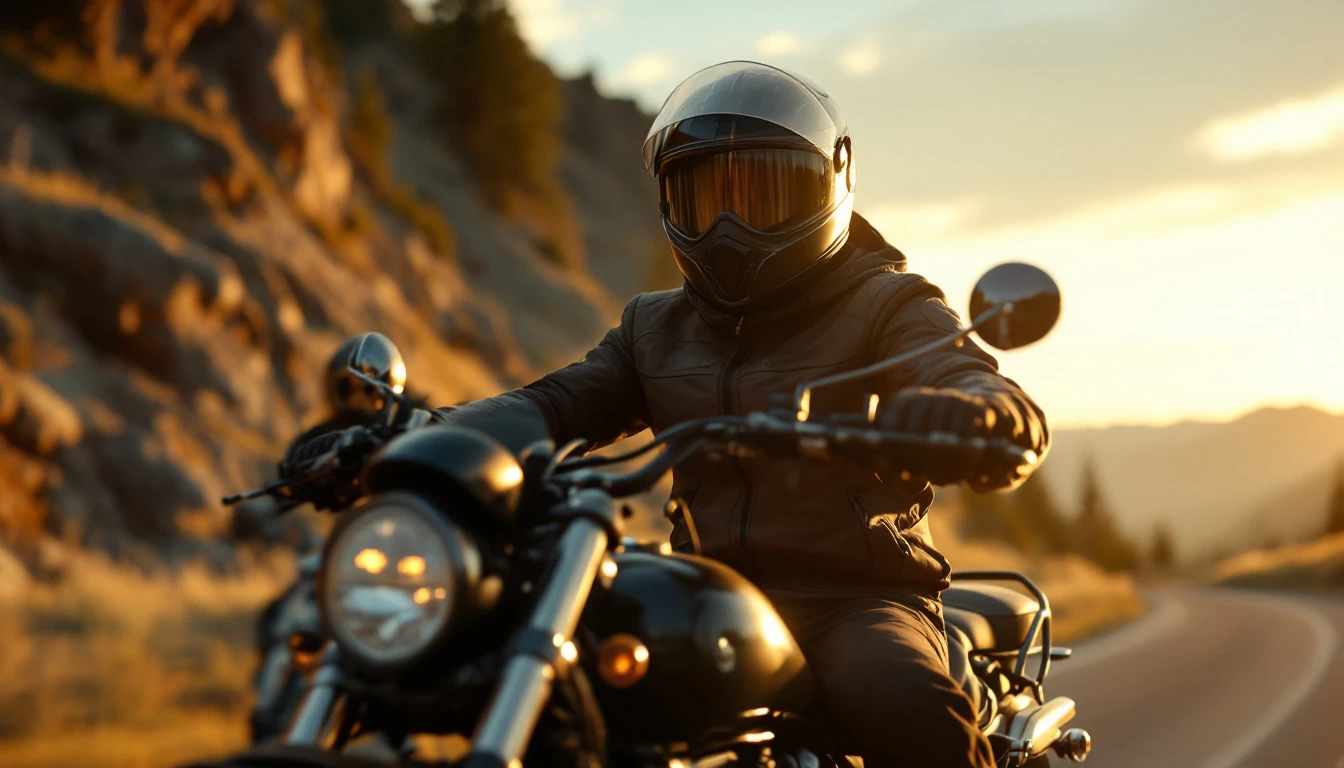

Motorcycle safety equipment has changed dramatically over the past several decades, moving from basic leather and canvas gear to engineered systems that absorb impact, monitor vitals, and even communicate with other vehicles. If you've been riding for a while, the difference is striking. If you're just starting out, you're benefiting from decades of hard-won progress. This article breaks down how each major category of rider gear has changed, what the research shows, and what modern riders should actually be wearing today.
The short version: riders today have access to better protective gear than at any other point in motorcycling history. The longer version is a fascinating look at how safety culture, materials science, and motorcycle training have all moved together to reduce serious injuries on the road.
Understanding this progression also matters for how you approach your own gear choices. Good equipment is only half the equation. The other half is knowing how to ride, and that's where structured training comes in.
How Helmet Technology Has Progressed Over the Past Thirty Years
Early motorcycle helmets, dating back to the mid-20th century, were simple hard shells with minimal liner material. Think of a glorified hard hat. They offered some protection against skull fractures but did very little to manage the rotational forces and deceleration impacts that cause the most severe brain injuries. In the 1970s and 1980s, full-face helmets became more common, and DOT standards in the U.S. began setting baseline performance requirements.
The real leap came with expanded polystyrene (EPS) liner systems, which were refined through the 1990s and early 2000s to better absorb linear impact energy. Brands began layering densities within the liner to handle both high- and low-speed impacts. That was a genuine improvement over single-density foam that either crushed too easily or not enough.
MIPS and Rotational Force Protection
One of the most significant recent advances in helmet design is Multi-directional Impact Protection System (MIPS) technology, along with competing systems from other manufacturers. Traditional helmets were tested primarily for straight linear impacts. But real crashes often involve oblique angles, where the head rotates rapidly on impact. Rotational force is now understood to be a major driver of concussion and traumatic brain injury. MIPS and similar systems add a low-friction layer inside the helmet that allows the shell to rotate slightly relative to the head, reducing the rotational forces transferred to the brain. Many modern helmets, including those that meet ECE 22.06 certification (the current European standard and increasingly a benchmark globally), are tested for rotational performance.
Smart Helmet Features and Connectivity
Helmets available now can include integrated Bluetooth communication, heads-up display (HUD) systems, emergency SOS beacons, and built-in camera mounts. Some high-end models include sensors that detect a crash and automatically alert emergency contacts. These aren't gimmicks, they're extensions of the same principle that drove earlier helmet development: reduce the consequences of a crash and improve rider situational awareness before one happens.
The Transformation of Protective Riding Jackets and Body Armor
Early riding jackets were thick leather, which offered abrasion resistance but almost nothing in terms of impact protection. Padding was minimal, typically stuffed into shoulder areas, and offered little energy absorption. Leather remains a valid abrasion-resistant material today, but the inside of a modern jacket looks completely different.
Ready to register your vehicle?
Join thousands of vehicle owners who use Montana Motorcycle Safety Foundation to handle their registration quickly.
Get started today. →CE-rated armor became the standard benchmark through the 1990s and into the 2000s. CE Level 1 and Level 2 ratings gave riders a way to compare the impact absorption of armor inserts across different brands. Level 2 armor, which absorbs significantly more energy, is now recommended for high-risk zones: shoulders, elbows, knees, hips, and the back.
Airbag Vests and Integrated Airbag Jackets
Perhaps the most dramatic innovation in body protection over the past two decades is the motorcycle airbag. Tethered airbag vests, which use when the rider is separated from the bike, have been available since the early 2000s. But recent years have brought fully electronic, sensor-driven airbag systems built directly into jackets and suits. These systems use accelerometers and gyroscopes to detect crash signatures in milliseconds and use airbags protecting the chest, back, shoulders, and hips before the rider even hits the ground. The technology was initially limited to professional racing, but it's now available to everyday street riders at increasingly accessible price points.
Textile Advancements and All-Season Gear
Modern textile riding jackets combine materials like Cordura, ballistic nylon, and Kevlar weaves to match or exceed the abrasion resistance of leather while adding weather resistance and ventilation. Riders in Montana and across the northern states benefit enormously from gear designed for cold-weather use, with removable thermal liners and waterproofing that didn't exist in practical form until the late 1990s. For a closer look at staying protected in challenging conditions, the post on cold weather riding gear and layering strategies covers what modern textiles can actually do for you.
Boots, Gloves, and Lower-Body Protection Over the Decades
Extremity injuries, hands, wrists, ankles, and feet, are among the most common in motorcycle crashes. For a long time, this category of gear lagged behind helmet and jacket development. Riders wore work boots, sneakers, or basic leather riding boots that offered abrasion resistance but minimal ankle stabilization or impact protection.
Modern motorcycle boots incorporate torsional stabilizers to resist ankle roll, heel and toe reinforcement, and CE-rated ankle armor. Some boots include oil-resistant, slip-resistant soles specifically engineered for the demands of motorcycling. The difference in ankle protection between a 1985 riding boot and a 2024 rated technical boot is significant.
Glove Technology and Palm Protection
The instinct to put your hands out during a fall is nearly impossible to override. That's why gloves matter more than many new riders initially realize. Early riding gloves were basic leather with minimal reinforcement. Modern gloves include carbon fiber or hard plastic knuckle protection, wrist braces or reinforced cuffs, and palm sliders to reduce friction burns. Some incorporate CE Level 1 or Level 2 ratings at the palm and knuckle areas. Touchscreen-compatible fingertips are a modern convenience, but the structural protection is the real story.
Motorcycle Pants and Hip Protection
Riding pants have followed a similar trajectory. Leather pants were the early standard, followed by textile options, and now technically engineered riding pants with CE-rated hip armor pockets and knee sliders built in. Hip fractures are a serious injury risk in motorcycle crashes, and modern riding pants with Level 2 hip armor address this directly. Many riders still skip pants protection, which is one of the more preventable gear gaps in everyday riding.
How Motorcycle Safety Courses Have Kept Pace with Gear Innovation
Better gear helps, but it doesn't replace the skill to avoid a crash in the first place. Over the same decades that saw rapid gear development, structured rider education programs also evolved considerably. The Motorcycle Safety Foundation, established in 1973, has continuously updated its curriculum to reflect new research on rider behavior, crash causation, and protective equipment use.
The Motorcycle Safety Foundation Basic Rider Course now includes instruction on proper gear selection and fit alongside the core riding skills curriculum. Riders learn not just how to operate the motorcycle but how to choose and wear the equipment that protects them. This combination of physical skill and informed gear use is the foundation of what the Motorcycle Safety Foundation actually does for riders.
What a Modern Safety Course Covers Beyond Basic Skills
A current MSF course covers hazard recognition, risk assessment, protective gear requirements, braking technique, and situational awareness. These aren't abstract concepts. They're directly tied to the scenarios that cause the most serious injuries. The course has been refined over decades to reflect what crash data shows actually kills and injures riders. Understanding what's covered helps you appreciate why the training matters as much as the gear you're wearing.
Finding a Course and Getting Started
One of the most common questions new riders ask is simply where to start. Finding a motorcycle safety course near you is easier than it used to be, with courses available across Montana, South Dakota, and most states nationwide. Some states offer subsidized or free courses. The DPS approved motorcycle safety course structure ensures that state-recognized training meets consistent standards. Online preparatory components, like the MSF eCourse, have also made entry into structured training more accessible.
A Decade-by-Decade Look at Key Safety Equipment Milestones
Seeing the progression laid out side by side helps clarify just how much has changed. The table below summarizes the major shifts in protective gear standards and technology across the past several decades.
| Era | Helmet Standard | Body Armor | Boot/Glove Protection | Key Innovation |
|---|---|---|---|---|
| 1970s | Early DOT standards introduced | Leather only, no rating system | Basic leather, no certification | Full-face helmet adoption |
| 1980s | DOT FMVSS 218 refined | Padded leather, no CE standard | Limited ankle support | Snell certification grows in use |
| 1990s | ECE 22.05 introduced in Europe | CE EN 13594 armor ratings arrive | First CE-rated gloves emerge | Textile jackets and Cordura panels |
| 2000s | CE Level 1 and 2 helmet ratings | CE Level 1/2 armor widespread | Ankle stabilizers in riding boots | Tethered airbag vests debut |
| 2010s | MIPS technology introduced | Back protector CE ratings refined | CE-rated palm impact zones | Electronic airbag jackets emerge |
| 2020s | ECE 22.06 (rotational testing) | CE Level 2 armor more affordable | Full extremity protection systems | Smart helmets with HUD and SOS |
The data supports the value of both good gear and good training. Riders who complete structured courses and wear properly rated gear consistently show better outcomes in crash statistics. As part of our work at the Montana Motorcycle Safety Foundation, we see how much knowledge-based gear selection improves rider confidence, not just physical protection. For more on building strong riding habits from the start, the motorcycle safety guide for every rider is a solid next read.
One consistent finding from years of registration and course completion data: riders who engage with structured training tend to take gear selection more seriously. Across the more than 5,000 customer orders our broader rider services network has completed, the riders most likely to ask detailed questions about gear requirements are those who have already completed or enrolled in a safety course (internal data, lifetime through current month, n=5,262). That connection between education and equipment choices is part of what makes rider training so valuable beyond just the riding skills themselves.
What Modern Riders Should Actually Prioritize in Their Gear Choices
With so many options available, it's easy to get overwhelmed. The right approach is to prioritize protection ratings over aesthetics, fit over brand recognition, and layered systems over single-piece solutions. Here's a practical priority order for building a protective kit:
- Helmet: Look for ECE 22.06 or Snell certification. MIPS or equivalent rotational protection is worth paying for. Fit matters more than the brand name on the outside.
- Jacket: CE Level 2 armor at shoulders and elbows minimum. A back protector rated CE Level 2 should be standard, not optional.
- Gloves: CE-rated knuckle and palm protection. Don't skip these because they feel bulky at first.
- Boots: Ankle stabilization and CE-rated ankle armor. Taller boots offer more protection than low-cut options.
- Pants: CE-rated hip and knee armor. This is the most commonly skipped category and one of the most impactful for crash outcomes.
Honest gear guidance is part of what good rider training programs cover. If you're unsure where to start, this breakdown of what happens when riders skip gear and pre-ride checks puts the stakes in plain terms.
Frequently Asked Questions About Motorcycle Safety Equipment Evolution
What was motorcycle safety equipment like in the 1970s compared to today?
In the 1970s, most riders wore basic leather jackets with minimal padding, open-face helmets, and work boots. DOT helmet standards had just been introduced in the U.S., but enforcement and adoption were inconsistent. Today's gear includes CE Level 2 rated armor, helmets tested for rotational force, electronic airbag systems, and certified gloves and boots. The difference in protection level is substantial across every gear category.
What does CE Level 2 armor actually mean for a rider?
CE Level 2 is the higher of two European Conformity armor ratings. It means the armor absorbs significantly more impact energy than Level 1 in standardized testing. For shoulders, elbows, hips, and knees, Level 2 certification indicates the insert has passed more demanding force transmission limits. Many safety professionals recommend Level 2 for any armor in a high-impact zone. It's a concrete benchmark that lets you compare protection across different gear brands.
Are motorcycle airbag jackets worth it for everyday street riders?
The evidence increasingly says yes, especially for highway and commuter riding where impact speeds are higher. Electronic airbag systems, once limited to racing, are now available in street-ready jackets from several manufacturers. They use in 25 to 80 milliseconds depending on the system, typically before the rider contacts the road surface. The cost has dropped significantly over the past decade. For riders logging significant miles, an airbag jacket is no longer a premium curiosity, it's a practical protection upgrade.
How has motorcycle safety progressed in the past thirty years beyond gear?
Beyond gear, motorcycle safety has advanced through improved rider education programs, better crash data collection, anti-lock braking systems (ABS) becoming standard on more bikes, traction control systems, and improved road safety infrastructure. Structured courses like the MSF Basic Rider Course have been continuously updated to reflect crash causation research. The combination of better machines, better gear, and better training has collectively improved outcomes for riders who take advantage of all three.
What should I look for in a modern motorcycle helmet certification?
Look for ECE 22.06 certification, which is currently the most rigorous widely available standard and includes rotational force testing. DOT FMVSS 218 is the U.S. minimum legal standard but sets a lower performance bar. Snell M2020 is another strong independent certification. MIPS or equivalent rotational management technology adds meaningful protection beyond what most certifications test for. Avoid helmets that only claim DOT compliance without additional testing, and always prioritize fit above everything else.
Does taking a motorcycle safety course actually change how riders use their gear?
Yes, consistently. Structured training programs cover gear selection, proper fit, and why each category of protection matters. Riders who complete a course like the MSF Basic Rider Course tend to take gear decisions more seriously because they understand the mechanics of what happens in a crash. Education shifts gear choices from an afterthought to a deliberate part of riding preparation. That shift in mindset is arguably as valuable as the riding skills themselves.
What gear improvements are most important for new riders starting out today?
New riders should prioritize a properly fitted, certified helmet above everything else. After that, a jacket with CE Level 2 shoulder and elbow armor plus a back protector, CE-rated gloves with knuckle protection, ankle-supporting riding boots, and armored riding pants. Don't skip the pants and gloves because they feel like extras. Statistically, hands and lower extremities take significant impact in crashes. Building a complete protective kit from the start builds better habits than gradually adding gear over time.
Motorcycle safety equipment has come a long way from leather caps and canvas jackets. Each decade brought meaningful improvements in materials, testing standards, and protection technology. Today's riders have access to gear that genuinely reduces injury risk at every point of impact. Pairing that gear with solid rider training, including a structured course that covers hazard recognition, braking, and situational awareness, gives you the most complete protection available. If you're ready to take the next step, the resources to find a motorcycle safety course near you are right here.