How much is a motorcycle safety course? The short answer: most riders pay between $50 and $350, depending on your state, the provider, and the type of course. Some states offer them free or heavily subsidized. Others charge full price, with no discount in sight.
This guide breaks down what drives that price range, which courses are worth the money, and where you might pay nothing at all. By the end, you'll know exactly what to budget, what you get for that money, and how to find a course near you.
One thing's certain: the investment is small compared to what proper training actually protects.
What a Motorcycle Safety Course Typically Costs
Prices vary quite a bit across the country, but there's a pattern. The Motorcycle Safety Foundation Basic Rider Course, which is the most widely taken training program in the United States, typically runs between $150 and $350 when paying out of pocket. That range covers both the classroom component and the hands-on range riding.
State-run programs often subsidize costs heavily, sometimes down to $25 or even zero. Private riding schools tend to sit at the higher end of that range, especially when they include motorcycle rentals or multiple range sessions. The Motorcycle Safety Foundation Basic Rider Course is a good baseline to understand what's included before you compare prices between providers.
The MSF Basic Rider Course Breakdown
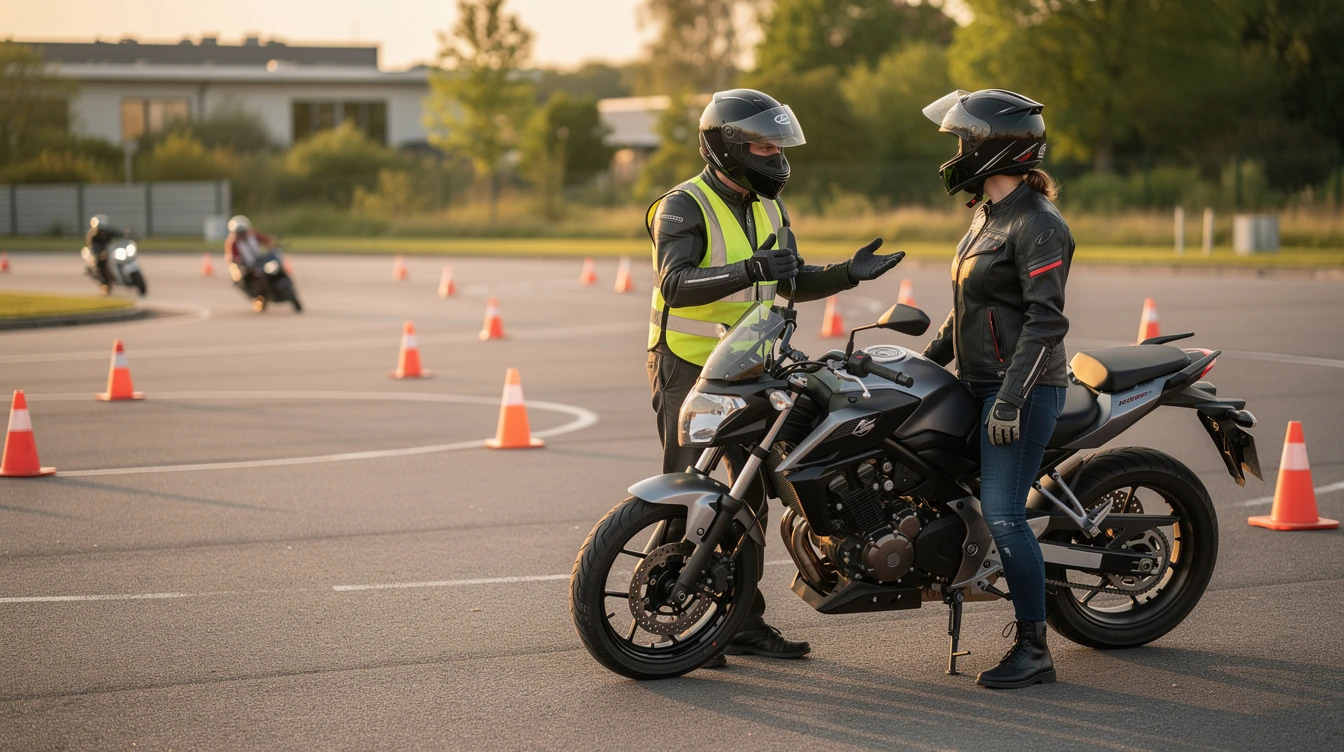
The MSF BRC is the gold standard for new riders. It typically includes about five hours of classroom instruction covering rules of the road, risk awareness, and riding strategy, plus ten hours of hands-on range time where you practice low-speed maneuvers, braking, and turns on a real motorcycle.
Many providers supply a motorcycle for the range portion, which is included in the course fee. That alone saves you the worry of bringing your own bike before you've even developed basic skills. You can read more about what really happens in the MSF Basic Rider Course before committing.
Advanced and Specialty Courses
Beyond the beginner course, there are intermediate and advanced options. The MSF Advanced Rider Course typically costs $50 to $150. Specialty courses, such as off-road riding clinics or DPS-approved motorcycle safety course programs offered through state agencies, may have their own separate fee structures.
Online-only courses, including the DPS approved motorcycle safety course options available in some states, tend to be less expensive, often $20 to $50, but they only cover the knowledge portion. They don't substitute for range training in most licensing contexts.
What Affects the Price of a Motorcycle Safety Course?
Price differences aren't random. A few specific factors push costs up or down depending on where you are and which program you choose.
Ready to register your vehicle?
Join thousands of vehicle owners who use Montana Motorcycle Safety Foundation to handle their registration quickly.
Get started today. →State Funding and Subsidies
Some states fund rider training programs directly through motorcycle registration fees or dedicated safety funds. Montana, for example, has a network of training programs supported through state initiatives. If your state subsidizes rider education, you might pay a fraction of the true cost.
Pennsylvania has historically offered free motorcycle safety courses to residents through its state program. Other states discount the MSF BRC to under $100. Always check your state's motor vehicle division website before assuming you'll pay full price.
Provider Type: Public vs. Private
Community colleges frequently offer the MSF curriculum at lower rates than private riding academies. That's because community colleges often receive state education funding that offsets operational costs. Private schools may charge more but sometimes offer smaller class sizes, more flexible scheduling, or specialized instruction.
Honestly, the curriculum itself is standardized through MSF regardless of where you take it, so the main reasons to choose a pricier provider are convenience and scheduling, not content quality.
Location and Demand
Urban areas with high demand tend to have more providers and more competitive pricing. Rural areas may have fewer options and higher costs per student because classes run with fewer participants. If you're searching for a motorcycle safety course near me, filtering by distance and comparing prices across a few providers can save you money without sacrificing quality.
Are There Free Motorcycle Safety Courses?
Yes, free courses exist, but availability depends heavily on your state. Pennsylvania has offered a no-cost program for residents for years through the PA Motorcycle Safety Program. Several other states, including Ohio, Maryland, and others, offer reduced-cost or subsidized options that can bring your out-of-pocket cost to zero or near zero.
How to Find Free or Low-Cost Courses in Your State
Start with the MSF course locator at msf-usa.org, which lists all affiliated training sites and notes any state-subsidized pricing. Your state DMV website is the other best source. Many state motor vehicle divisions link directly to their rider education program pages, which spell out exactly what residents pay.
Some employers and motorcycle clubs also cover course fees as part of group safety initiatives. Worth asking around before you register.
Online Courses and eCourses
The Motorcycle Safety Foundation offers an eCourse option that covers the knowledge classroom portion online. This is often lower-cost or even free in some states, and it can reduce the total time you spend at a physical site. However, the eCourse alone doesn't satisfy licensing requirements, you still need the range portion to earn your endorsement in most states.
Some states have approved certain online components as substitutes for the in-person classroom session, but this varies. Check your state's specific requirements before assuming an online course is enough to waive your riding test.
Course Cost vs. What You Actually Get
A $250 course fee sounds significant until you weigh it against what comes with it. Most riders who complete a state-approved course receive a completion certificate that waives the DMV riding skills test in many states. That alone saves you scheduling time and test anxiety.
Insurance Discounts After Completion
Many insurance carriers offer discounts of 5% to 15% for riders who complete a DMV approved motorcycle safety course. Over a few years, that discount can more than cover the course cost. Call your insurer before registering to confirm their specific discount and which course formats they accept.
What You Learn That Money Can't Replace
Look, statistics on this are clear: trained riders are significantly less likely to be involved in crashes. The range skills practiced in a motorcycle safety course, emergency braking, swerving, low-speed control, are things most self-taught riders never drill intentionally. That muscle memory sticks. You can read about what really happens when you take a motorcycle safety course and why so many riders wish they'd done it sooner.
| Course Type | Typical Cost Range | Includes Motorcycle? | DMV Test Waiver? |
|---|---|---|---|
| MSF Basic Rider Course (subsidized state) | $0, $100 | Usually yes | Yes, most states |
| MSF Basic Rider Course (private provider) | $150, $350 | Usually yes | Yes, most states |
| MSF Advanced Rider Course | $50, $150 | Bring your own | No (not applicable) |
| Online eCourse only | $20, $50 (or free) | No | No (partial credit only) |
| DPS Approved Course (state-specific) | $0, $150 | Varies | Yes, in applicable states |
| Private riding academy | $200, $500+ | Often yes | Varies by provider |
how to find a motorcycle safety course near you
Finding a course is straightforward once you know where to look. The MSF course locator, your state DMV website, and local community college directories are the three best starting points. Most courses fill up quickly in spring and summer, so don't wait until riding season is fully underway.
Using the MSF Site Locator
The MSF site at msf-usa.org has a zip-code-based search that shows affiliated training providers near you. Each listing typically shows location, contact information, and available course types. You can also check our guide on how to find a motorcycle safety course near you for a step-by-step walkthrough.
Montana-Specific Resources
Montana riders have access to a strong network of training programs. The Montana motorcycle safety courses guide covers available programs, locations, and pricing across the state. Montana's wide geography means planning ahead matters more than it does in densely populated states.
For those working toward a full motorcycle endorsement in Montana, the process and requirements are well documented in our guide on how to get a motorcycle license in Montana.
Frequently Asked Questions
How much does the MSF Basic Rider Course cost?
The MSF Basic Rider Course typically costs between $150 and $350 through a private provider. State-subsidized programs can bring that cost down to $25 to $100, and some states offer the course free to residents. The fee usually includes motorcycle rental for range sessions, classroom materials, and your completion certificate. Check with your state's rider education program for exact pricing in your area.
Is there a free motorcycle safety course available?
Yes, in several states. Pennsylvania has offered a no-cost motorcycle safety course program for residents for many years. Other states, including Maryland, Ohio, and Montana, offer subsidized pricing through state-funded rider education programs. The best way to find free or reduced-cost options near you is to check your state DMV website or search the MSF course locator and filter by price.
Can I take a motorcycle safety course online?
Partially. The MSF eCourse covers the knowledge and classroom portion of the Basic Rider Course online. It's available in many states and may reduce the time you spend at the physical training site. However, the eCourse alone does not satisfy licensing requirements in most states. You'll still need to complete the hands-on range portion with a certified instructor to earn your endorsement or waive the DMV skills test.
Does completing a motorcycle safety course lower my insurance?
In most cases, yes. Many major insurance carriers offer discounts of 5% to 15% for riders who complete a recognized course such as the MSF BRC or a DPS approved motorcycle safety course. Discounts vary by insurer and policy type. Contact your insurance provider before registering to confirm the exact discount they offer and which course formats qualify.
Does a motorcycle safety course waive the DMV riding test?
In the majority of U.S. states, completing a state-approved course like the MSF Basic Rider Course does waive the DMV riding skills test. You typically still need to pass the written knowledge exam and pay the license or endorsement fee. Requirements vary by state, so confirm with your local motor vehicle division before registering to make sure the course you choose qualifies for the test waiver in your state.
How long does a motorcycle safety course take?
The MSF Basic Rider Course is typically completed over one weekend, or spread across a few weekday evenings and one range day. Total instructional time is around 15 hours, split between classroom and range. Advanced courses are shorter, usually four to six hours. Some providers offer intensive formats that compress everything into a single long day, though weekend formats are more common.
Is the motorcycle safety course worth the cost?
For nearly every rider, yes. The course fee is typically offset by insurance discounts within one to two policy years. More importantly, the skills you practice during range sessions, including emergency braking and hazard avoidance, are ones that could prevent a crash. Riders who invest in formal training tend to ride with more confidence and better technique than those who self-teach. The honest guide to motorcycle safety goes deeper on why training matters at every experience level.
What is the MSF eCourse and how much does it cost?
The MSF eCourse is an online version of the classroom portion of the Basic Rider Course. It covers riding theory, risk awareness, and traffic strategies in an interactive format you can complete at your own pace. Cost varies by state, ranging from free in some subsidized programs to around $20 to $50 through private providers. Completing the eCourse before your range day can make the physical training feel more manageable since you'll already know the concepts being applied.
Your Next Step Starts Here
A motorcycle safety course is one of the most practical investments a rider can make. Costs are manageable, often between $100 and $300, and the returns show up in your riding confidence, your insurance bespoke, and your ability to handle real-world situations on the road. Whether you're searching for a subsidized state program or a private provider near you, the right course is out there.
The Montana Motorcycle Safety Foundation is here to help riders at every level find the training, resources, and guidance they need. From understanding what the MSF course involves to finding locations and planning your endorsement path, we've got you covered.
Ready to get started? Reach out through our contact page or browse our full rider resource blog to keep building your knowledge before you hit the range.