Figuring out how to get a motorcycle learners permit is the first real step toward riding on public roads, and the process is more straightforward than most new riders expect. You'll visit your state's motor vehicle office, pass a written knowledge test, and walk out with a permit that lets you practice legally with restrictions. This guide covers exactly what's required, what to expect on the knowledge test, how a motorcycle safety course can skip part of the process for you, and what comes next after you pass.
State requirements vary, but the core steps are consistent across the country. Whether you're in Montana, South Dakota, or anywhere else, the path follows the same basic structure. Get your facts straight now, and you won't waste a trip to the DMV.
One more thing worth saying upfront: getting your permit is just the paperwork side. Building real riding skill is a separate mission, and a structured course makes that part much safer and faster.
What a Motorcycle Learners Permit Actually Is
A motorcycle learners permit, sometimes called a motorcycle instruction permit or motorcycle permit, is a temporary authorization that lets you operate a motorcycle on public roads while you practice for your full endorsement. It's not a full license. It comes with restrictions.
What Restrictions Come With a Permit?
Most states impose a short list of standard restrictions on permit holders. Common ones include:
- No riding at night (often defined as after sunset or after dark)
- No carrying passengers
- No riding on interstates or highways in some states
- Must ride within a certain radius of your home in a few older state codes
Montana specifically restricts permit holders from riding after dark and from carrying passengers. Check your state's motor vehicle division for the exact current rules, since these details do get updated.
How Long Does a Motorcycle Permit Last?
Most permits are valid for six months to one year. In Montana, the motorcycle permit is valid for six months. South Dakota issues a 90-day permit. If yours expires before you complete your road test or endorsement course, you'll have to reapply and retest, so don't let it sit unused.
Is a Permit Required Before Getting a Full Endorsement?
Not always. In many states, including Montana, completing an approved MSF Basic Rider Course waives the requirement to hold a permit first. You can go straight from zero to full endorsement if you complete the course and pass. That's one of the biggest practical reasons riders sign up for training before touching a DMV counter.
Step-by-Step: How to Get a Motorcycle Learners Permit
The process is similar in most states. Here's how it typically works, with Montana specifics called out where they differ.
Ready to register your vehicle?
Join thousands of vehicle owners who use Montana Motorcycle Safety Foundation to handle their registration quickly.
Get started today. →Step 1: Meet the Minimum Age Requirement
Most states set the minimum age for a motorcycle permit at 14 to 16 years old. In Montana, you can get a motorcycle permit at age 14 with a parent or guardian's written consent. South Dakota sets the minimum at 14 as well. If you're under 18, expect to bring a parent or guardian to sign off on the application.
Riders under 16 who complete training in Montana still need parental consent to get the endorsement applied to their license. The endorsement process at 16 has a few extra steps compared to adults, but it's doable.
Step 2: Gather Your Documents
Before heading in, collect the following:
- Proof of identity (valid driver's license or state ID)
- Social Security number (you typically provide this verbally or on a form)
- Proof of residency if you don't already have a license in that state
- Payment for the permit fee (varies by state, typically $5 to $25)
- Parent or guardian signature if under 18
Step 3: Pass the Motorcycle Knowledge Test
The written test covers traffic laws specific to motorcycles, hazard awareness, safe riding practices, and equipment use. In Montana, the Montana motorcycle permit test is based on the Montana Motorcycle Operator Manual. Most states use a similar state-published manual as the study source. The test is usually 25 to 30 multiple-choice questions, with a passing score around 80%.
Study the manual. That's not generic advice. The questions are drawn directly from it, and riders who skip the reading fail at a much higher rate than those who put in a few hours.
Step 4: Pay the Fee and Receive Your Permit
Once you pass, you pay the fee and receive your permit, either printed on the spot or mailed within a few days depending on the state. Montana typically issues a paper permit immediately. You're then authorized to ride under the stated restrictions while you prepare for the road test or skills evaluation.
How a Motorcycle Safety Course Changes the Equation
This is where things get interesting for new riders. Taking a structured rider training program, like the Motorcycle Safety Foundation Basic Rider Course, can change how much of the standard permit process you actually have to complete.
What the MSF Basic Rider Course Covers
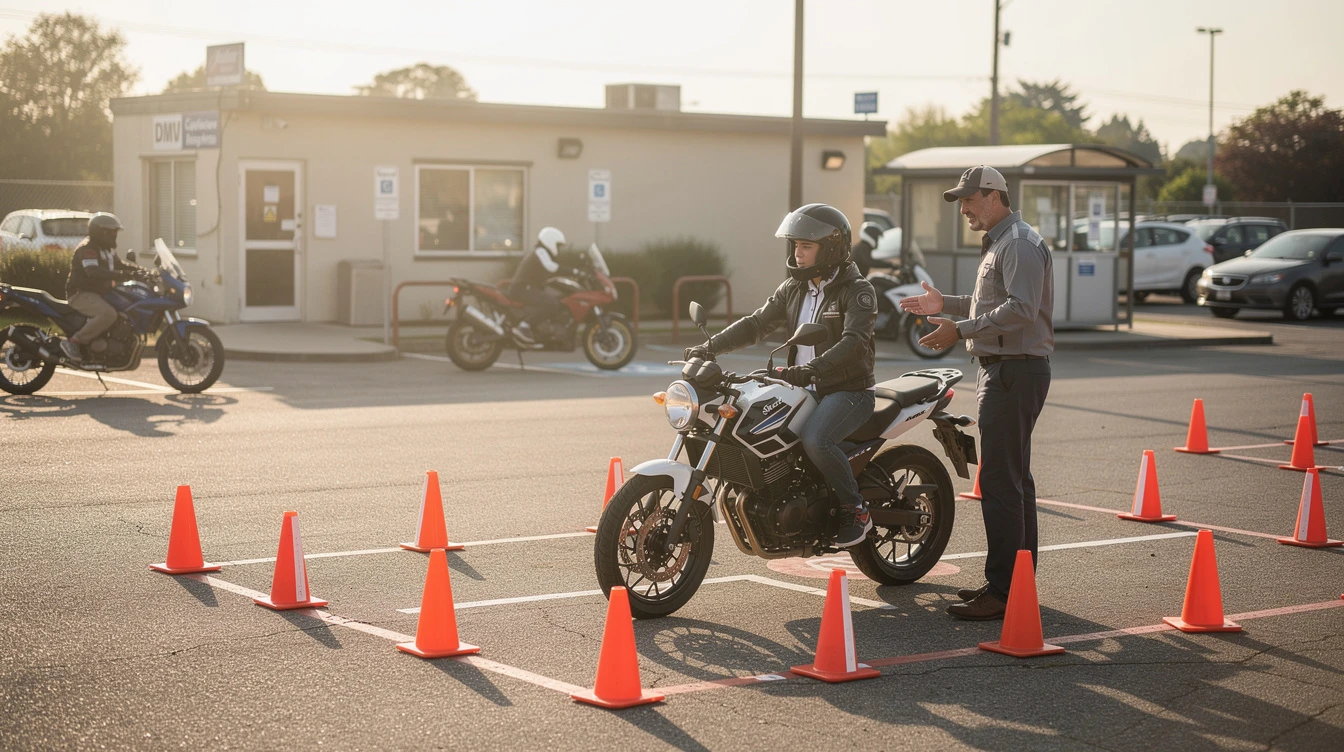
The MSF course is a structured training program that combines classroom or online learning with hands-on range exercises. You cover braking, turning, hazard response, low-speed control, and emergency stops. Motorcycles are typically provided. You don't need your own bike to take it.
The course runs over a weekend, typically about 15 hours total. Many riders describe it as the most useful thing they did as a new rider. Read more about what really happens when you take a motorcycle safety course to know what you're signing up for.
How Course Completion Affects Your License Requirements
In Montana, completing the MSF Basic Rider Course waives the DMV road skills test. You present your completion card at the motor vehicle office, pass the written knowledge test if you haven't already, and get your endorsement applied. No separate skills test. That's a real advantage, especially for riders who get nervous about on-the-spot performance evaluations.
Some insurance companies also reduce premiums for riders who complete a motorcycle safety course near them. Check with your provider before assuming, but the savings are real in many cases.
Finding a Course in Your Area
The Motorcycle Safety Foundation maintains a national course locator at msf-usa.org. You can search by ZIP code to find a motorcycle course near you. Montana has course locations spread across the state, including in Billings, Missoula, Great Falls, and Bozeman. South Dakota has offerings through the state university system and private providers.
Ready to take the next step toward your motorcycle endorsement? Find training and resources through the Montana Motorcycle Safety Foundation.
See How We Can Help With Your Rider Training →Montana vs. South Dakota: Permit Requirements Side by Side
If you're deciding where to get licensed, or you've recently moved, here's a direct comparison of the two states this foundation serves most. For official Montana fee details, see the Montana Motor Vehicle Division.
| Requirement | Montana | South Dakota |
|---|---|---|
| Minimum age for permit | 14 (with parental consent) | 14 (with parental consent) |
| Written knowledge test required | Yes | Yes |
| Permit validity period | 6 months | 90 days |
| Night riding restriction | Yes | Yes |
| Passenger restriction | Yes | Yes |
| MSF course waives skills test | Yes | Yes |
| Approximate permit fee | ~$12 | ~$10 |
| Endorsement added to license | Yes (Class M) | Yes (Class M) |
What Comes After the Permit
Your permit is a starting point, not a destination. Once you have it, the clock is running. Use that time to practice intentionally, take formal training if you haven't already, and prepare for the skills evaluation or endorsement course completion.
Practicing Safely on Your Permit
Stick to the restrictions. Riding after dark on a permit isn't just a ticket risk, it's genuinely more dangerous for a new rider who hasn't built situational awareness yet. Ride in low-traffic areas first. Work on smooth braking, slow-speed turns, and clutch control before taking on highways. These are exactly the skills covered in the MSF Basic Rider Course, and practicing them deliberately shortens your learning curve.
Getting Your Full Motorcycle Endorsement in Montana
After completing your permit period, you have two paths. Take the DMV skills test, which is a controlled evaluation of your ability to perform specific maneuvers. Or complete the MSF Basic Rider Course, which substitutes for that test. Most new riders find the course path less stressful and more educational. The full motorcycle license process in Montana is covered in detail if you want a deeper breakdown of each step.
Motorcycle Safety Resources for New Riders
Getting the permit is the paperwork. Building real skill takes time and intentional practice. The complete motorcycle safety guide on this site covers hazard awareness, gear selection, and risk management in plain terms. Also worth reading: the essential safety tips every new rider should know before their first solo ride.
The Montana Motorcycle Safety Foundation has supported over 5,000 riders through training resources and registration guidance combined, reflecting just how many people take this process seriously and invest in doing it right (internal data, lifetime, n=5,262).Frequently Asked Questions About Getting a Motorcycle Learners Permit
Do I need a regular driver's license before getting a motorcycle permit?
In most states, no. You can get a motorcycle permit without holding a car driver's license first. However, if you don't have a driver's license, you'll typically need to go through the full identification and residency verification process rather than a simple add-on. Montana allows you to hold a motorcycle permit as a standalone credential separate from a standard driver's license, though most adult riders already have one.
How hard is the motorcycle permit knowledge test?
For riders who read the state motorcycle operator manual, the test is straightforward. It's multiple choice, usually 25 to 30 questions, and covers material directly from that manual. Common topics include following distance, lane positioning, alcohol's effect on riding, and what to do in a skid. Riders who don't study tend to find questions surprisingly specific. Put in a few hours with the manual and you'll pass without stress.
Can I ride on the highway with just a motorcycle permit?
This varies by state. Montana does not explicitly prohibit permit holders from using highways, but night riding is restricted. South Dakota and some other states do restrict highway use during the permit period. Check your state's current motorcycle operator manual or motor vehicle division website for the exact current restrictions before riding on any high-speed road.
What happens if my motorcycle permit expires before I get my endorsement?
You'll need to reapply and retake the knowledge test. There's no grace period in most states. If your permit expires, you cannot ride until you have a valid permit or full endorsement. Set a calendar reminder well before your permit's expiration date and schedule your skills test or training course with enough buffer time to avoid the situation entirely.
Does completing a motorcycle safety course really waive the DMV skills test?
Yes, in Montana and in most other states that participate in the MSF program. When you complete the Motorcycle Safety Foundation Basic Rider Course, you receive a completion card that you present to the motor vehicle office. That card serves as your skills test waiver. You still need to pass the written knowledge test if you haven't done so already, but the range evaluation is skipped.
Is there a motorcycle safety course I can take online?
The classroom portion of many courses is available online. The MSF eCourse covers the knowledge component and can be completed at your own pace before the in-person range training. This is useful for riders with busy schedules. The hands-on range exercises cannot be completed online, so you'll still need to show up for those. Search for a motorcycle class near you that offers the blended format if you want to minimize in-person time.
How long does it take to get a full motorcycle endorsement after getting the permit?
That depends entirely on how quickly you complete the required steps. If you take the MSF course within a few weeks of getting your permit, you could have your full endorsement in under a month. If you wait to schedule a DMV skills test, timelines vary by location and appointment availability. Most riders complete the full process from permit to endorsement within one to three months. The beginner's timeline for motorcycle skill development gives a realistic picture of what to expect beyond just the paperwork.
You've got the information. Now take the first step toward your motorcycle endorsement with training and resources built for riders at every level.
Start Your Rider Journey Today, No Hidden FeesYour Next Move After Reading This
Getting a motorcycle learners permit comes down to four things: meeting the age requirement, bringing the right documents, passing a written knowledge test, and paying a small fee. That's it. From there, your permit gives you time to practice and prepare for a full endorsement, and completing a motorcycle safety course near you is the fastest way to reach that goal while genuinely improving your skills on the bike.
Montana and South Dakota both have clear, accessible paths to a motorcycle permit and full endorsement. The Montana Motorcycle Safety Foundation exists to help riders work through that path with confidence. Whether you're brand new to riding or returning after years away, the right training makes every mile safer.