Montana Motorcycle Safety Foundation
Motorcycle Safety: Essential Tips for Every Rider
There’s nothing quite like the freedom of riding a motorcycle — the open road, the wind, and a sense of connection with your surroundings that you simply can’t get inside a car. But that freedom comes with responsibility. Motorcycle safety isn’t just a checklist you run through once; it’s a mindset that experienced riders carry with them every single time they swing a leg over the seat. Whether you’re a brand-new rider just getting your license or a seasoned veteran who’s logged thousands of miles, the fundamentals of staying safe on two wheels are always worth revisiting. In this guide, we break down everything you need to know — from protective gear and pre-ride inspections to road hazard awareness and defensive riding techniques.
Why Motorcycle Safety Matters More Than You Think
Motorcycles account for a disproportionate share of traffic fatalities. According to the National Highway Traffic Safety Administration (NHTSA), motorcyclists are about 24 times more likely than passenger car occupants to die in a crash per mile traveled. That’s a sobering statistic — and it’s not meant to discourage you from riding. It’s meant to make you take safety seriously.
The good news? The vast majority of motorcycle accidents are preventable. Studies consistently show that rider error, lack of protective gear, and failure to anticipate hazards are the leading contributors to motorcycle-related injuries and deaths. That means the power to protect yourself is largely in your hands.
In states like Montana, South Dakota, and across the American West, motorcyclists enjoy some of the most scenic and rewarding riding in the country. Wide open highways, mountain passes, and rural backroads are incredible — but they also present unique challenges, from unpredictable weather to wildlife crossings to loose gravel. Understanding your environment is a critical part of motorcycle safety wherever you ride.
The Right Gear: Your First Line of Defense
Motorcycle safety starts before you ever start the engine. The gear you wear can mean the difference between walking away from an accident and suffering life-altering injuries. Here’s a breakdown of the essential protective gear every rider should own:
- Helmet: This is non-negotiable. A DOT- or ECE-rated full-face helmet provides the best protection for your head and face. Open-face and half helmets offer less coverage but still significantly reduce the risk of traumatic brain injury.
- Jacket: A quality motorcycle jacket — leather or reinforced textile — with CE-rated armor at the shoulders and elbows protects against road rash and impact injuries. Many also include a pocket for a back protector insert.
- Gloves: Your hands are the first thing to hit the ground in a fall. Motorcycle-specific gloves with palm sliders and knuckle protection are essential.
- Pants: Riding pants with built-in knee and hip armor provide critical lower-body protection that jeans simply cannot offer.
- Boots: Ankle injuries are extremely common in motorcycle accidents. Over-the-ankle motorcycle boots with reinforced soles and ankle support can prevent or reduce the severity of these injuries.
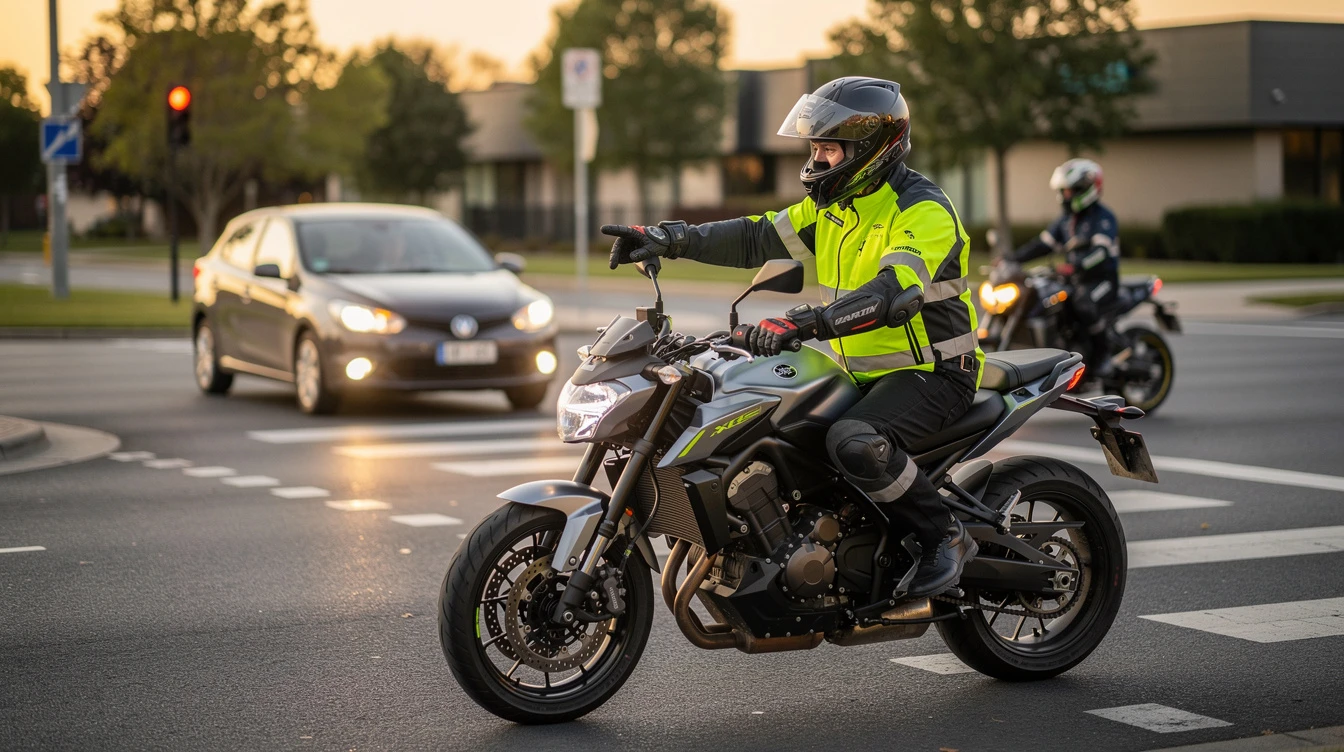
- High-Visibility Gear: Being seen is a huge part of motorcycle safety. Brightly colored gear or reflective accents make you significantly more visible to other drivers, especially in low-light conditions.
Gear Comparison: Protection Levels at a Glance
| Gear Item | Minimum Recommended | Best Practice | Key Certification to Look For |
|---|---|---|---|
| Helmet | DOT-rated half helmet | Full-face DOT/ECE helmet | DOT, ECE 22.06, or SNELL |
| Jacket | Heavy leather jacket | CE Level 2 armored jacket | CE EN 17092 |
| Gloves | Leather work gloves | CE-rated motorcycle gloves | CE EN 13594 |
| Pants | Heavy denim jeans | Armored riding pants | CE EN 17092 |
| Boots | Sturdy ankle-covering boots | Dedicated motorcycle boots | CE EN 13634 |
Pre-Ride Inspection: The T-CLOCS Checklist
One of the most effective motorcycle safety habits you can build is performing a thorough pre-ride inspection every time you ride. The Motorcycle Safety Foundation (MSF) recommends using the T-CLOCS framework as your guide:
- T – Tires and Wheels: Check tire pressure (consult your owner’s manual for the correct PSI), inspect tread depth, and look for any cracks, bulges, or embedded objects. Check that wheel spokes or lug nuts are secure.
- C – Controls: Test your throttle (it should snap back when released), clutch, and both brake levers. Make sure cables aren’t frayed and hoses aren’t leaking.
- L – Lights and Electrics: Confirm that your headlight, taillight, brake lights, and turn signals are all functioning. Check your horn as well.
- O – Oil and Other Fluids: Check engine oil, brake fluid, coolant, and clutch fluid levels. Look for any signs of leaks beneath the bike.
- C – Chassis: Inspect the frame for any visible cracks or damage. Check the chain or belt for proper tension and lubrication. Test the front and rear suspension.
- S – Stands: Make sure your kickstand and center stand (if applicable) retract properly and don’t drag during cornering.
This inspection takes fewer than five minutes once you’ve done it a few times. It’s one of the simplest and most impactful motorcycle safety practices you can adopt.
Defensive Riding Techniques That Could Save Your Life
Even if you’re the safest rider on the road, you share that road with distracted, inexperienced, or impaired drivers. Defensive riding means anticipating problems before they happen and positioning yourself to avoid them. Here are the core principles:
- Ride like you’re invisible: Assume other drivers cannot see you. Avoid lingering in blind spots, especially around large trucks and SUVs. Make eye contact with drivers at intersections when possible before proceeding.
- Maintain a safe following distance: Motorcycles can stop faster than cars, but if you’re rear-ended, the consequences are severe. Keep at least 2-3 seconds of following distance and more in poor conditions.
- Watch for road hazards: Gravel, sand, oil patches, wet leaves, railroad tracks, and expansion joints can all cause a loss of traction. Scan the road surface constantly, especially in corners.
- Use the correct lane position: Ride in the portion of the lane that gives you the best visibility and keeps you visible to others. Typically, this is the left third of the lane when following traffic, though it varies by situation.
- Cover your brakes: In high-risk situations — entering intersections, approaching driveways, riding through neighborhoods — hover your fingers over the brake lever to reduce reaction time.
- Manage your speed: Speed amplifies every other risk factor. Riding within your skill level and the posted limits gives you more time and space to react to hazards.
Montana and South Dakota Riding Conditions: Regional Considerations
Riders in Montana and South Dakota face some unique environmental challenges that make motorcycle safety even more important to think about carefully. Here’s what to keep in mind if you’re riding in these states:
- Weather variability: Both states are known for rapid weather changes. A sunny morning in the mountains can turn into a hailstorm within an hour. Always check forecasts before heading out and carry rain gear.
- Wildlife crossings: Deer, elk, and pronghorn antelope are common on rural roads, especially at dawn and dusk. Scan the roadsides continuously and reduce speed in areas marked with wildlife crossing signs.
- Gravel and unpaved shoulders: Many scenic routes in Montana and South Dakota have unpaved shoulders or gravel turnouts. Be cautious when pulling over or returning to the pavement.
- Long stretches between services: In rural areas, you may travel 50–100 miles without a gas station. Plan your fuel stops and carry a basic tool kit and first aid supplies.
- Helmet laws: Montana requires helmets for riders under age 18. South Dakota requires helmets for riders under 18 as well. While experienced adult riders may legally ride without a helmet in these states, wearing one is always strongly recommended for your own protection.
Motorcycle Safety Courses: Invest in Your Skills
No matter how long you’ve been riding, formal motorcycle safety training is one of the best investments you can make. The Motorcycle Safety Foundation (MSF) offers a range of courses for all skill levels:
- Basic RiderCourse (BRC): Ideal for new riders. Covers fundamental controls, braking, cornering, and hazard avoidance. Completion typically qualifies you to waive the state riding skills test.
- Advanced RiderCourse (ARC): Designed for experienced riders who want to sharpen their skills and build confidence in challenging situations.
- Basic RiderCourse 2 (BRC2): A refresher course for returning riders or those who’ve taken a break from riding.
Many insurance companies offer discounts to riders who complete MSF courses, so the investment often pays for itself quickly. Check with your state’s DMV for course locations and availability in Montana or South Dakota.
Frequently Asked Questions About Motorcycle Safety
What is the most important piece of motorcycle safety gear?
Your helmet is the single most important piece of protective gear. Head injuries are the leading cause of motorcycle fatality, and a properly fitted, certified helmet dramatically reduces both the risk and severity of traumatic brain injury. Always choose a helmet that meets DOT, ECE, or SNELL certification standards.
How do I stay visible to other drivers on a motorcycle?
Visibility is a cornerstone of motorcycle safety. Wear brightly colored or high-visibility gear, use your headlight at all times (even during the day), and position yourself in the lane where drivers can see you in their mirrors. Avoid riding in blind spots, especially around large vehicles, and use your horn when necessary to alert distracted drivers.
Is lane splitting legal and safe?
Lane splitting — riding between lanes of slow or stopped traffic — is only legal in a handful of states, including California. It is not currently legal in Montana or South Dakota. Even where it is legal, it requires advanced skills and should only be done at low speeds in appropriate conditions. Always follow the laws of the state where you’re riding.
How often should I take a motorcycle safety course?
New riders should complete a basic course before or shortly after getting their license. Experienced riders benefit from refresher training every few years, or after any extended break from riding. Many seasoned riders find that advanced courses help them identify and correct bad habits they’ve developed over time.
What should I do if I encounter a road hazard while riding?
If you spot a hazard ahead — gravel, a pothole, an animal — avoid sudden braking or swerving if possible. Slow down gradually, grip the handlebars firmly, and try to steer smoothly around the hazard. Look through the turn or around the obstacle, not directly at it. If you must ride over debris, do so as upright as possible and avoid braking while on the hazard.
Does the type of motorcycle affect safety?
Yes, to some degree. Motorcycles with higher horsepower relative to a rider’s skill level are associated with higher crash risk. New riders are typically advised to start on smaller-displacement bikes (250–500cc) before progressing to larger, more powerful machines. Sport bikes, which encourage aggressive riding postures and higher speeds, statistically have higher fatality rates than cruisers or standard motorcycles.
Support the Community That Keeps Riders Connected
At MTMC Foundation, we believe in community, connection, and looking out for one another — whether you’re a rider, a road tripper, or someone navigating the complexities of vehicle registration and ownership. Our mission is rooted in helping people across Montana, South Dakota, and beyond get the information and support they need.
If you found this guide helpful, we invite you to explore more resources on our website and consider supporting our mission. Every contribution helps us continue providing educational content, community programs, and support services that make a real difference.