What does a motorcycle safety course not teach you? That's the question most riders never think to ask until they're out on the highway, traffic pressing in from every direction, and they realize the parking lot drills didn't fully prepare them for this. The MSF Basic Rider Course and similar programs are genuinely valuable, but they have real limits. Knowing those limits before you hit the road can save your life.
This guide covers what's usually missing from the curriculum, why those gaps exist, and what you can do about them. Think of it as the second half of your rider education, the part nobody hands you at graduation.
Passing a course is the beginning, not the finish line. Here's what comes next.
What Is Usually Covered in a Motorcycle Safety Course?
Before looking at the gaps, it helps to understand what these courses actually do well. Programs like the Motorcycle Safety Foundation Basic Rider Course are structured around controlled skill-building. You'll spend classroom time on rules of the road, basic risk awareness, and how motorcycles handle differently from cars. Then you move to a closed range for hands-on practice.
Core Skills Covered in Most Courses
- Clutch and throttle control at low speeds
- Basic braking technique, including emergency stops
- Slow-speed turns and figure-eight exercises
- Lane positioning fundamentals
- Gear shifting and starting/stopping procedures
- Basic hazard awareness concepts
These are real, foundational skills. If you want a solid breakdown of how courses are structured, the MSF Course overview on this site is a good place to start. A DPS approved motorcycle safety course covers the same core material and meets state licensing requirements in most places.
Why the Curriculum Has Built-In Limits
Courses are designed for controlled environments. Instructors can't replicate rush-hour traffic, wet pavement, deer jumping a fence, or a distracted driver drifting into your lane. The range is flat, predictable, and cone-marked. The road is none of those things. That's not a flaw in the system, it's just physics. You can only simulate so much.
The MSF and similar organizations know this. The course is designed as an entry point, not a complete education. The problem is that many new riders don't hear that message loudly enough when they walk out with their completion card.
The Real-World Skills No Safety Course Can Fully Teach
Here's where the honest conversation starts. A motorcycle safety course not teaching you these things isn't a criticism, it's a structural reality. These skills only develop through seat time, repetition, and real-world exposure.
Ready to register your vehicle?
Join thousands of vehicle owners who use Montana Motorcycle Safety Foundation to handle their registration quickly.
Get started today. →High-Speed Stability and Highway Riding
Range exercises happen at parking-lot speeds. Most top out around 20-25 mph. That's nowhere near the physics of highway riding at 70 mph, where crosswinds have real force, passing trucks create air displacement, and lane changes require a completely different spatial awareness. The first time you merge onto an interstate, you're essentially starting over.
High-speed stability, countersteering feel, and the mental bandwidth required to track multiple vehicles simultaneously, these develop over many miles, not a weekend course.
Reading Traffic and Anticipating Driver Behavior
Traffic scanning is mentioned in every curriculum. Actually doing it well, spotting the SUV about to pull out of a gas station, reading the body language of a car that might lane-change, noticing the driver looking at their phone, takes months of practice to become instinctive.
The honest guide to motorcycle safety on this site makes the point clearly: other drivers are the most common threat, and most of that threat is unpredictable. No cone exercise teaches you to read a human.
Riding in Adverse Conditions
Rain, gravel, wet leaves, cold pavement, strong side winds. Courses don't cover these because they can't replicate them safely in a structured setting. But roads don't care about your comfort level. Knowing your tires lose significant grip on painted road markings when wet, or that cold tires need a warm-up period before hard braking, this is knowledge you either learn proactively or learn the hard way.
Check out our guide to cold weather riding and staying alert on icy roads for practical detail on this exact topic.
Mental and Emotional Skills the Classroom Skips
Rider training covers what to do physically. It barely touches what happens in your head. That's a significant gap, because most crashes involve a decision error before any physical failure.
Managing Rider Fatigue and Mental Load
Concentration is a resource that depletes. A 20-minute range session doesn't replicate the mental load of a 4-hour ride on unfamiliar roads. Fatigue degrades reaction time, narrows attention, and makes familiar hazards invisible. Learning to recognize your own mental limits, and to stop before they're exhausted, is a skill that only comes from long rides, honest self-assessment, and sometimes from near-misses.
Recovering from a Close Call
Courses teach emergency braking in a straight line. They don't teach you what happens after a close call, the adrenaline spike, the shaking hands, the altered judgment for the next 10 minutes. Some riders get tense and over-brake after a scare. Others get numb and start taking bigger risks. Understanding your own stress response is part of riding safely, and our article on managing rider anxiety after a close call goes deep on this.
Group Riding Dynamics
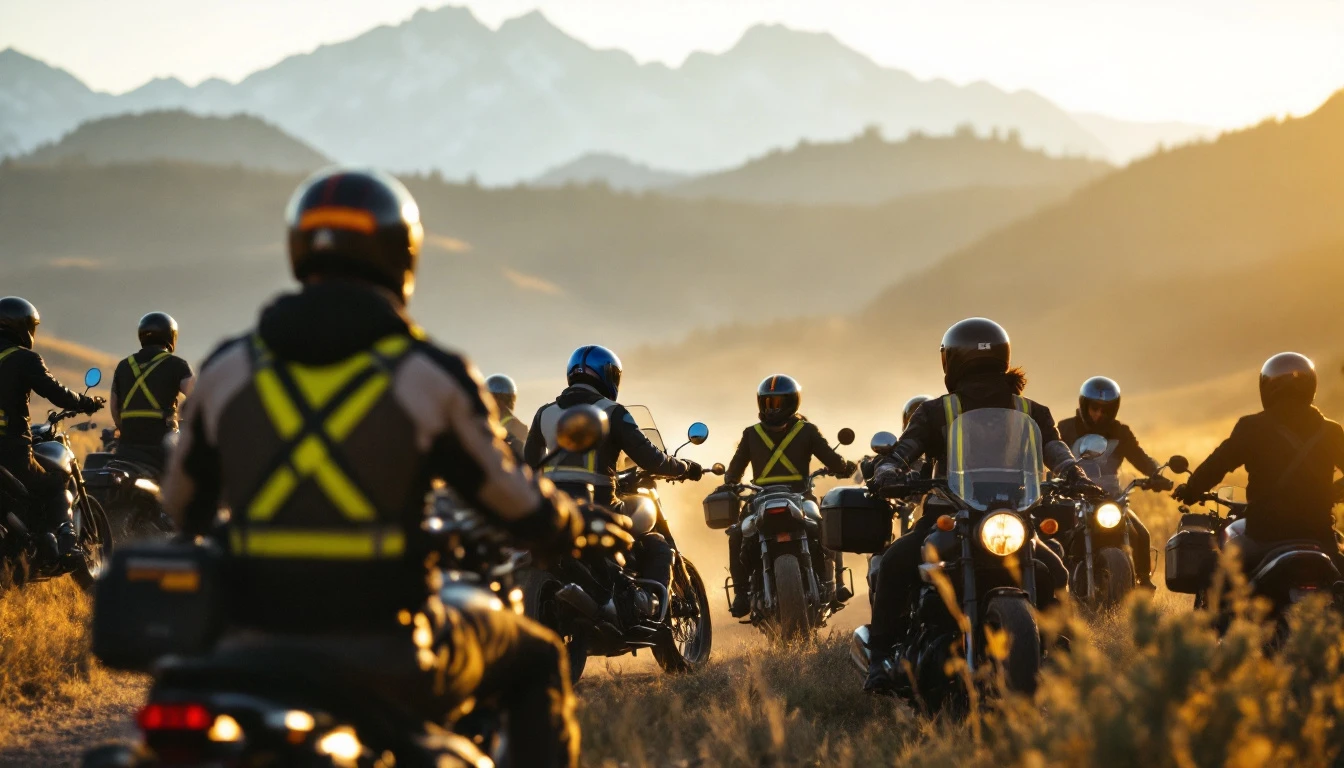
Solo riding and group riding are different skills. Formation riding, hand signals, pacing with other riders, and managing your ego when someone ahead is riding faster than is safe for you, none of this is in the basic curriculum. If your first group ride is also your first real road experience, the social pressure adds risk. Read up on group riding etiquette and hand signals before you join a club run.
Gear, Maintenance, and Practical Knowledge Gaps
The practical side of owning and maintaining a motorcycle rarely makes it into a two-day course. Yet these gaps create real risk.
Gear Selection and What It Actually Protects Against
Courses tell you to wear gear. They don't always explain why specific gear matters or what to look for when buying it. A DOT-rated helmet is different from a novelty helmet. CE-rated armor in a jacket isn't the same as padded fashion leather. Understanding the protection hierarchy, helmet, gloves, boots, jacket, pants, and knowing what certifications actually mean helps you spend money where it counts.
Our guide on gear and pre-ride inspections covers the specifics most new riders skip.
Pre-Ride Inspection and Basic Maintenance
The T-CLOCS inspection checklist gets a mention in most courses. Actually building the habit of running through it before every ride, tires, controls, lights, oil, chassis, stands, takes deliberate repetition. Tire pressure alone is responsible for a significant number of handling problems that riders blame on their skills. Check your tires cold, every time.
Choosing the Right First Bike
This one surprises people. You spend a weekend learning to ride and walk out without any guidance on which motorcycle to buy. Engine displacement, seat height, weight, power delivery, these all affect how manageable a bike is for a new rider. A 600cc supersport and a 300cc standard are completely different learning environments. Getting matched to the wrong bike is one of the most common early mistakes.
| Skill or Knowledge Area | Covered in Course? | Where to Fill the Gap |
|---|---|---|
| Low-speed clutch and throttle control | Yes | N/A, well covered |
| Emergency braking (straight line) | Yes | N/A, well covered |
| Basic lane positioning | Yes | N/A, well covered |
| Highway riding at speed | No | Supervised highway miles, advanced courses |
| Riding in rain or on wet roads | No | Experienced mentor, gradual exposure |
| Reading and anticipating traffic | Partially | Many hours of real riding, advanced training |
| Managing fatigue and mental load | No | Self-monitoring, long-ride experience |
| Group riding dynamics | No | Guided group rides, club mentorship |
| Gear selection and certifications | Basic mention only | Independent research, gear-specific guides |
| Pre-ride inspection habits | Basic mention only | Repetition and a T-CLOCS checklist habit |
| Choosing your first motorcycle | No | Dealer guidance, rider community advice |
What to Do After You Pass: Building Real Skills
Passing your course is a genuine achievement. Don't stop there. The riders who stay safe over years and decades are the ones who treat education as ongoing, not one-time.
Take an Advanced or Intermediate Course
The MSF and state-affiliated programs offer courses beyond the basic level. Intermediate and advanced curricula include higher-speed exercises, swerving practice, and more complex traffic scenarios. Some states offer motorcycle safety courses near you at reduced or no cost through state safety programs. If you're in Montana, the Montana motorcycle safety programs and resources page lists current options.
Find a Mentor and Log Deliberate Miles
Riding with someone more experienced than you, in conditions slightly outside your comfort zone, accelerates skill development faster than solo riding alone. Log your miles deliberately, vary your routes, ride in different weather, try different times of day. Each variable builds a new layer of pattern recognition.
The beginner's timeline for becoming a skilled motorcyclist on this site gives realistic benchmarks for how long skill-building actually takes. Honest answer: longer than most people expect.
Study the Common Mistakes
Reading about what goes wrong for other riders is one of the fastest ways to avoid making the same errors. Our article on 10 common mistakes to avoid when riding a motorcycle is a practical starting point, and so is the breakdown of dangerous motorcycle safety myths that experienced riders still fall for.
Frequently Asked Questions
What does a motorcycle safety course not teach you about highway riding?
Most basic courses are conducted entirely in a closed parking lot at low speeds. Highway riding, including merging, lane changes at speed, wind management, and maintaining awareness across long distances, is not covered. These skills require real road exposure, ideally starting on lower-traffic roads before moving to interstates. Some advanced courses do include highway segments, but the basic curriculum doesn't reach that level.
I just passed the motorcycle safety course. What now?
Start small. Ride in low-traffic areas during daylight for your first several weeks. Build up exposure gradually, different roads, different times of day, then weather variables. Look into an intermediate course to accelerate skill-building. Find a more experienced rider who can give you real-time feedback. And read everything you can about the common mistakes new riders make. The course got you licensed, but the real education starts now.
Does a motorcycle safety course cover riding in the rain?
No. Rain riding involves reduced traction, longer stopping distances, reduced visibility (yours and everyone else's), and different tire behavior on road markings and painted surfaces. None of this is covered in a standard basic rider course. You'll need to learn rain riding through gradual real-world exposure, ideally starting with light rain on familiar roads at lower speeds before building up to more challenging conditions.
What is usually covered in a motorcycle safety course that surprises new riders?
Most new riders are surprised by how much the course focuses on mental preparation and risk awareness, not just physical skills. The concept of the "search, evaluate, execute" mental process, the role of riding position in being visible to other drivers, and the idea that most accidents involve a series of small errors rather than one catastrophic moment, these are topics the classroom handles well. What surprises riders after the fact is how much more there still is to learn once they're on real roads.
Can a motorcycle safety course online replace in-person training?
The online eCourse from the MSF covers the knowledge portion of rider education but cannot replace the range (hands-on) component. You'll still need in-person range time to develop physical skills. The online format is useful for completing the classroom portion on your own schedule before showing up for range days, but it's not a standalone substitute for hands-on instruction. Check the MSF website for current eCourse options and how they pair with in-person sessions.
Are there skills that take years to develop even after taking safety courses?
Yes. Reading traffic patterns, managing fatigue over long distances, making split-second swerving decisions on unfamiliar road surfaces, and staying consistently alert across varying conditions, these are skills that compound over years of riding. Advanced training courses help accelerate the timeline, but there's no substitute for deliberate, varied seat time. Riders with 10,000+ miles typically show a qualitatively different level of situational awareness compared to those with 500 miles, regardless of how many courses they've taken.
Does a motorcycle safety course teach you how to choose a motorcycle?
Not really. Course instruction focuses on riding a provided training bike, usually a small, manageable motorcycle suited to beginners. Guidance on displacement, seat height, weight class, or power delivery for your specific body type and riding goals is largely absent. Most instructors will give informal advice if asked, but there's no structured curriculum around bike selection. Seek out a reputable dealer, talk to experienced riders in your local community, and research beginner-appropriate models before purchasing.
Is the MSF Basic Rider Course enough to be a safe rider?
The Motorcycle Safety Foundation would say no, and that's not false modesty. The Basic Rider Course builds the foundation. Staying safe over time requires continued education, honest self-assessment, proper gear, and a commitment to treating every ride as a learning opportunity. Even in structured training environments, the most frequent area where riders need correction involves procedural compliance, much like how Odometer compliance is the most frequent reason documents come back for correction in vehicle registration paperwork (internal data, rolling last 90 days, n=118). The lesson: structured training catches errors, but it doesn't eliminate the need for ongoing attention to detail.
The Course Is the Beginning. The Road Is the Teacher.
A motorcycle safety course not teaching you everything doesn't make it less valuable. It makes it exactly what it's designed to be: a starting point. The riders who stay safe over years and decades are the ones who walked out of the course knowing they still had a lot to learn. Honest self-awareness is probably the most important skill the course can build, and the most transferable one.
Keep riding deliberately. Take the next course. Find riders better than you and learn from them. Read about the motorcycle safety tips every rider should know and revisit them as your experience grows. The gap between passing a course and being a confident, skilled rider is real, but it's completely closeable with the right approach.